Popular Cycling Roads and Trails Threatened by Trump’s Public Lands Sell-off


This article originally appeared on Bike Portland and is republished with permission.
A plan to sell off about millions of acres of public land for housing development has raised eyebrows among many Oregonians who say it threatens popular cycling routes in nearby forests.
The legislation is included in the Trump Administration’s budget bill and it was released last week by the Senate Committee on Energy & Natural Resources (ENR). The proposal would require the Bureau of Land Management and U.S. Forest Service to identify between 2 and 3 million acres of land and sell it to the highest bidder. Any land sold through this process must be developed into housing or “community needs as defined by the Secretary of the Interior.”
According to the Wilderness Society, 21.7 million acres of public land in Oregon would become available for sale. A map shared on their website shows large swaths of land in the Cascade Range that could be sold. USFS tracts east of Portland between the Sandy and Columbia Rivers — including popular roads and trails around Larch Mountain and the Bull Run Reservoir — could be sold for development. And while the bill text says protected areas, national parks and national monuments would not be eligible for sale, the Trump Administration is also making moves to undo those designations.
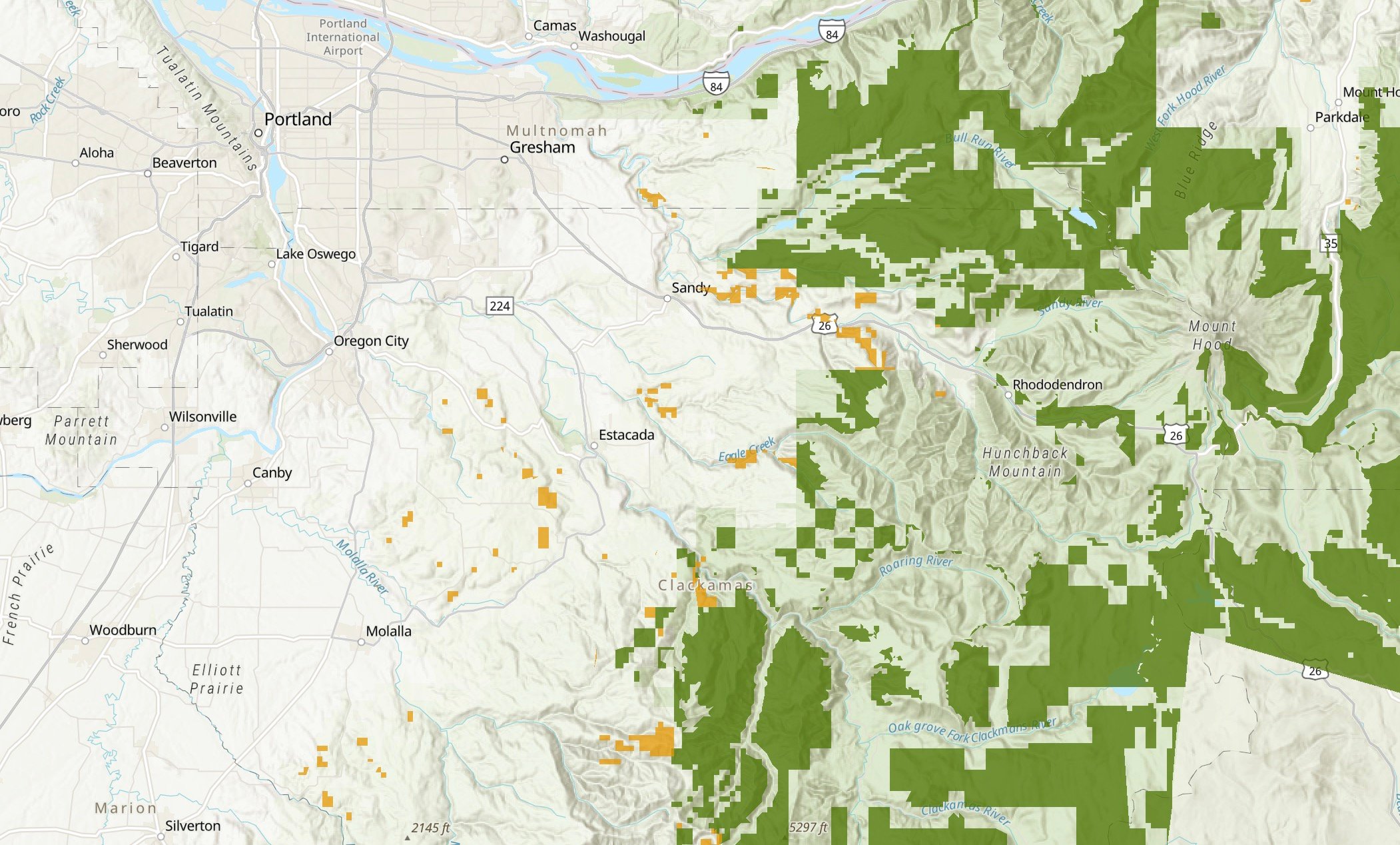
The ranking Democrat on the ENR Committee, Sen. Martin Heinrich from New Mexico, said the legislation would, “Take a sledgehammer to our national public lands,” and that it’s not about housing: “It’s about giving their billionaire buddies your land.” The Wilderness Society says the bill would set an “extremely dangerous precedent” and that it, “includes a range of extraordinary giveaways aimed at privatizing public lands.”
Republicans who support the legislation reject these criticisms and say the total acreage sold would amount to just 0.5% to 0.75% of the total land currently held by the BLM and USFS. They say it would help solve the housing affordability crisis because only lands that are 1-5 miles from a major population center would qualify for the sale. A fact sheet published by the ENR Committee states that, “Unlocking federal land for housing will develop millions of single-family homes, resulting in greater housing supply and making housing more affordable.” (Note they mention “single-family homes,” which validates fears that any housing built on the lands wouldn’t be affordable.)
Outdoor advocacy groups are wasting no time organizing opposition.
If the bill were to pass, the current language says the Secretary of the Interior would have to consult with the Governor of the state were the land sale is proposed, as well as local government and tribal representatives. But given the track record of playing fast-and-loose with the law and major lack of trust in the Trump Administration in general, those provisions are no source of solace.
The public lands sale legislation is part of a package of proposals in Trump’s “big beautiful bill” that includes a vast overhaul of energy policy that would, “repeal billions in unspent Green New Deal handouts,” vastly expand timber farming and oil and gas leases, encourage coal mining, and more. Learn more about the bill at ENR’s website.