Talking Headways Podcast: When You Don’t Really Need an Ambulance
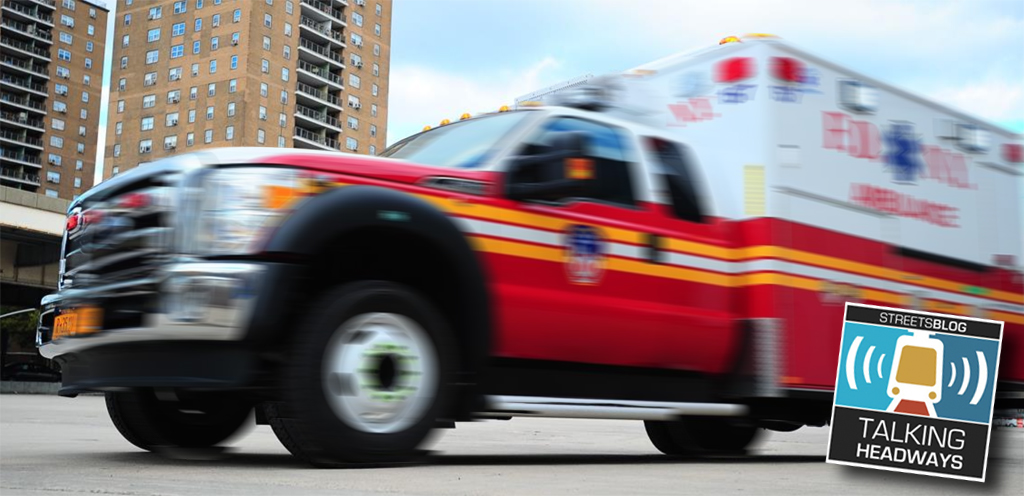
This week, we’re joined by Ross Peterson to talk about the non-emergency medical transportation he does with his new wheelchair-accessible company, RIDEtoo. We talk about transportation funding for medical visits and how they can be more efficient.
At Talking Headways, we give you three ways to enjoy the broadcast. First, click the green arrow in the white circle above. Or you could read a full unedited transcript by clicking here (yes, there will be AI typos).
Or … you could read the partially edited section below. Let’s begin:
Jeff Wood: Also I’m interested in just the idea of medical transportation. There’s a specific connection between transportation and health that we don’t talk about enough because it’s something that’s outside of most urban transportation planner’s purview. But it is important.
Ross Peterson: I think a lot of planners recognize the idea of social determinants of health. That’s a pretty well understood concept. What I think a lot of people don’t realize is that Medicaid has paid for transportation all the way back to the beginning of Medicaid in the mid-1960s.
So medical transportation enshrined as part of Medicaid from the very early days. Saying and recognizing that it doesn’t really help people to provide health insurance if they can’t access their doctor. So Medicaid is always paid for non-emergency medical transportation. And so in a way, the non-emergency medical transportation benefit under Medicaid, has been one of the social determinants of health that actually has a funding source tied to it.
It’s really good for urban planners to understand that because at the end of the day, we’re always trying to establish what is the return on investment of transportation. Hospitals and healthcare systems really do understand the value of transportation, because if somebody can’t get there for their preventive healthcare, it’s going to turn into an emergency.
And something that I guess really struck me early on when thinking about Medicaid in particular is that if you’re enrolled in Medicaid, you can call 911 at any point and get a free ride. Immediately. A free on-demand ride to the doctor and it costs you nothing, but it’s in an ambulance and that ride is gonna cause taxpayers quite a bit.
So it does make sense that health plans invest in non-emergency medical transportation. And I think that I’ve been really interested in understanding how that works. Where does it not work? Because if you Google non-emergency medical transportation, you’ll get a lot of horror stories of folks that have been stranded for hours waiting for their rides.
It’s a really mixed bag in terms of the level of quality of services that people get. So what’s striking is that as a planner, you think about medical transportation is something that can help address the social determinants of health, and that makes a lot of sense, but it’s also a really challenging service to provide.
The passengers are some of the most vulnerable passengers out there. They really need their rides to go well, and when they don’t go well, it can be a really terrible experience. So non-emergency medical transportation has these two sides to the coin. One is we recognize that it’s a very valuable service, but two, it’s also one of the hardest types of transportation to provide.
A lot of folks don’t want to touch it. There’s a lot of complaints associated with it. People don’t understand it and they often will almost look at it as, Hey, how can we confine this benefit or reduce the amount of it that we have to provide? And so it gets a bad rap.
Jeff Wood: You’re talking about under resourcing and that’s what we do for transit as well in this country.
Ross Peterson: That’s right.
Jeff Wood: And it’s frustrating. And this is actually more life and death than, transit is life and death because people need to get access to places. But this is more life and death than that. If you can’t get to, like you said, your care visits and then otherwise people are taking the ambulance.
I am curious about the EMT system and how people are currently using it, abusing it. The reason why you need non-emergent medical transportation. It’s interesting to think about how there’s almost like a series of steps that go up to when you actually need an ambulance, but before that, it’s being abused to a certain extent.
Ross Peterson: Keep in mind non-emergent medical transportation is distinct from emergency medical transportation and they’re intentionally kept separate. That non-emergency medical transportation has different training requirements and that keeps the cost a lot more affordable. We’re not driving people in ambulances with lights on, but non-emergency medical transportation can mean a lot of different things.
The brokers that manage it can use their funds to buy bus passes. They can buy somebody a bus pass if that’s the most cost effective way to get somebody to their treatment. They can even pay for mileage reimbursement. So if you’ve got a car but you can’t afford to operate your car, an NEMT broker can give you money to operate your car and drive yourself to your appointment.
They can also authorize basic life support level of service if you need that. If you’re in a stretcher or you need to oxygen during transport, or maybe you’re being transferred from one hospital to another. So there’s a whole spectrum of types of transportation that are covered under NEMT, and I don’t think people realize that a big part of that is actually public transit.
Most rural transit agencies use Medicaid money as match for their federal funds.
Read More:
Streetsblog has migrated to a new comment system. New commenters can register directly in the comments section of any article. Returning commenters: your previous comments and display name have been preserved, but you'll need to reclaim your account by clicking "Forgot your password?" on the sign-in form, entering your email, and following the verification link to set a new password — this is required because passwords could not be carried over during the migration. For questions, contact tips@streetsblog.org.