Thursday’s Headlines Are Hard-Driving
To paraphrase Billy Ocean: Get out of my car, get into my dreams. Wired shows us examples of cities cutting down on driving that most of us can only fantasize about.
By
Blake Aued
12:01 AM EDT on March 13, 2025
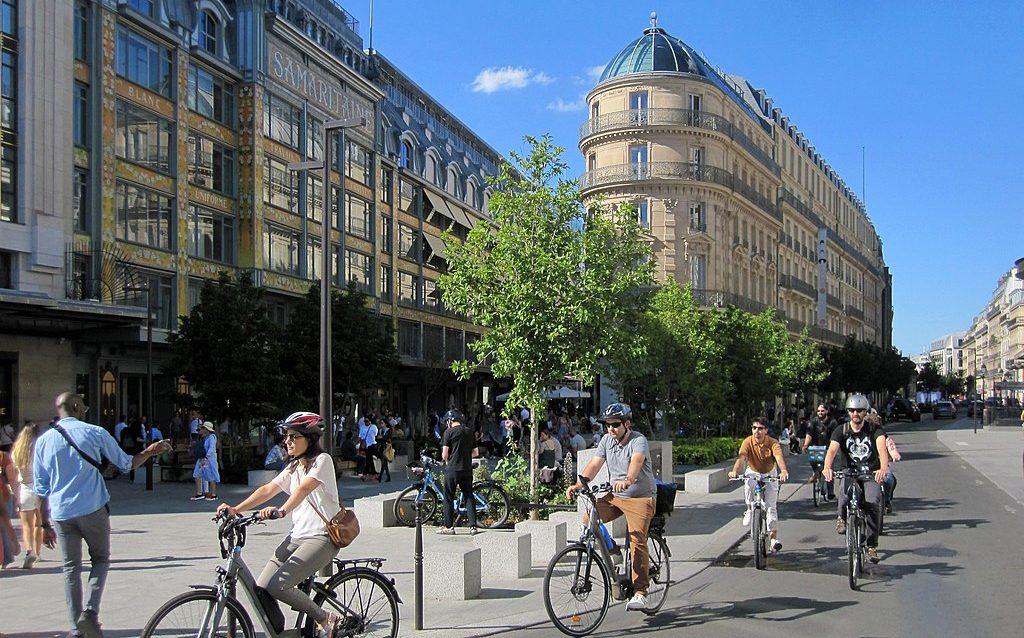
- From congestion pricing in New York City to car-free zones in European cities like Paris and Copenhagen that have turned their street space over to people on foot or bike, it’s become clear that the way to get people out of the cars is to make driving a little more difficult than the alternatives. (Wired)
- Obviously that’s not happening in the U.S., where drivers logged a record 3.28 trillion miles in 2024, eclipsing the pre-COVID record. (Reuters)
- A new White House report lays the groundwork for President Trump, long a climate-change denier, to argue that climate change will actually be beneficial. (E&E)
- In their new book “Abundance,” Ezra Klein and Derek Thompson used California high-speed rail as an example of projects where progressives have failed to deliver, but Benjamin Schneider at The Urban Condition thinks their take lacks nuance.
- EVs may be the future of cars, but cars should not be the future of transportation. (Better Cities)
- Washington state is facing an $8 billion budget deficit, and legislators are considering cutting highway projects to make up the gap. (The Urbanist)
- Atlanta cut the ribbon on a protected bike lane on downtown’s Forsyth Street. (Georgia Public Broadcasting)
- Running for re-election with bike lanes an issue, Boston Mayor Michelle Wu appeared on WGBH to defend the use of concrete barriers for bike lanes over less effective flex posts.
- After experimenting with mobile speed cameras, Denver is installing permanent ones along two of its most dangerous corridors. (Denverite)
- Maryland Democrats pushing for a fee-based approach to funding roads argue that it will be more equitable than a gas tax. (Fox 45)
- New Jersey is poised to start construction on a bus rapid transit project that’s crucial for the 2026 World Cup. (NJ.com)
- Austin’s KUT looks at the advantages for light rail over heavy rail or BRT.
- Birmingham has added 30 miles of walking and biking trails through its Complete Streets initiative. (Bham Now)
- Tucson’s new zoning code will encourage walkable development. (Arizona Luminaria)
- Portland, Maine officials are urging patience as residents demand they do more to prevent pedestrian deaths. (Press Herald)
- Here’s how to get a speed hump installed in Rochester, New York. (Democrat & Chronicle)
- Statistics show that new Scotland cycling routes are encouraging people to ride their bikes. (North Edinburgh News)

Blake Aued has been doing Streetsblog's daily national news digest for years. He's also an Atlanta Braves fan, which enrages his editor in New York.
Read More:
Streetsblog has migrated to a new comment system. New commenters can register directly in the comments section of any article. Returning commenters: your previous comments and display name have been preserved, but you'll need to reclaim your account by clicking "Forgot your password?" on the sign-in form, entering your email, and following the verification link to set a new password — this is required because passwords could not be carried over during the migration. For questions, contact tips@streetsblog.org.
More from Streetsblog USA
Every Friday’s Headline Is Sacred
When transit funds are wasted, God gets quite irate.
October 16, 2026

Friday Video: When Walkability Isn’t Enough … Even in the Great Cities of Europe
What happens when livable places get overwhelmingly popular before we can build more of them — or when other failures of design and governance make them bad places to live?

October 16, 2026

Talking Headways Podcast: The Passion Problem in Public Transit
Where should the most enthusiastic supporters of transit try to work?

October 15, 2026

Thursday’s Headlines Are Trouble for Tesla
Autonomous vehicles just can't seem to behave themselves.
October 15, 2026
Study: It’s More Expensive Than Ever to Drive America’s Most Popular Car
...and not just for the obvious reasons.

October 15, 2026