

Who’s to Blame for Tuesday’s Headlines?
Are the people in this photo inherently "vulnerable", or is this car just dangerous?
By
Blake Aued
12:01 AM EDT on April 30, 2024
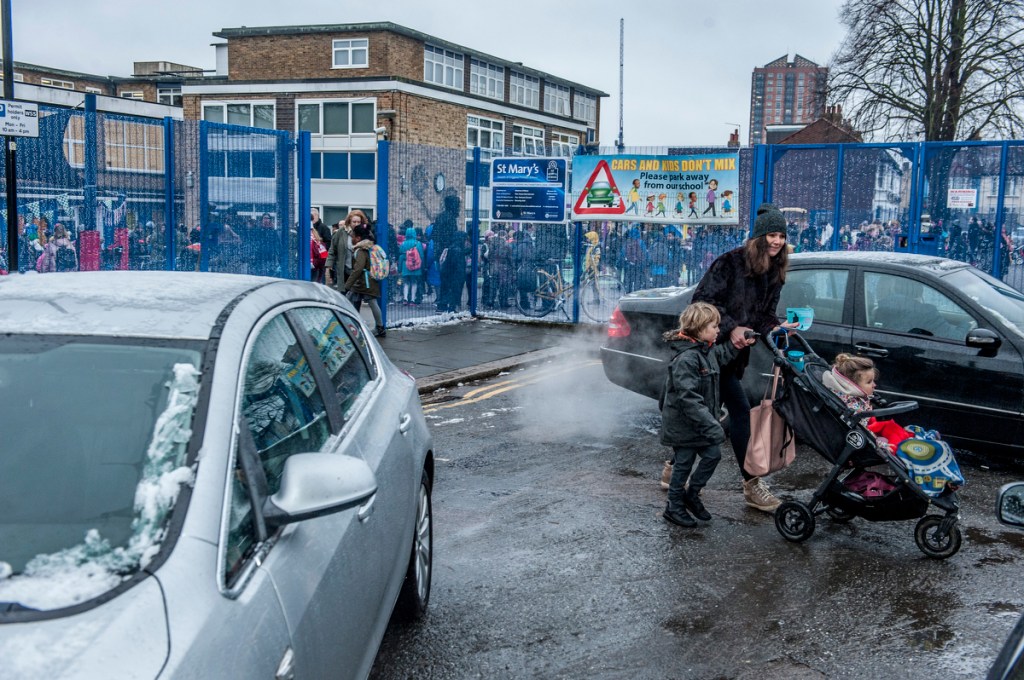
- Americans’ growing penchant for ever-bigger, dirtier and more dangerous trucks and SUVs isn’t just a matter of consumer preference. Federal policies that subsidize light trucks and charge tariffs on smaller vehicles from abroad, as well as loopholes in safety standards, are also to blame. (Vox)
- A Governing podcast discusses how administrative barriers and public opinion make traffic-calming measures difficult to implement.
- A new report from the Mineta Transportation Institute examines the cybersecurity threats facing transit. (Transportation Today)
- Rather than talk about how cyclists and pedestrians are “vulnerable,” it’s more accurate to call drivers “dangerous,” a Bike Portland writer argues.
- Houston’s Metropolitan Transit Agency is reducing service on the Silver Line, which could lead to the loss of a federal grant and is unlikely to improve disappointing ridership numbers (Chron).
- Outside Milwaukee, Wisconsin traffic deaths fell by 36 percent between 2002 and 2022. Within the county, they more than doubled. (Wisconsin Public Radio)
- Atlanta formally launched its Vision Zero initiative on Juniper Street, which had 620 crashes over a four-year period. (Rough Draft)
- A rail link from the Orlando Airport to attractions like Disney World would cost $4 billion, according to a new Florida DOT study, which sounds like a lot but is actually less than previous estimates (Trains). Meanwhile, Florida’s Brightline set records for ridership and revenue in March on its Miami-to-Orlando line (Newsweek).
- The first leg of Sound Transit’s 2 Line connecting Eastside Seattle communities opened on Saturday. (Axios)
- San Francisco parking officers say they fear for their safety after being ordered to crack down on parking violations. (CBS News)
- A Chicago watchdog group is calling to consolidate the region’s transit agencies to save money, although transit officials say funding, not structure, is the problem. (Block Club)
- Drivers killed a record 35 people in Missouri road work zones last year. (KCUR)
- Donors from outside the district are pouring money into a Baltimore city council race where the hot-button issue is bike lanes. (Brew)
- Momentum Mag ranks the 30 most picturesque bike routes in the world.

Blake Aued has been doing Streetsblog's daily national news digest for years. He's also an Atlanta Braves fan, which enrages his editor in New York.
Read More:
Streetsblog has migrated to a new comment system. New commenters can register directly in the comments section of any article. Returning commenters: your previous comments and display name have been preserved, but you'll need to reclaim your account by clicking "Forgot your password?" on the sign-in form, entering your email, and following the verification link to set a new password — this is required because passwords could not be carried over during the migration. For questions, contact tips@streetsblog.org.
More from Streetsblog USA
Why Deadly, Illegal E-Motos Are On The Rise – And Why E-Bikes Are Being Blamed When They Crash
...and what we can do to protect our kids *and* the e-bike revolution.

October 26, 2026

Friday Video: Inside the Global Far-Right Push To Rip Out Bike Lanes
Toronto might be in the center of the fight to resist bike lane teardown today. But if some far-right politicians have their way, this fight won't be the last.

October 23, 2026

Friday’s Headlines Shoot Themselves in the Foot
Gas taxes pay for transit, too, so what happens when politicians pander to voters, and the highway trust fund runs dry?
October 23, 2026
Talking Headways Podcast: A More Humanized Experience in Honolulu
If we look transit just as a distance issue, but as a time issue, performance should be discussed as one big whole.

October 22, 2026

Our Best Bet To Confront Climate Change in the Trump Era? Build More Apartments
Most climate strategies are hamstrung by Washington and culture wars across the country. But zoning reform may be the exception.

October 22, 2026
