Monday’s Headlines Are Too Tall
Unlike on dating app profiles, height isn't a good thing when it comes to vehicles — in fact, it's deadly, as high hoods are more likely to crush a pedestrian's chest or head in a collision.
By
Blake Aued
12:01 AM EST on January 29, 2024
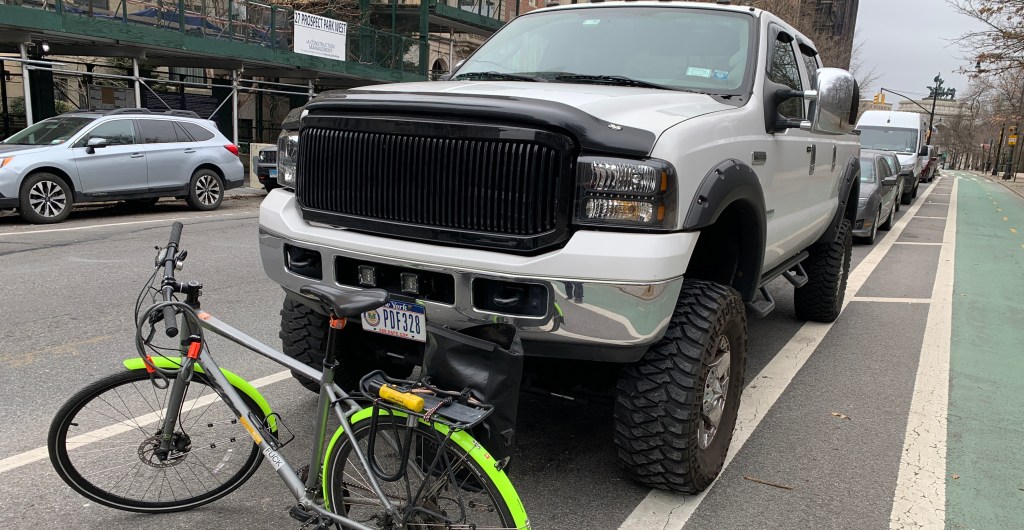
- A new study confirms that taller vehicles are more likely to kill pedestrians in a crash, with the victim 22 percent more likely to die for every 10-centimeter increase in hood height. Capping front ends at a little over four feet would save more than 500 lives a year. (Economics of Transportation)
- The White House announced $5 billion in funding for infrastructure projects, including bridges connecting Minnesota and Wisconsin, Oregon and Washington, and Cape Cod to the Massachusetts mainland; fixes to a Pittsburgh freeway to prevent flooding; and widening a section of I-10 in Arizona (Axios).
- A bill sponsored by Georgia congressman Hank Johnson would provide $80 billion in operating funds to transit agencies over four years. (Smart Cities Dive)
- Biking or walking for 45 minutes a day significantly lowers inflammation levels, according to a Finnish study. (Momentum Mag)
- A Bay Area city tech billionaires are proposing to build from scratch will be a car-centric sprawl development no matter how many bike lanes it includes because it lacks any regional transit connections, Fast Company says.
- Uber plans to spend $30 million this year on various California campaigns and causes. (Politico)
- A $54 million federal grant will go toward stopping rockslides that interrupt passenger rail service between San Diego and Los Angeles. (Fox 5)
- Austin officials are exploring where to put stations along the planned Project Connect light rail line. (KXAN)
- The Honolulu city council signed off on its end of a federal grant agreement to finally finish a long-awaited light rail line. (Star-Advertiser)
- Nashville Mayor Freddie O’Connell’s first capital budget includes tens of millions for Vision Zero, sidewalks, bike lanes, transit centers and new buses. (Tennessean)
- Sixteen years after it was first proposed, a complete streets overhaul of the major Buckhead artery Piedmont Road is underway. (Urbanize Atlanta)
- A manager who blew the whistle on alleged corruption involving a Twin Cities light rail project has sued the Met Council for retaliation. (KSTP)
- The Rhode Island Public Transit Authority is chronically underfunded and needs state support now more than ever. (ecoRI)
- Contrary to popular belief, it is in fact possible to live without a car in Houston, though it takes some effort (Chronicle). Similarly, an ex-suburbanite writes about moving to St. Paul and falling in love with the bus (streets.mn).

Blake Aued has been doing Streetsblog's daily national news digest for years. He's also an Atlanta Braves fan, which enrages his editor in New York.
Read More:
Streetsblog has migrated to a new comment system. New commenters can register directly in the comments section of any article. Returning commenters: your previous comments and display name have been preserved, but you'll need to reclaim your account by clicking "Forgot your password?" on the sign-in form, entering your email, and following the verification link to set a new password — this is required because passwords could not be carried over during the migration. For questions, contact tips@streetsblog.org.
More from Streetsblog USA
Friday Video: Inside the Global Far-Right Push To Rip Out Bike Lanes
Toronto might be in the center of the fight to resist bike lane teardown today. But if some far-right politicians have their way, this fight won't be the last.

October 23, 2026

Friday’s Headlines Shoot Themselves in the Foot
Gas taxes pay for transit, too, so what happens when politicians pander to voters, and the highway trust fund runs dry?
October 23, 2026
Talking Headways Podcast: A More Humanized Experience in Honolulu
If we look transit just as a distance issue, but as a time issue, performance should be discussed as one big whole.

October 22, 2026

Our Best Bet To Confront Climate Change in the Trump Era? Build More Apartments
Most climate strategies are hamstrung by Washington and culture wars across the country. But zoning reform may be the exception.

October 22, 2026

What ‘Flying Cars’ Could Mean For US Car Culture
Would fleets of flying cars be a dystopian nightmare, or a chance to create more walkable cities on the ground?

October 22, 2026