How a ‘City Bus Manager’ Video Game Could Become an Advocacy Tool
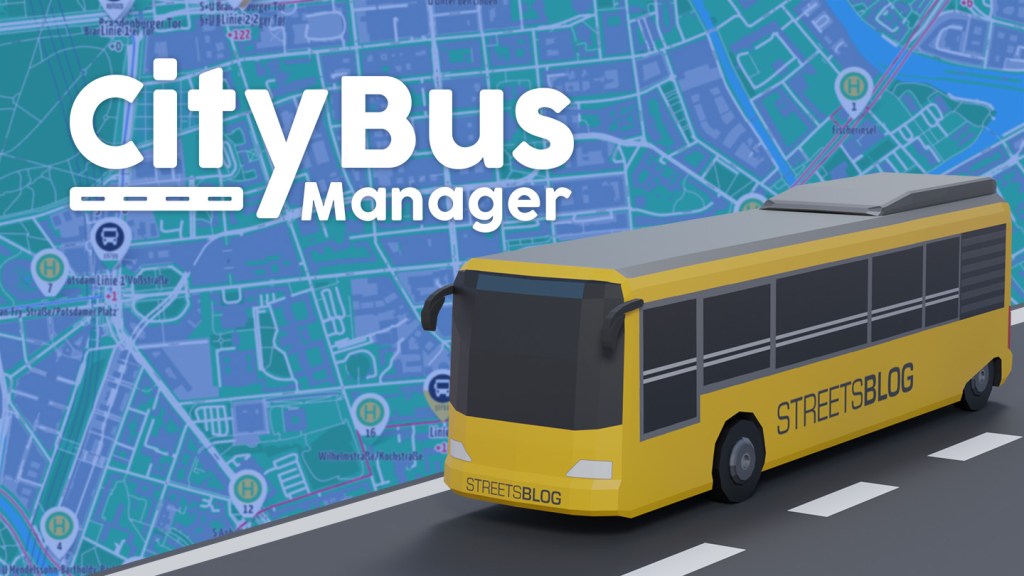
A new video game releasing today will challenge players to successfully run a virtual version of their city’s bus network — and the developers behind it hope it can create a new generation of transit advocates, even as they acknowledge that the complex realities of a transportation network can’t be gamified.
On Nov. 10, developers at German video game company PeDePe and publisher Aerosoft released an early access edition of City Bus Manager, a tycoon-style game where players can build bus depots and stops, manage routes, and juggle the struggles of keeping a transit network running and riders happy.
In an interesting twist, though, the game allows its players to run virtual buses through a detailed map of a real city of their choice — and gives them a budget commensurate with that city’s size and modal share, unless they opt for an “easy” mode with fewer constraints on their finances. And unlike other transit-focused video games (and considering that the Bus Simulator series alone is up to Vol. 21, there are a whole lot of them), it puts players in charge of keeping the whole system strong, rather than just piloting a bus-driving avatar through a series of animated streets.
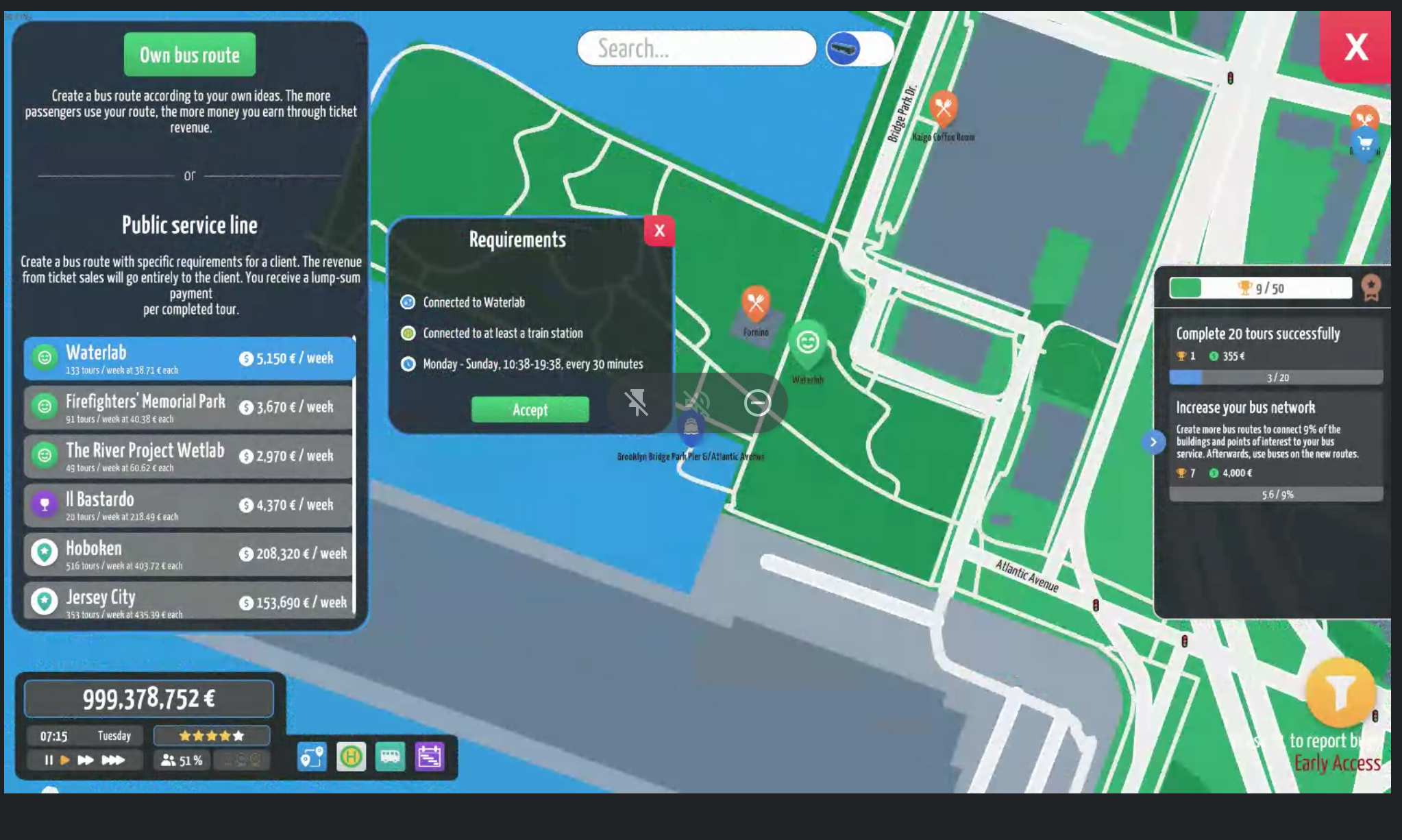
Unsurprisingly, the game has already attracted a small army of transit nerds who are painstakingly customizing their buses to their tastes and debating the merits of various route planning approaches on a companion Discord channel. And some are even replicating the most granular details of their actual cities’ bus networks — and sending their local agencies notes on how they can do better.
“We really tried to make it as realistic as possible, but we also wanted to make it fun at the end,” said Niklas Polster, co-founder of PeDePe. “Pretty much every public transit network has the problem of not having enough money and not being profitable enough. It’s really hard to get a good balance between the incomes of the bus company and the costs of repairing them and maintaining the fleet in the game, just like in real life.”
Whether transit agencies will welcome the feedback of gamers, of course, remains to be seen — and how realistic City Bus Manager can possibly be is up for debate.
Since the release of Sim City way back in 1989, planners and advocates have questioned the impact of video games in shaping public perceptions of how cities actually get built — not to mention how future built environment professionals will approach their jobs if they graduate from a PC simulator to a planning degree. Sim players, famously, can reduce traffic on roads by widening them (which is precisely the opposite of the way it works in real life) while games like Cities: Skylines have been dinged for obscuring the colossal impact of overbuilt parking by having cars simply disappear when they arrive at their destinations.
Some might argue that a video game simply can’t capture the sheer difficulty of building a transit network in the real world — at least not in a way that would make that game fun to play. Suffice it to say, players of City Bus Manager will probably never have to suffer through months (if not years) of broken environmental review processes or exhausting public engagement sessions where cartoon business owners yell at them for taking parking spaces away to build a bus lane. Instead, they can simply click and drag.
Even if digitally recreating a transit landscape is seemingly impossible task, though, the developers at PeDePe are certainly trying their best.
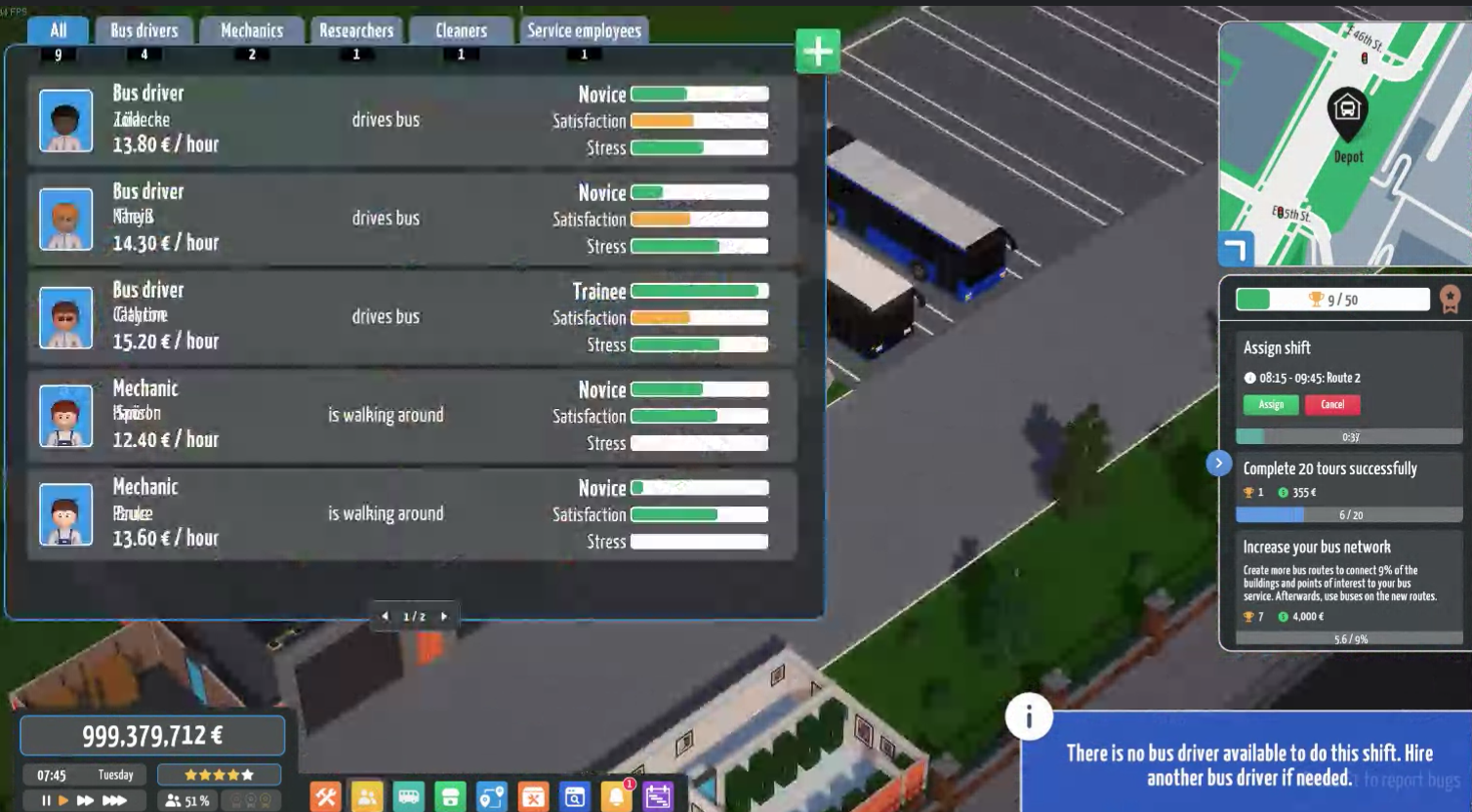
Players’ companies can win riders and increase their satisfaction by upgrading stops with shelters and other amenities, just like in real life; they have to make difficult decisions about whose travel needs to prioritize and who to leave waiting, like agencies do every day. And just like in actual cities, crowded vehicles, poor maintenance, long headways, dirty stops, aggressive driving, steep fares and, yes, getting stuck in traffic jams with virtual motorists can all impact a company’s rating and run them into ruin.
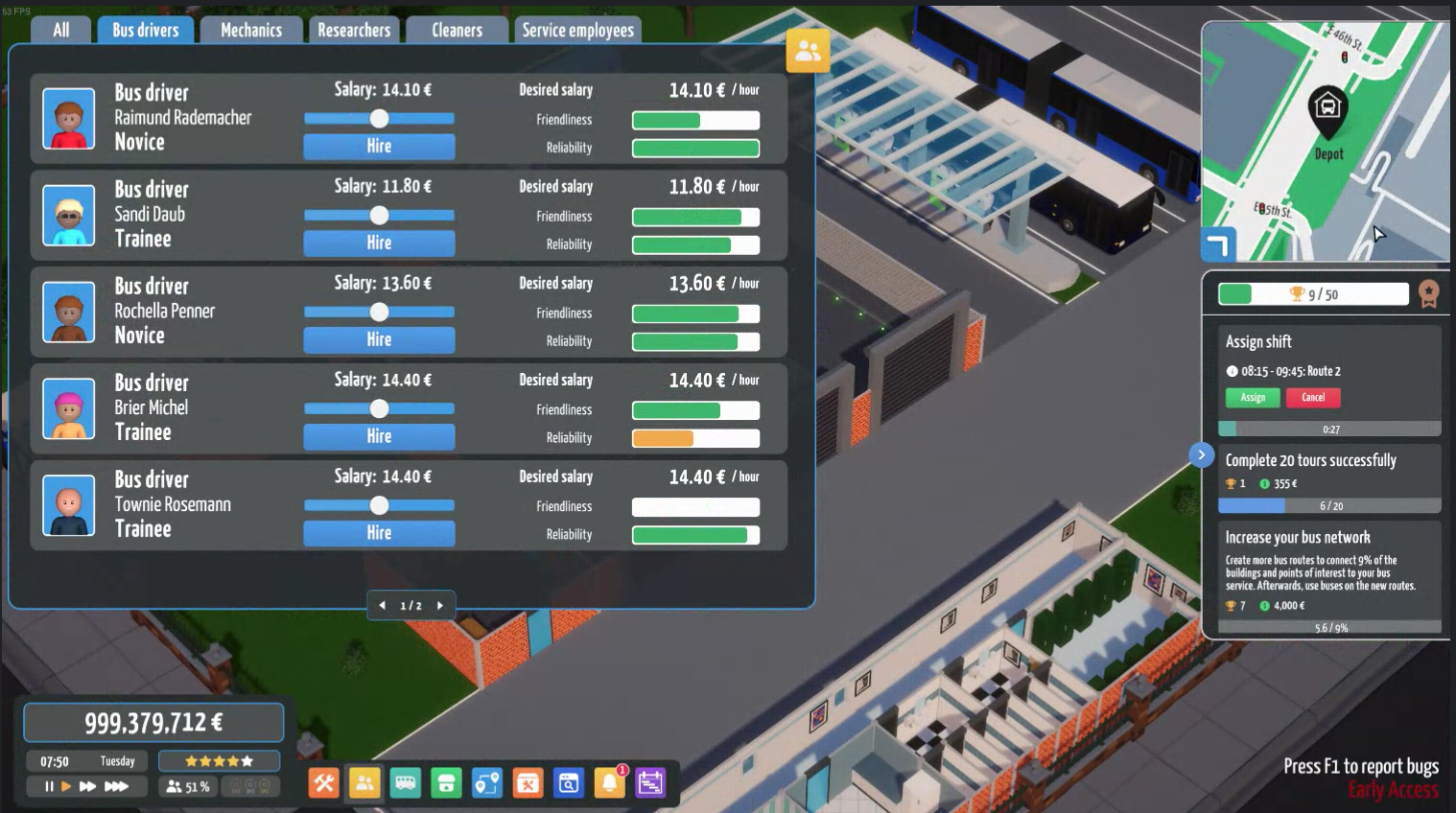
Interestingly, all the objectives of the game are met by a staff of individually-named virtual employees who respond poorly to having their salaries cut, though Postler acknowledges that the game doesn’t quite get into the nitty gritty of labor disputes over, say, split shifts and bathroom access. He does note, though, that the team is exploring adding more random challenges into the game, which could include operator strikes, in addition to things like track maintenance on city rail systems that cause surges in ridership on other modes, extreme weather, and — of course — pandemics.
Even if the game never achieves a true singularity between the duties of a City Bus Manager and an actual city bus manager, though, Postler hopes it can help demystify how transit networks work — and why, without proper resources, they sometimes don’t.
“You can understand everyday problems [with transit systems] better if you understand how they might have happened,” Postler added. “So if [a player] is waiting for a real-life bus that isn’t coming on time, they might think,’ well, maybe it’s in the depot for maintenance and they don’t have enough mechanics; that’s understandable.’ Or they might say, ‘I can do it so much better in the game — why can’t they do it better in real life?”
On Nov. 10, City Bus Manager is available for download on PC and Mac via Steam for $27,99. An 11 percent discount will be automatically applied for a limited time.

Streetsblog has migrated to a new comment system. New commenters can register directly in the comments section of any article. Returning commenters: your previous comments and display name have been preserved, but you'll need to reclaim your account by clicking "Forgot your password?" on the sign-in form, entering your email, and following the verification link to set a new password — this is required because passwords could not be carried over during the migration. For questions, contact tips@streetsblog.org.