That Viral Dodge Ad Isn’t the First Time Automakers Compared Drivers to ‘Predators’
This isn’t even a new low.
A new viral Dodge ad has some street safety advocates outraged at the notoriously aggressive carmaker — but others are pointing out that this is just the latest chapter in the company’s long history of commercials that openly promote the deadliest driving behaviors.
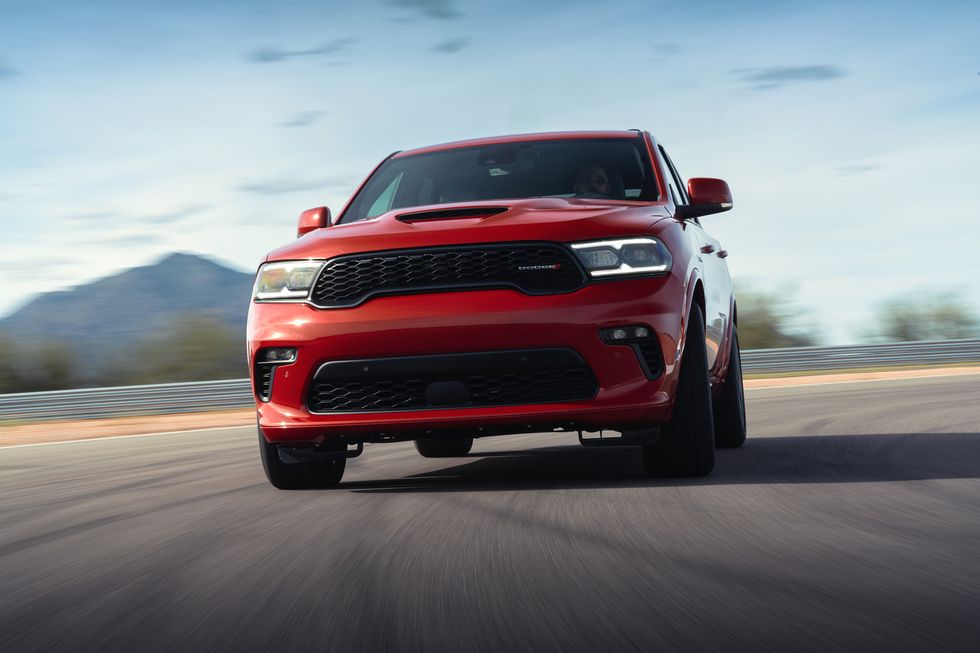
On Thursday, the Stellantis subsidiary tweeted a new ad for the Durango SUV, which depicted a simple image of the 2.5-ton assault car with a shiny red paint job menacing the lens, followed by the tagline, “A predator doesn’t need camouflage” and a smirking emoji.
The company later deleted the tweet, but only after it had sparked angry responses from hundreds of users, many of whom questioned a marketing strategy that highlighted the Durango’s killing power on the heels of one of the bloodiest years on American roadways in recent memory.
The federal Department of Transportation estimates that more than 40,000 people died in car crashes in 2021 — the most since 2007 — and experts say the rising proportion of trucks and SUVs in the national vehicle fleet is one of the drivers the surge, particularly among pedestrians, whom the drivers of large vehicle are two to three times more likely to kill than motorists who choose smaller cars.
Sadly, this wasn’t the first time Dodge openly compared its customers to killer carnivores.
A 2015 dual ad for the company’s Hellcat and Viper models featured a Phil Collins soundtrack over a growling voiceover, which despaired a modern reality where human beings “don’t have to worry about predators like our ancestors did; no saber tooth tigers stalking from the brush, no dire wolves circling the camp. There are no more monsters to fear — and so we have to build our own.”
When that commercial made an appearance in Streetsblog’s America’s Most Toxic Car Ad contest last September, we wondered why, exactly, anyone in their right mind would be on “team make-America-a-violent-prehistoric-hellscape-again” — and what it says about American culture that the idea of deliberately stalking and killing anything with an automobile would be such a strong selling point.
Even that ultra-aggressive messaging though, though wasn’t quite bad enough to beat out the competition. The infamous Dodge “Predators” commercial didn’t even make it past the first round — because it was matched up against another Dodge ad that compared its cars to supernatural demons capable of shattering glass with the sound of their speeding engines alone.
Dodge’s violent ads aren’t just a matter of poor taste. There’s evidence that depictions of aggressive driving can inspire such behavior among motorists on real-world roadways — evidence that countries around the world have answered by barring auto advertisers from airing them.
In the particularly strict nations like the United Kingdom, even the perennial “professional driver on a closed course” isn’t exempt. A 2018 Ford ad was banned from Britain for including a voiceover of the famous Dylan Thomas poem “Do Not Go Gentle” — you know, the one that urges readers to “rage, rage against the dying of the light” — over images of officer workers growing increasingly furious over the everyday indignities of spilled coffee, crowded train commutes, and obnoxious lectures from the boss.
At the end of the ad, a Mustang revs out of a parking garage and onto an empty public road; the car isn’t speeding anywhere nearly as quickly as the average car in a Dodge commercial, but British Advertising Standards Authority still thought the behavior in the spot put “the driver, other motorists and pedestrians at risk.”
For now, American watchdogs aren’t very likely to step in even when companies like Dodge openly market driving as a violent and predatory activity —never mind a horrifyingly fuel-intensive way to decorate a Christmas tree.
But with enough advocate pressure, someday they might – and in the meantime, those same advocates will be fighting for the kind of road designs that will slow even the most speed-hungry drivers.
And along the way, they’ll even throw in a free biology lesson or two for the company’s advertisers.

Read More:
Streetsblog has migrated to a new comment system. New commenters can register directly in the comments section of any article. Returning commenters: your previous comments and display name have been preserved, but you'll need to reclaim your account by clicking "Forgot your password?" on the sign-in form, entering your email, and following the verification link to set a new password — this is required because passwords could not be carried over during the migration. For questions, contact tips@streetsblog.org.