The Bikes That Last Four Months
Editor’s note: This article originally appeared on U.S. PIRG and is republished with permission

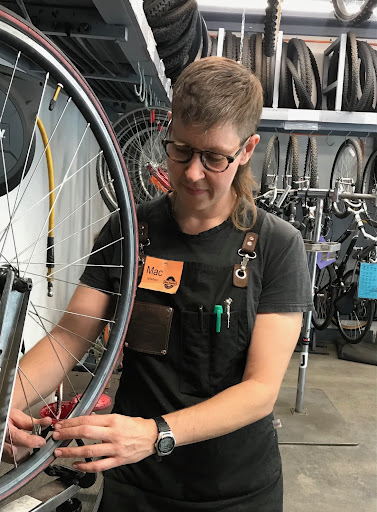
Mac Liman estimates she has fixed 14,000 bicycles over the last 18 years. But increasingly, the bikes coming through her Colorado shop are unfixable — and the manufacturers made them that way on purpose.
The influx of these essentially disposable bicycles has Mac raising the alarm about this trend in planned obsolescence. As we’ve covered in earlier editions of Junked By Design, our society is rife with unfixable products, which creates a mounting ecological problem.
While we’re all annoyed when our latest electronic gizmo conks out after just a few months, by now it’s not all that surprising. But a bike? Surely a bike should last longer, right?
Making sure all communities get access to bikes
Mac works with Bikes Together, which repairs, donates and sells used bicycles inexpensively to people who wouldn’t otherwise have a working bike with a goal of equitable bicycle access. Not only does Bikes Together supply bikes, it helps people gain the skills needed to keep them going.
People can ride a reliable bike to work and school, with the side benefit of outdoor exercise. On top of that, it’s better for the environment than driving as we work to minimize carbon emissions in transportation. Bikes Together wants to make sure that all of Denver’s residents can share in these benefits by taking used bikes and fixing them for new riders.
Mac sees many bikes from the 1990s that still work now. “Especially because it’s so dry here [in Colorado], bikes can last a really long time,” she said to me in a recent interview. Counterintuitively, many bikes bought six months ago have more problems.
Signs of an unfixable bike
Because Bikes Together works with donated, used bicycles, Mac has to train staff and volunteers how to process incoming bikes. Increasingly, that means teaching people to identify the bikes it’s not worth bothering to fix.
“The job used to be explaining to people how to fix things. Now, it’s explaining why they cannot,” Mac said. “The job used to be fixing; now, it’s stripping them down and scrapping them.”
Bikes Together has a checklist for spotting bikes made too poorly to fix for donation or resale. If you spot three or more of the following characteristics, the bike should be recycled:
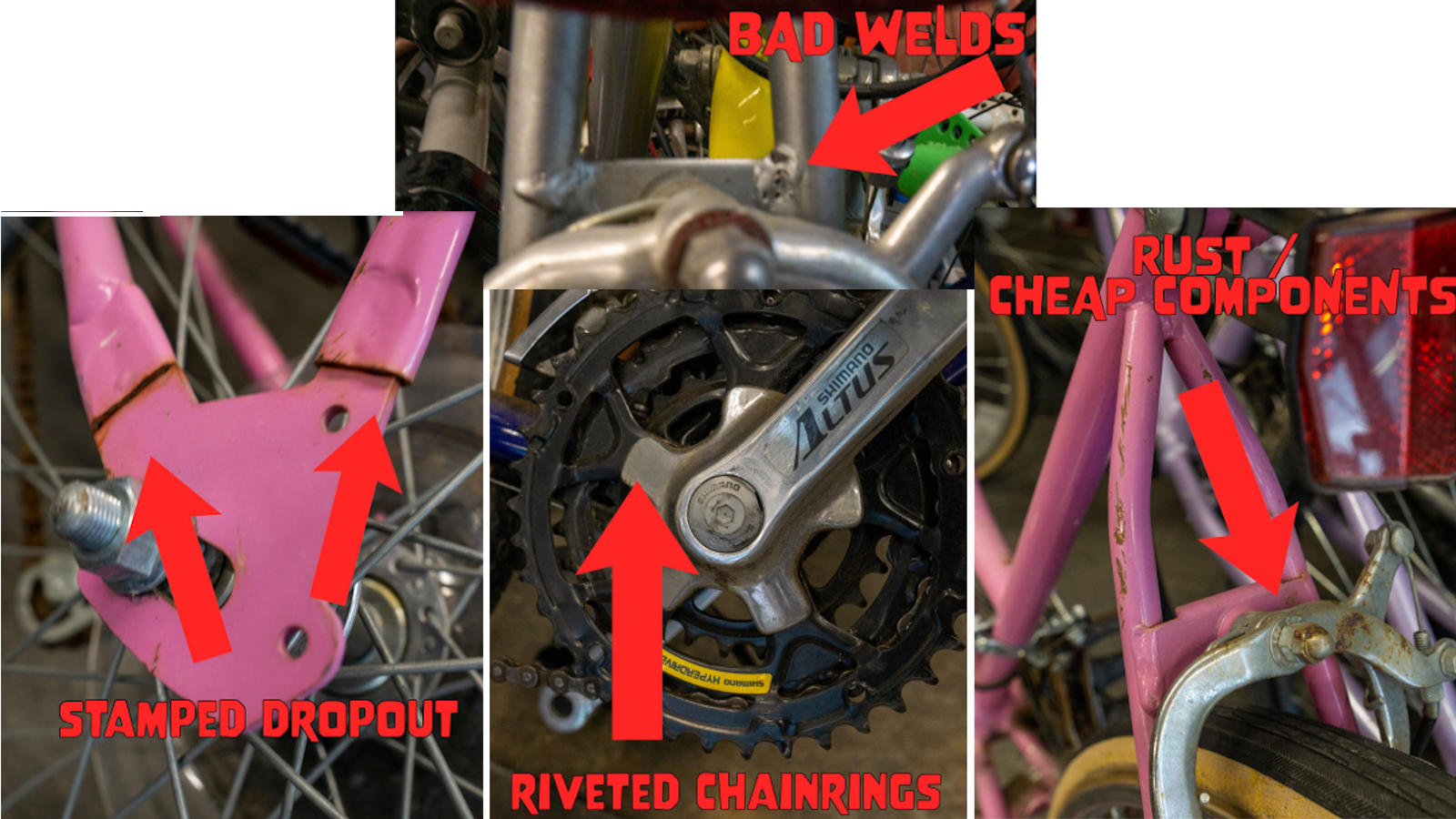
It may be hard to believe, but Mac says when fixing these bikes, they “just disintegrate.” The metal is such poor quality that the frames crack and the threading erodes. Since they are not waterproofed at all, when they get wet, they easily rust. Repairpeople can’t replace non-standard or welded-on parts. Other parts are made to look adjustable, but actually are not. And you can’t always rely on a brand name: While some brands have good track records, other brands sell bicycles at a wide range of price points, and some of their lower-end models have inferior components or overall quality.
“Because of where I fix bikes, I’ve seen thousands and thousands of the low-end bikes, much more than a normal bike shop which deals more with the upper end of the market. Across thousands of examples, I estimate that these low-end bikes last about 90 riding hours before they fail,” explained Mac, noting these bikes mostly come from big box retailers. If you commute an hour each workday on your bike, 90 hours is only about 4 months. “People get these bikes because they don’t have other options.”
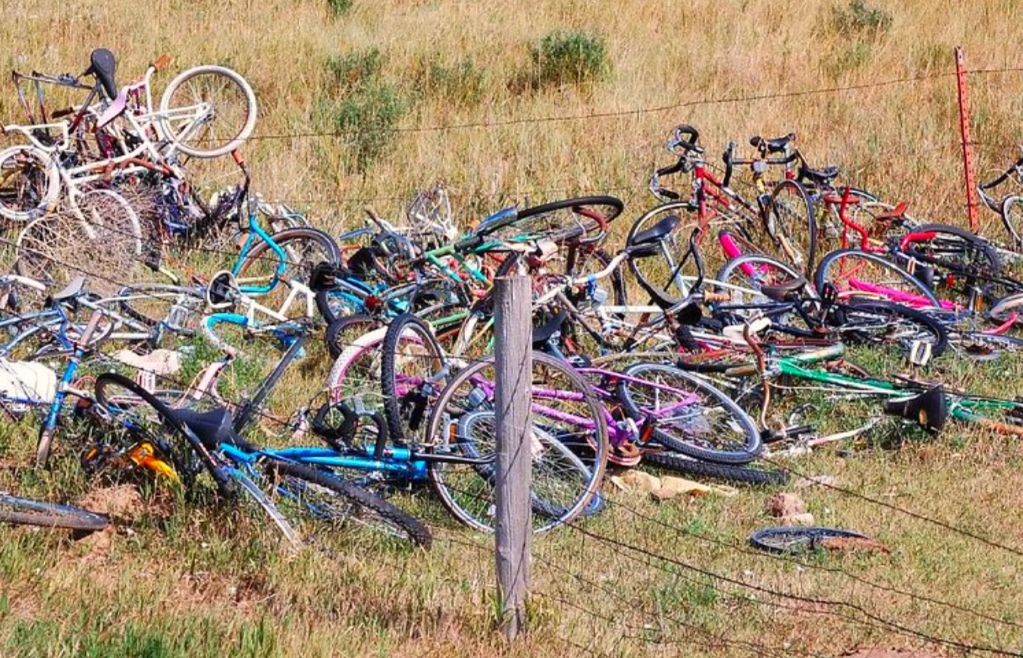
Junky bikes are piling up
That causes uncertainty and wasted time and money both for people who have trouble affording bicycles on their own — and for public and private entities trying to build a more bike-friendly society. Josh Bisker, the founder of a New York City bike co-op, wrote in Streetsblog that,“I once unpacked 50 new budget bikes for a community project to find that not a single one of their front wheels could actually spin.”
Mac recalled a charity give out a large donation of bicycles to low-income Denver residents to help people use new bike trails. But the donated bikes were unfixable, so a few months later Mac recalled that “the dumpsters were full of these bikes.” Mac doubts the charitable donors even know the bikes they helped donate ended up breaking down so fast.
Statistics from the past year and a half suggest that the pandemic caused a huge spike in interest in bicycles. Bikes have sold out in many places across the country. People have needed them to get around when transit was unsafe or unavailable. But far too many of the tens of millions of bikes sold in the last year are already broken and useless.
Mac worries that this could undermine Americans’ trust in bicycles: if people buy a new bike, but find it is unreliable, and breaks quickly, they may not bother again. Mac and other bike repair organizations and businesses have launched a petition against the manufacture and sale of “built to fail” bicycles.
It’s important for people to recognize the telltale signs of an unfixable bike, so they don’t buy one. But that’s blaming the victim here. To ensure a cleaner, healthier future including safe, reliable bike riding, manufacturers need to stop building “gotcha” bikes — and retailers need to stop selling them.

Read More:
Streetsblog has migrated to a new comment system. New commenters can register directly in the comments section of any article. Returning commenters: your previous comments and display name have been preserved, but you'll need to reclaim your account by clicking "Forgot your password?" on the sign-in form, entering your email, and following the verification link to set a new password — this is required because passwords could not be carried over during the migration. For questions, contact tips@streetsblog.org.