SORRIEST BUS STOPS 2021: Chicago vs. Orinda
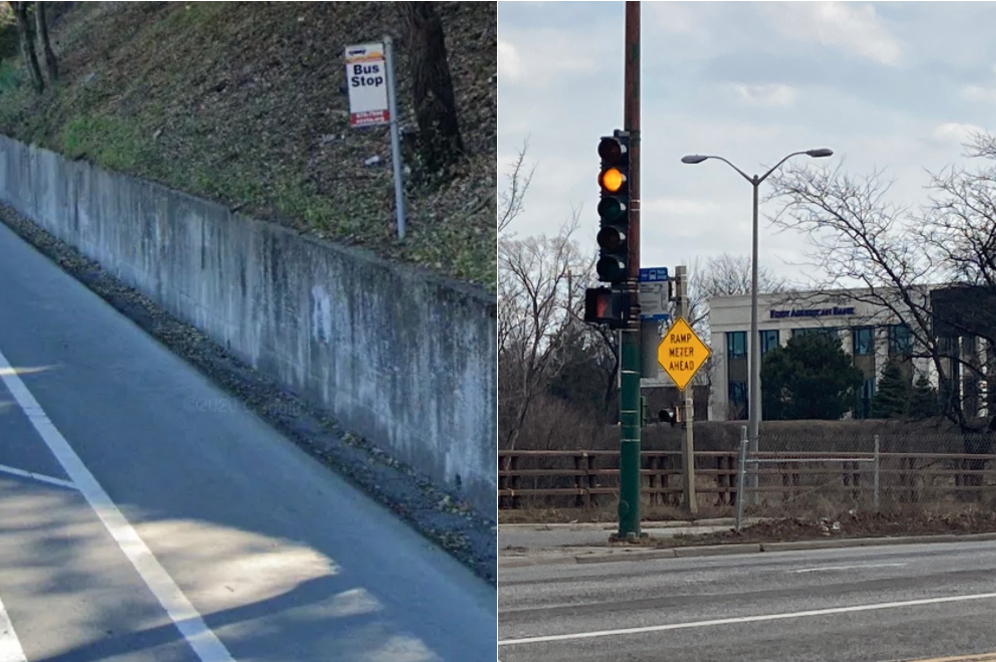
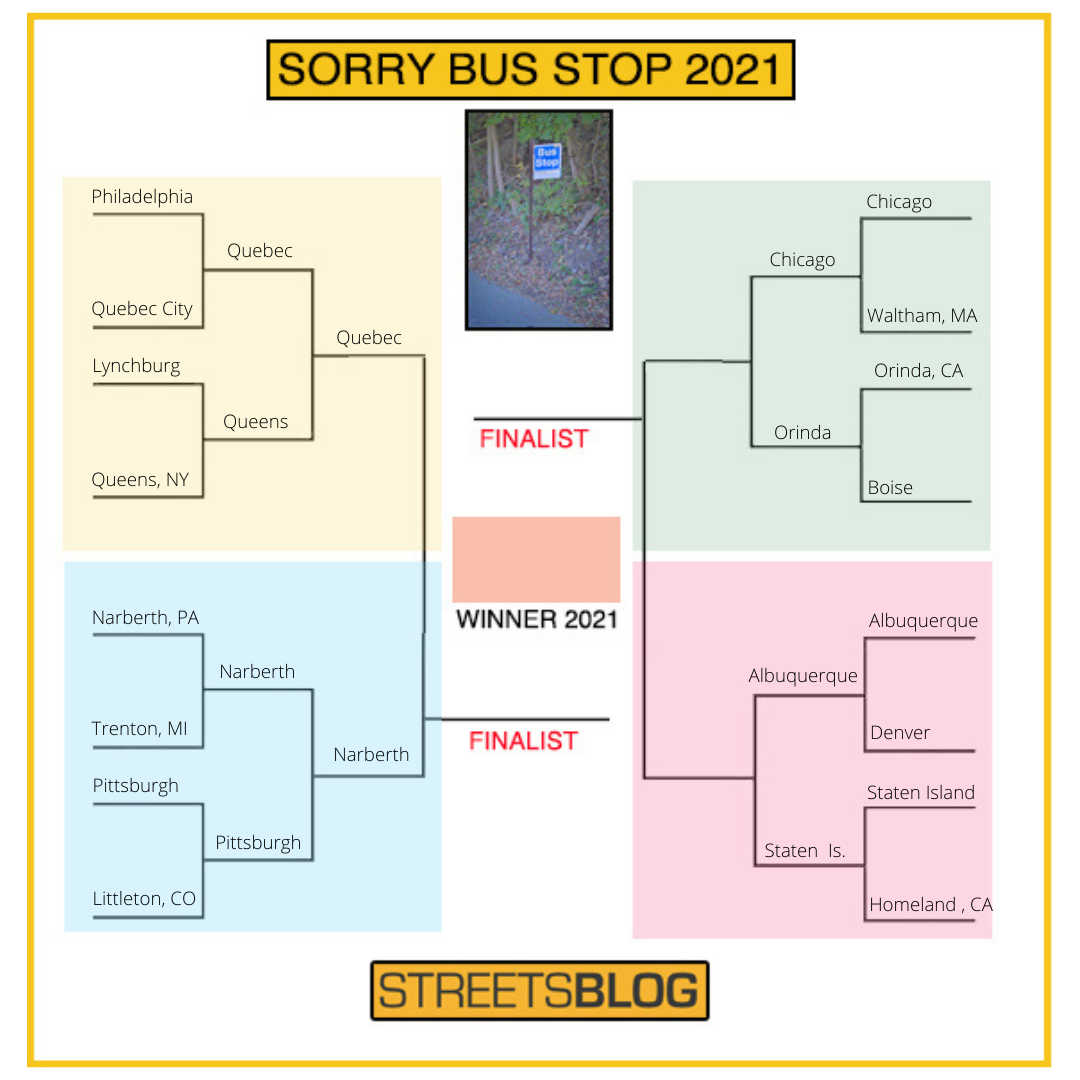
Editor’s Note: This is the third Elite Eight matchup in the Sorriest Bus Stop contest. In our previous bouts, Québec City absolutely stomped Queens, and Narberth just eked past Pittsburgh to set up quite a battle in the regional finals. Don’t forget to scroll to the bottom to weigh in today’s battle, and tune in tomorrow for our final second-round match-up.
Pretty much every sorry stop in this contest puts the squeeze on its riders — but these two Atrocious Eight contenders really put their passengers between a rock and a hard place.
In a lot of ways, the two waiting areas we’re offering for your consideration today couldn’t be more different; one is located in a giant city while the other is in a tony suburb, one is choked by winter half the year while the other averages zero inches of annual snow. But they have one critical thing in common: they’re wedged into the narrowest possible slices of urban space.
Let’s take a look at these too-tight terrors:
Chicago’s On-Ramp Outrage
Between the highway on-ramp with no crosswalk, the alarming gap in the only crosswalk that is there, and the ultra-wide high-speed arterial on the other side, this Windy City waiting area doesn’t give riders much room to breathe.
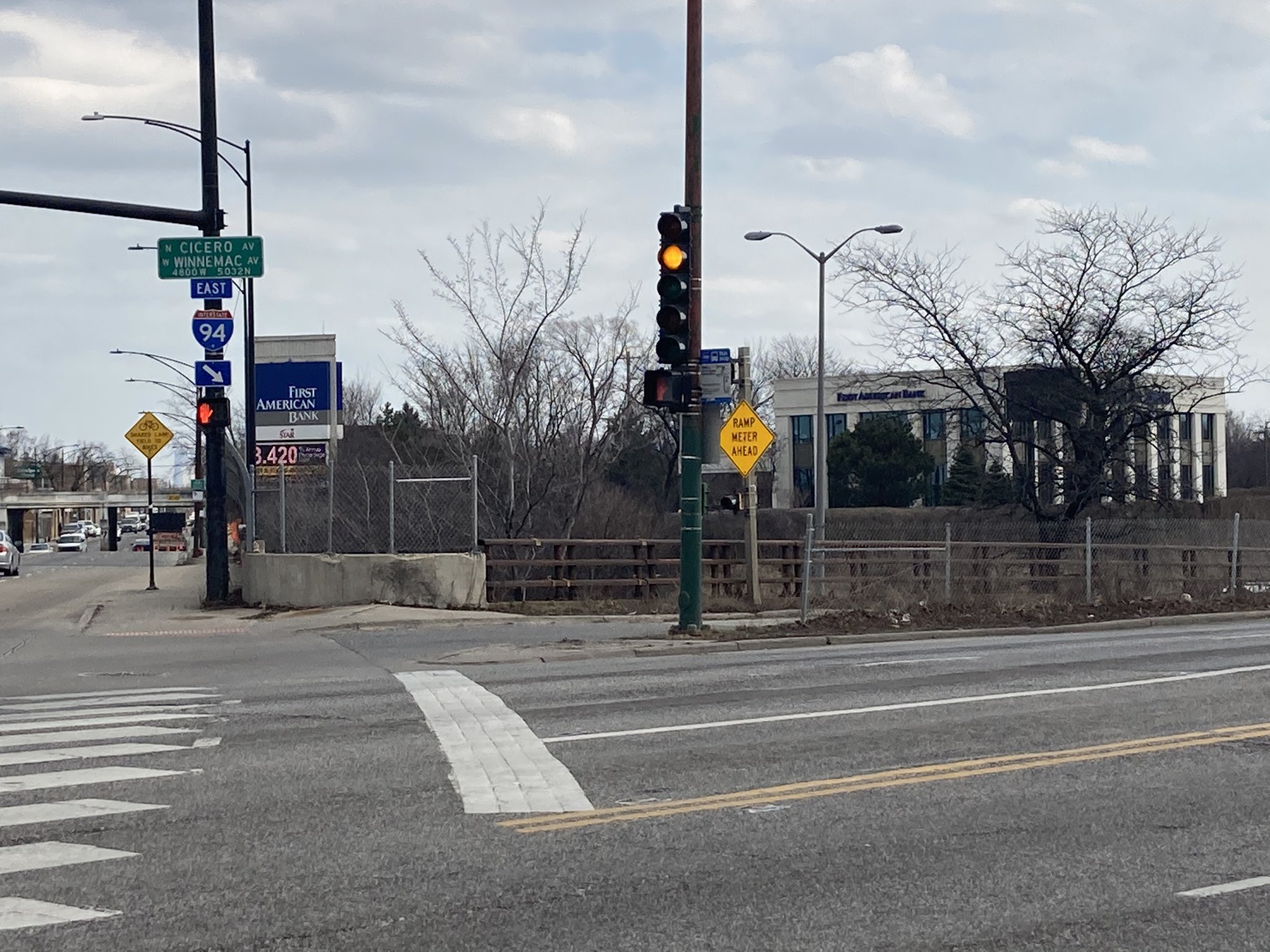
In the first round, nominator Lena described the horror of watching drivers regularly clip the curb right where riders are expected to stand, and the alarming number of speed camera tickets at nearby intersections. (Memo to city DOTs: if a speed camera keeps spitting out moving violations like Skeeball tickets and it doesn’t prompt you to redesign the road to slow drivers down, you’re doing it wrong.)
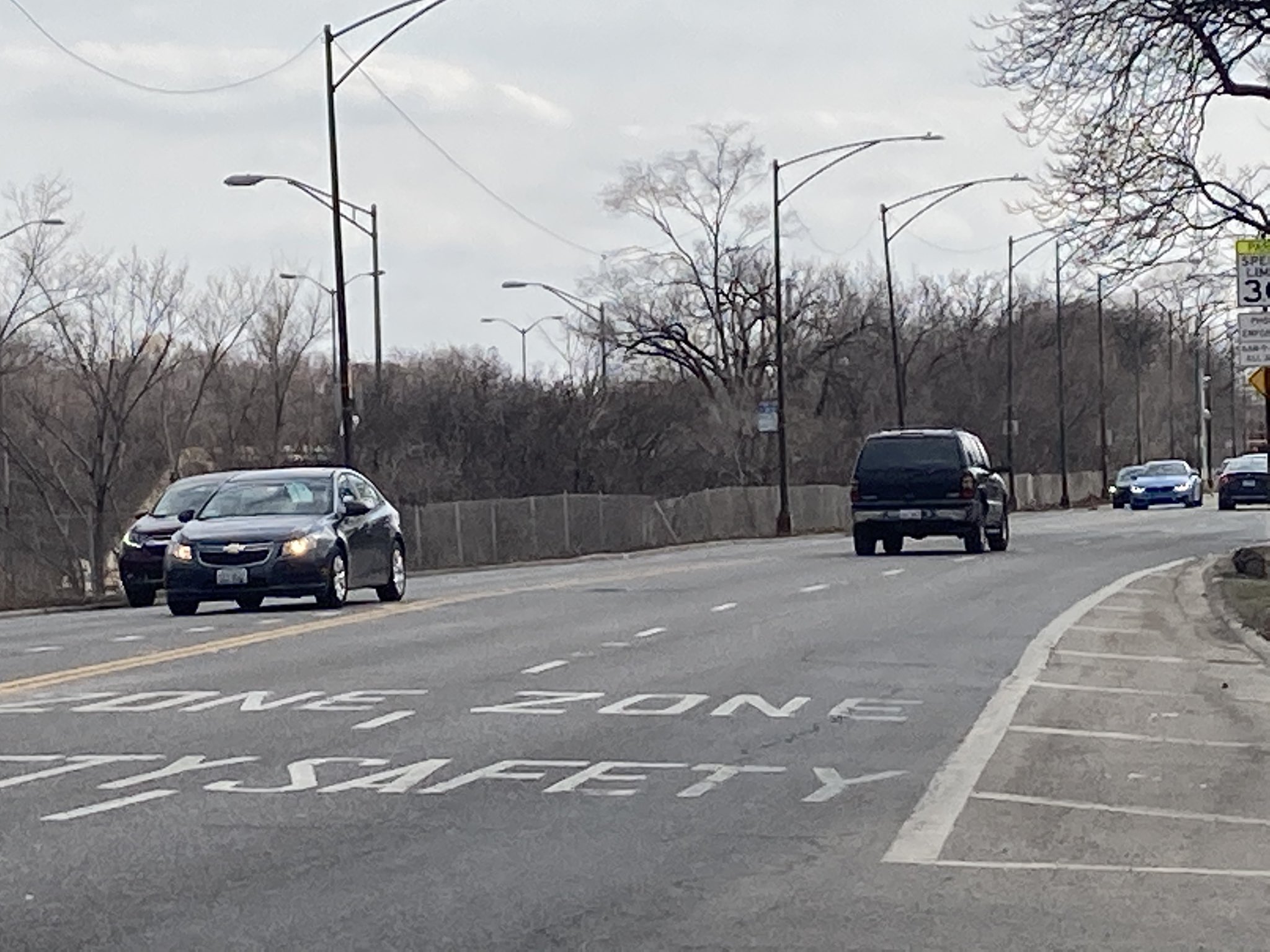
We couldn’t find a speed limit sign for this stretch of road on Google Maps, but it looks like it’s designed for about 40 miles per hour, minimum. And whatever the actual limit is, drivers are blowing past it: the camera nearest to this stop generated roughly a million dollars in revenue for the city in just 18 months, even though the city only wrote drivers tickets on their second offense, and only if they travelled more than ten miles per hour over the limit.
Of course, all that speeding leads to people dying. Between 2009-12, the Chicago Department of Transportation noted that there were “four bike and pedestrian crashes, three serious or fatal crashes, 35 crashes involving children or teens, and 84 were caused by speeding drivers.”
Oh, and to make matters worse: check out this other stop just a stone’s throw away. If you’re not comfortable on slip lane island, you’re definitely not going to love standing at this sidewalk-free stop … if you can even get to it.
Chicago absolutely whomped Waltham in round one. But is it bad enough to overtake Orinda?
Orinda’s Offensive Excuse for a Bus Stop
Bus stop in a bike lane? I know, I know: it’s serious.
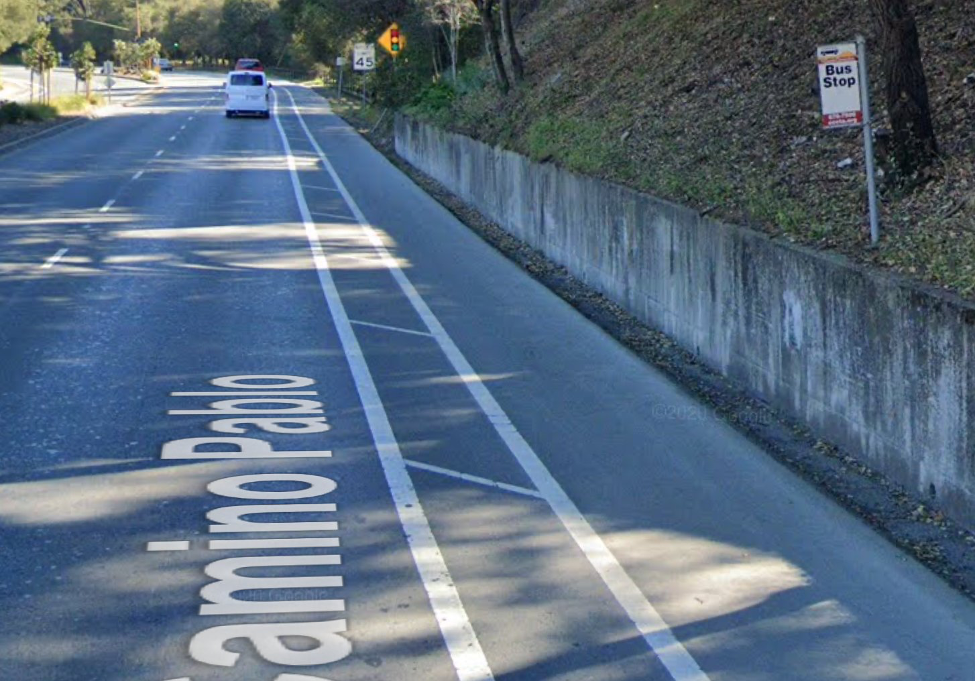
In the first round, Streetsblog readers were pretty aghast at this Bay Area blasphemy, which forces riders to literally wait in the gutter astride an unprotected bike lane and a 45-mile-per-hour road.
After a little digging around, it appears that the route served this stop, the County Connection #6, is actually the only bus line in all of Orinda. It’s not the most popular in the CC system, but as a connector the regional Bay Area Rapid Transit light rail stop less than a mile away, it’s still a critical part of the local transportation landscape, especially for those that are car free.
With two driving lanes in each direction on this road, there’s more than enough room for a solid protected bike lane, a sidewalk, and an ADA accessible stop — but only if there’s the local will to build it.
Orinda captured a decisive win over a similar multimodal mess in Boise in the first round. But is this stop lousy enough to cheat Chicago out of its place in the Final Four?
Time to let us know. Polls are open until Tuesday, April 6 at 4 p.m. EST.
[poll id=”183″]
Here’s the bracket so far:
Read More:
Streetsblog has migrated to a new comment system. New commenters can register directly in the comments section of any article. Returning commenters: your previous comments and display name have been preserved, but you'll need to reclaim your account by clicking "Forgot your password?" on the sign-in form, entering your email, and following the verification link to set a new password — this is required because passwords could not be carried over during the migration. For questions, contact tips@streetsblog.org.