Skip to Content
Streetsblog USA home
Log In

Coord invites cities and other curb managers to apply for its Digital Curb Challenge to undertake a free curb management pilot program in 2020. Applications close on Feb. 14. Click here for information.

Local leaders often have no idea how bad streets really are for their non-driving constituents. But to quote the planet's oldest cliche, a picture is worth a thousand words — and a good picture can motivate an apathetic streets department worker to break out the blacktop repair mix.

Source: Streets.mn
Source: Streets.mn
Source: Streets.mn

Writer Drew Ross has a background in photography and journalism, and he shared some great tips at Streets.MN about how to take a pothole photo that really grabs an apathetic politician's attention. "A photograph conveys a lot of information: perspective, proportions, scope, and emotion," Ross said. "In a world heavy with reports and plans, photographs are a welcomed relief."

Here are a few of his best tips on how to raise awareness and help get those potholes filled. (Or if you're impatient, have a little money to spare, and don't mind risking a little trouble...the fine folks at PBS made you an excellent guide on filling potholes yourself. Just sayin.')

1. Outline it

Outlined Pothole
Source: Streets.Mn
Source: Streets.Mn

Ross didn't actually break out the spray paint to take this picture — the staff of a local bike race did to warn riders of hazards. But there's nothing to stop you from doing it; spray chalk is cheap and doesn't violate most cities' graffiti laws.

2. Scale it

Source: Streets MN.
Source: Streets MN.
Source: Streets MN.

Throwing a ruler into your pothole for scale, as Ross did in his first photo, is a good strategy. But you know what's even better? Showing that your roadway hazards are four times the size of a human skull. 

3. Get the angle

Source: Streets.mn
Source: Streets.mn
Source: Streets.mn

"This photo caused people to gasp," Ross said, and it's not hard to see why. When you get low and shoot with an eye to really showing the depth of a pothole, not just the breadth, it's more obvious just how easy it would be to snag a tire in one of these things.

4. Dramatize it

Source: Streets.mn
Source: Streets.mn
Source: Streets.mn

Someone who doesn't ride a bike might have no idea what horrors can happen when you hit a crack in the pavement that runs parallel to the path you're riding. Show them, though, and voilà: they get an instant mental image of a cyclist flipping their handlebars — and a stronger incentive to get that thing filled.

5. Skip the people

Source: Streets.mn
Source: Streets.mn
Source: Streets.mn

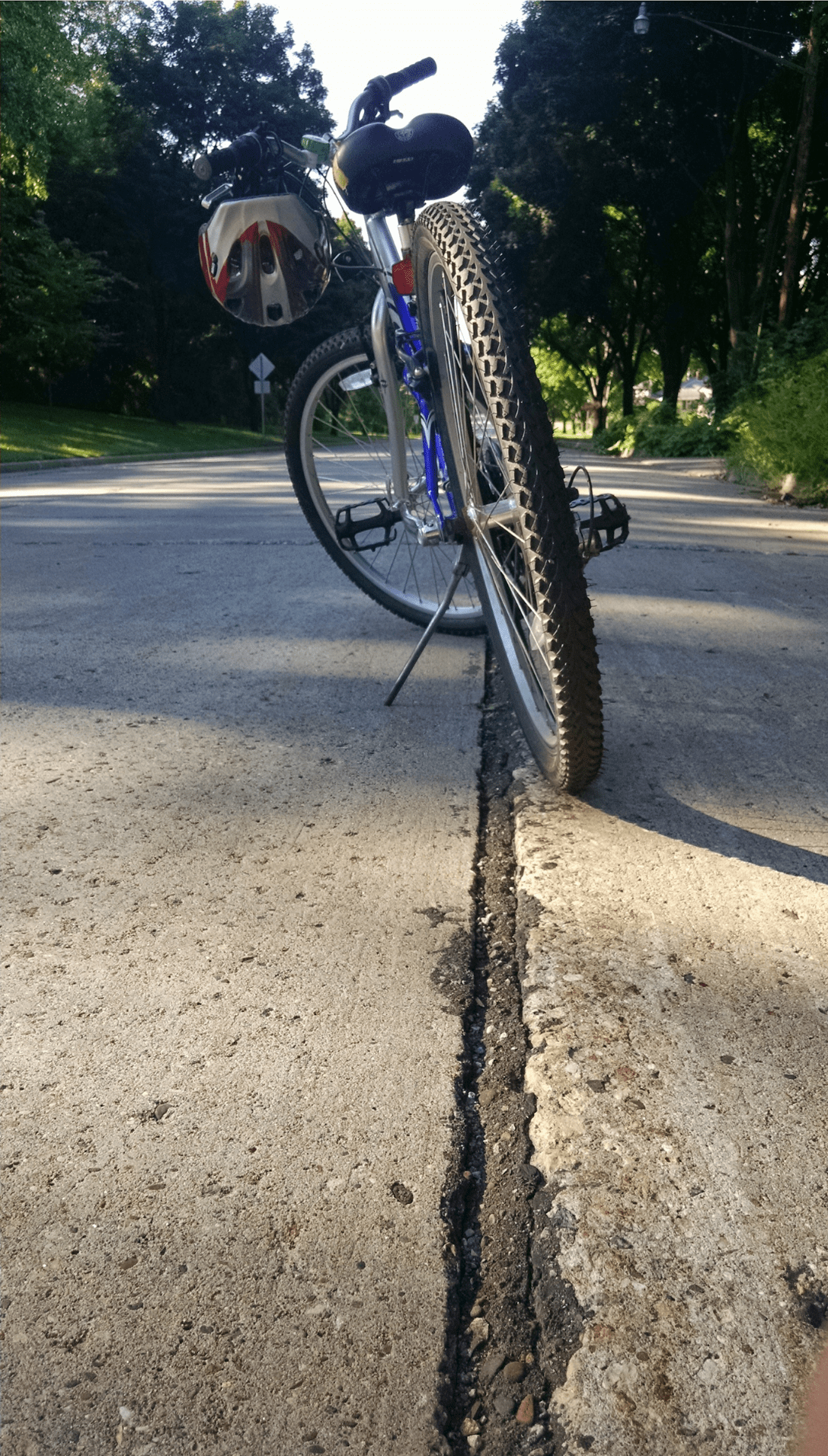
Your first instinct might be to put a human face on your city's pothole problem. But Ross points out that personalizing a photograph can distract left-brainy engineers from the simple technical problem they need to solve. This photograph makes the that issue crystal clear: this seam in the road is wide enough to grab this mountain bike tire. Better fill it.

However you photograph your pothole, don't keep it to yourself. Drop a pin so your streets department knows exactly where that sucker is. Follow your city's official process for reporting roadway hazards, yes, but then tag that councilperson of yours on Twitter, too. Don't be afraid of making noise and demanding the safe roadway you deserve.

And if you don't get a response, maybe steal a page from this hero's book and make yourself a sign: "The person who didn't fill this pothole is an asshole."

Stay in touch

Sign up for our free newsletter

More from Streetsblog USA

Agenda 2026: Will Zohran Mamdani’s Left-Progressive Backers Mobilize for Faster Buses?

New York's new mayor must mobilize the coalition that got him elected if he wants to avoid his recent predecessors' failure to speed up buses.

December 2, 2025

Opinion: One Less Lane Ought To Fix It

Federal inaction means states must lead on reducing emissions — but their reluctance to reallocate road space for cars may doom climate goals.

December 2, 2025

Tuesday’s Headlines Fight Fire With Fire

Berkeley, Calif., is far from the only city where the fire department dictates transportation policy.

December 2, 2025

Investigation: How Trump’s U.S. DOT Is Loosening Safety Rules Meant to Protect the Public

In Trump’s second term, the agency opened 50-percent fewer investigations into vehicle safety defects, concluded 83-percent fewer enforcement cases against trucking and bus companies and started 58-percent fewer pipeline enforcement cases compared with the same period in the Biden administration.

December 1, 2025

Monday’s Headlines Go Cold Turkey

Life is a highway, and Congress is going to ride it all night long.

December 1, 2025

OPINION: Where Cities are Investing, Vision Zero is Working 

As the Vision Zero Network turns 10, it's time to look at what works and what is achievable (a lot!).

November 28, 2025
See all posts