Advocacy Group: Stop Spending On New Roads
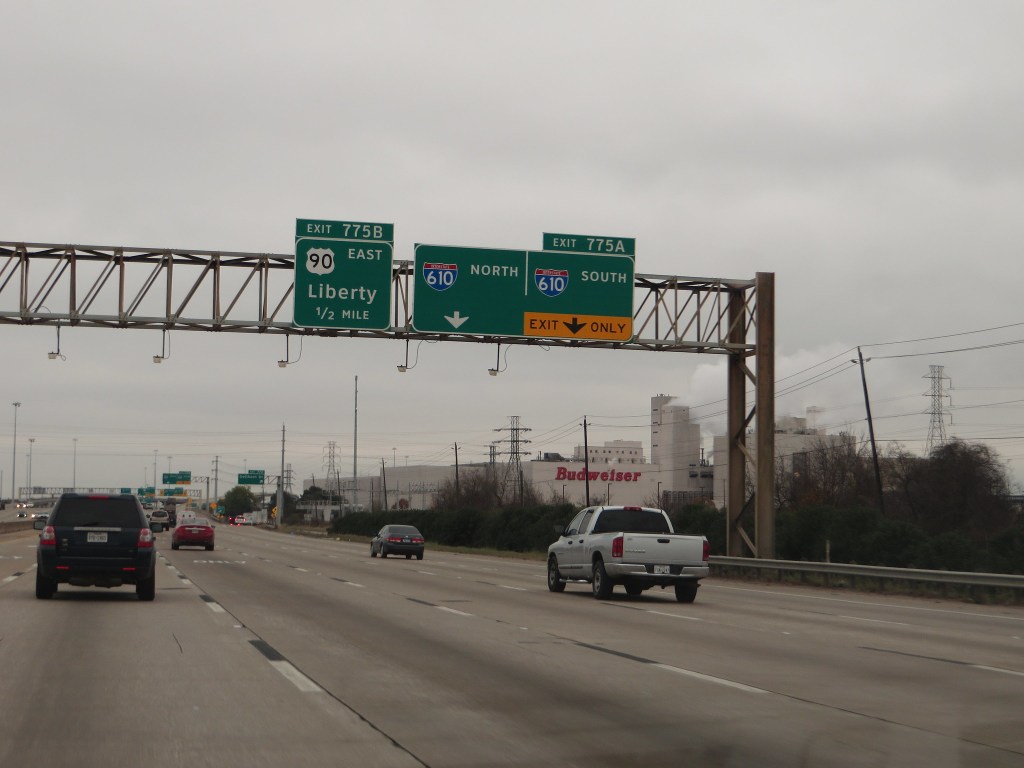
A major transportation-advocacy group is asking Congress to reallocate the roughly $40 billion a year it pours into new highways, bridges, and road projects that only to make Americans more dependent on their cars while stinting alternative modes of transit.
Breaking with transportation trade groups and other advocacy organizations, Transportation For America will no longer push Congress to increase federal funding for new roads; instead the Washington, D.C.-based, group will demand that federal transportation officials prioritize the maintenance of existing roads, street design that keeps pedestrians and other users safe, and a transit system that ensures people have access to good jobs and housing, it said in a manifesto released Monday.
“Putting more money into a cup with a giant hole in it is a fruitless endeavor and it is time for a reset,” T4A spokesman Stephen Davis told Streetsblog. “The era of money going up and up is over but now we need a vision about accomplishing as much as possible with what we have.”
The advocacy group, which includes planners, elected leaders, and government officials who work in transportation fields, gravitated to such fundamentals as maintenance, safety, and equity because they were both logical and measurable and because taxpayers want to know what they’re getting for their money.
“We feel like with these three principles get to what is most important about transportation in first place — taking long-term care about things we build and making sure safety is paramount in designing roads for safety,” Davis said. “I didn’t think you’d have to say moving people safely while alive from A to B needed to be said — but it does.”
In Transportation for America’s view, the federal government should dedicate its formula highway funding to cutting the country’s road maintenance backlog in half before paying for any new projects; that would take about six years.
Congress also should mandate that road designs put safety first, which may mean lowering speeds to 35 miles per hour and less on roads other than highways and interstates. And Congress should require the U.S. Department of Transportation to collect data in order to assess how Americans access housing and jobs — prioritizing transit funding in order to move people between work and home efficiently.
The group’s shift in public policy presents a stark contrast to the position of businesses, labor, and other transportation-friendly groups — which is that Congress must keep the highway trust fund solvent in order to pay for a growing list of infrastructure projects in every state.
The U.S. Chamber of Commerce and the AFL-CIO, among other groups, view a higher fuel tax as the most attractive option for the funding.
“We need Congress and the president to move past the current dysfunction and agree on federal legislation to modernize and fix our nation’s infrastructure,” the Chamber’s vice president of transportation and infrastructure Ed Mortimer told McClatchy.
But Transportation for America faulted that approach, saying that the country’s transportation goals haven’t been updated since the 1950s — when Congress authorized the construction of our interstate highway system, forcing cities and region to plan neighborhoods to accommodate vehicles instead of people.
“Nearly seven decades ago we set out with a clear purpose: connect our cities and rural areas and states with high-speed interstates and highways for cars and trucks and make travel all about speed,” wrote Beth Osborne, director of T4A’s transportation arm. “We moved from the exponential returns of building brand new connections where they didn’t exist to the diminishing, marginal returns of spending billions to add a new lane of road here and there, which promptly fills up with new traffic.”
Congressional leaders have been lukewarm about raising the gas tax; a massive shift in how the surface transportation bill would fund transportation is not on most lawmakers’ radar. But advocates say their principles are garnering bipartisan support in Washington.
“This should fly with anyone, and if there’s a more fundamentally conservative goal than preserving existing assets you spent money on, I don’t know what it is,” Davis said. “Keeping people alive while getting where they need to go should not be a partisan issue while improving access for people with the lowest cost should have a lot of buy-in no matter where you end on the political spectrum.”
Correction: An earlier version of this report misidentified Transportation For America.

Read More:
Streetsblog has migrated to a new comment system. New commenters can register directly in the comments section of any article. Returning commenters: your previous comments and display name have been preserved, but you'll need to reclaim your account by clicking "Forgot your password?" on the sign-in form, entering your email, and following the verification link to set a new password — this is required because passwords could not be carried over during the migration. For questions, contact tips@streetsblog.org.