Five Ways Trump Is Wrong On California Emissions
On the eve of the president’s visit to Los Angeles, the Trump administration revoked a waiver allowing California to set higher automobile emissions standards than the federal government.
California hoped to compel automakers to boost the average fuel economy standards for new vehicles to 54 miles per gallon by 2025 and reached an agreement in July with four automakers to increase gas mileage standards. But the White House drafted a plan rolling back Obama-era clean air regulations a year ago and freezing fuel economy standards after 2021 to only 37 miles per gallon, which even the automobile industry felt was too low.
Now the president is singling out the state by curtailing its ability to set stricter air pollution standards. Here’s why it’s a bad idea:
Pollution will get worse
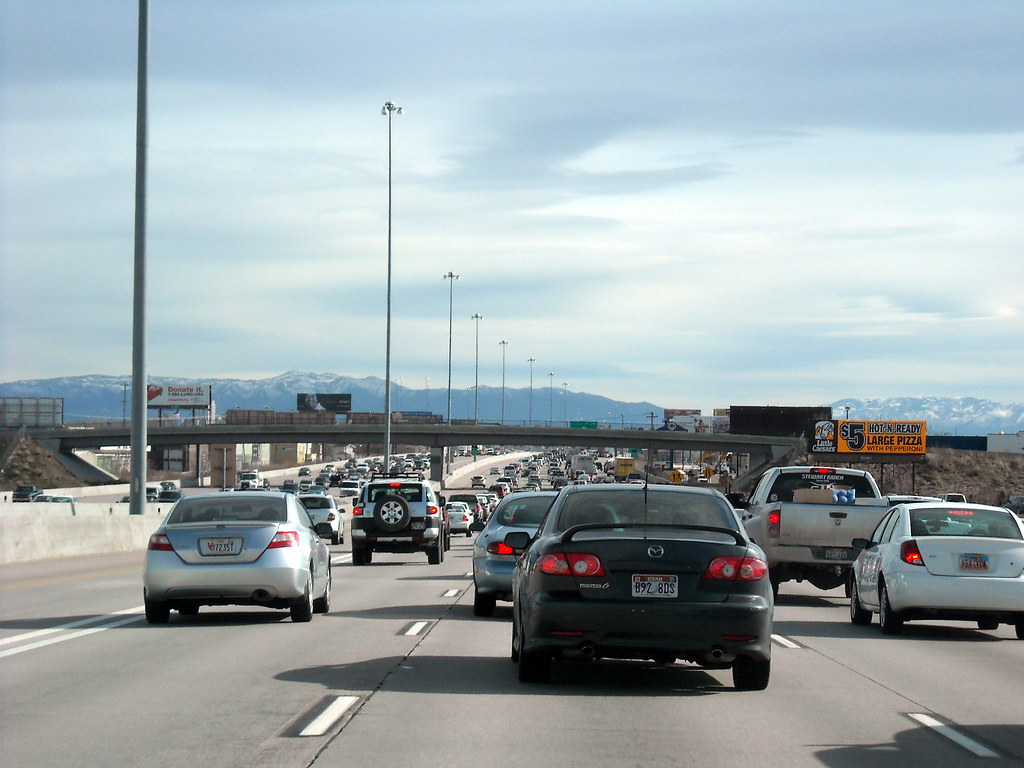
Transportation is one of the top sources of carbon dioxide pollution in the country — at 28 percent, it’s tied with power generation and in California it’s as high as 40 percent. Severely limiting tailpipe pollution is the most efficient way to cut emissions in one swoop, experts say.
“We need all the reasonable programs that we can get in place and this is one of the most reasonable and impactful across the board,” Obama’s EPA air chief Janet McCabe told Politico.
If Trump gets his way, an additional six billion tons of CO2 would be emitted back into the earth’s atmosphere.
Climate change is real
The president does not believe in climate change, but the earth is getting warmer regardless.
The earth experienced the hottest July ever recorded, according to National Oceanic and Atmospheric Administration scientists. The warming temperatures are melting both ice caps, reducing the Arctic sea ice 19.8 percent below average and shrinking the Antarctic sea ice 4.3 percent below average, making it the smallest in July in the past 41 years.
Sea levels are rising around the world, and California alone could experience a surge of nine feet by the end of the century. If you’re a billionaire cruising around the sweltering planet in an air conditioned private jet and a stretch-Cadillac limo containing a fridge stocked with your own blood type, it may not matter so much, but to the rest of us it’s been pretty uncomfortable.
It’s a bad move from a legal perspective
The Trump administration is arguing that California does not have the right to set its own environmental standards and influence other states.
“We embrace federalism and the role of the states, but federalism does not mean that one state can dictate standards for the nation,” EPA Administrator Andrew Wheeler said Tuesday.
But removing California’s emissions waiver destroys 50 years of legal precedent. California’s role in leading the nation’s fuel economy standards came from the 1970 Clean Air Act, the landmark federal legislation that limited air pollution in an era when smog clogged city horizons. The Trump administration has rolled back 85 environmental rules, although some efforts stalled because staffers have not prepared the legal and scientific justifications for a change.
Their anti-federalist argument will soon be severely tested now that the Environmental Defense Fund and California Attorney General and Xavier Becerra threatened lawsuits.
“You have no basis and no authority to pull this waiver,” Becerra said in a statement. We’re ready to fight for a future that you seem unable to comprehend; we’ll see you in court if you stand in our way.”
Two markets for cars
If the Trump administration loses the inevitable Supreme Court challenge, the nation would essentially get two markets for automobile manufacturers: states like California and 13 others that want strict rules and states that choose the more relaxed federal standards.
Trump’s emissions meddling spurred 17 automakers to co-sign a letter in June asking the president to abandon his rollback, and a month later, California had reached an agreement with Ford, Volkswagen, BMW and Honda to boost their new fleets’ fuel economy to nearly 50 miles per gallon by 2026.
“The framework provides regulatory stability, greater environmental benefits and reduced compliance costs,” Honda said in a statement. “As a leader in producing efficient, low and zero-emission vehicles, Honda believes this is a win for our customers and for the environment.”
It won’t help the economy
Trump has argued that the emissions standards are holding back the economy because they’re making cars too expensive. But auto sales have been sliding for other reasons. Interest rates on auto loans have crept upwards, new cars are lasting longer on the road than older ones, millennials are buying fewer cars than their parents because they’re congregating in cities where transit is more accessible.
Cleaner cars could also give prospective buyers an incentive to swap out their polluting jalopy for a hybrid or electric vehicle, if they have to purchase a car in the first place.
Then again, we’re probably heading toward a recession, so we might as well breathe a little easier.

Read More:
Streetsblog has migrated to a new comment system. New commenters can register directly in the comments section of any article. Returning commenters: your previous comments and display name have been preserved, but you'll need to reclaim your account by clicking "Forgot your password?" on the sign-in form, entering your email, and following the verification link to set a new password — this is required because passwords could not be carried over during the migration. For questions, contact tips@streetsblog.org.