Arizona Defends Deadly Highway Instead of Fixing It
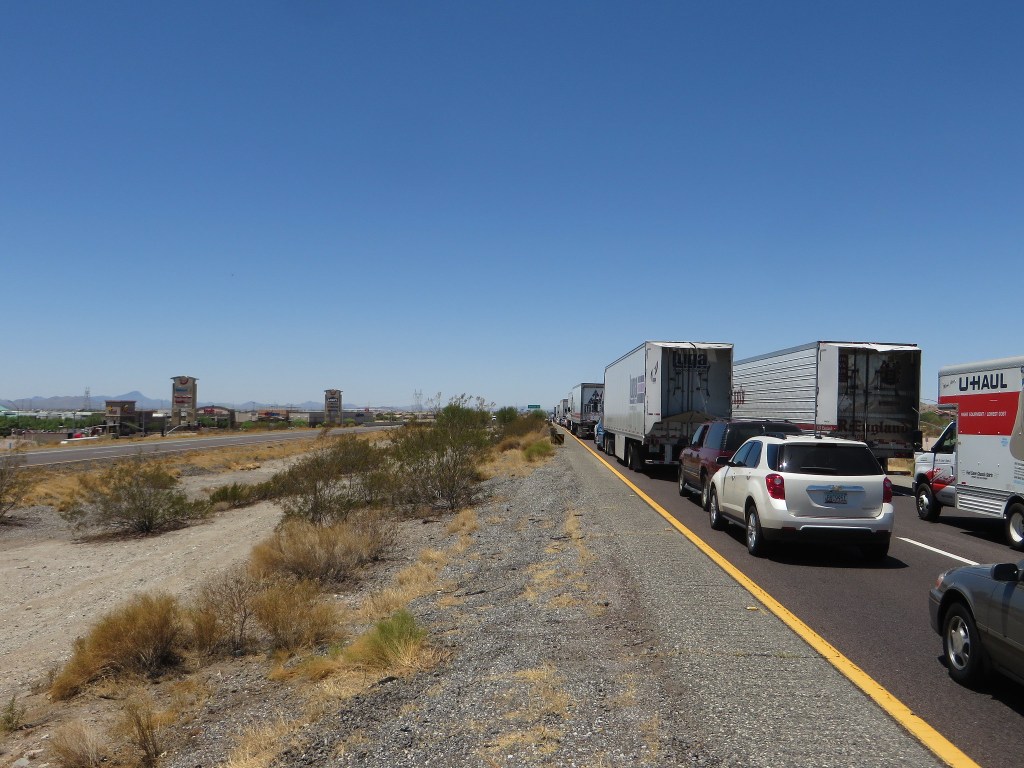
An Arizona highway has been rated one of the most dangerous roads in the country — but local officials are more upset at the bad press than the deadly roadway!
A security company wanted to determine which are the worst roads for summer driving — and its analysis of federal highway traffic data revealed that the Arizona portion of Interstate 10 had 100 traffic fatalities in the May-to-September periods between 2015 and 2017 — twice as high as the next-deadliest roadway in the state, I-40. The Arizona portion of the Jacksonville to Santa Monica freeway was one of the 11 most-dangerous strips, according to A Secure Life‘s analysis.
The study’s authors told the Arizona Republic they wanted to raise awareness about the risks of summer travel, when millions of Americans hit the road for vacations. But transportation officials in the Grand Canyon State slammed the study for only considering roadway fatalities instead of the drivers who may bear responsibility for a crash.
“It misses the point by focusing on the highway itself, instead of the behavior of the people who drive on it,” Arizona Department of Transportation spokesman Steve Elliot told the Arizona Daily Star. “I would add that driver behavior is far and away the leading factor in highway crashes.”
Arizona Department of Public Safety spokesman Bart Graves told KTAR News that 94 percent of traffic deaths and injuries on state and federal highways involved “driver error.”
“People who have been on the road too long, don’t have enough sleep, their reaction time is greatly slowed,” Graves said.
Elliot defended the I-10 for being “designed to meet exacting safety standards” and chided the report for overlooking other factors that could measure safety.
“Fatalities alone really shouldn’t be the sole indicator of a highway’s safety performance,” he added. “It would also be valuable to examine all types of crashes, whether it’s a minor fender bender or a severe injury or fatal collision.”
Speed, lack of lighting, and lane size should also certainly be considered.
The transcontinental interstate is Arizona’s longest and busiest highway, connecting Phoenix and Tucson along its 2,460-mile length.
The speed limit in Arizona rises as high as 75 miles per hour and a portion of the freeway in Tempe is 12 lanes wide. Speed accounted for 26 percent of all traffic deaths on American roadways, according to the National Highway Traffic Safety Administration.
Researchers at ValuePenguin named the entire I-10 the fourth deadliest in the nation based on the highway’s 54.5 fatal crashes per 100 miles of road. They also ranked the I-10 as second darkest highway in the country, and fourth in the drunk driver category.
The interstate has also repeatedly been ranked one of the most dangerous in the country in several studies, including ValuePenguin which analyzed National Highway Traffic Safety Administration fatality stats from 2011 through 2015.
Even more drivers could experience the anxiety of speeding through the I-10, as the state proceed with plans to widen stretches of the highway between Phoenix and Tucson to six lanes thanks to a $54-million federal grant.

Read More:
Streetsblog has migrated to a new comment system. New commenters can register directly in the comments section of any article. Returning commenters: your previous comments and display name have been preserved, but you'll need to reclaim your account by clicking "Forgot your password?" on the sign-in form, entering your email, and following the verification link to set a new password — this is required because passwords could not be carried over during the migration. For questions, contact tips@streetsblog.org.