Traffic Study Comes Under Fire for Being Too ‘Pro-Car’
A landmark report that analyzes traffic congestion and its costs is coming under fire from transportation experts who say its methodology and findings are biased toward cars.
The Urban Mobility Report “is a throwback to an earlier age” that “reflects an outdated transport planning paradigm which assumed that ‘transportation’ means automobile travel and ‘transportation problem’ means traffic delay,” wrote Todd Litman of the Victoria Transport Policy Institute, a Canadian organization.
This pro-car bias, according to Litman, means that the UMR, published by the Texas A&M Transportation Institute, promotes highway expansion at the expense of other transportation solutions. The latest iteration of the UMR was published in August.
“Since planning decisions often involve trade-offs between congestion reductions and other objectives, these practices tend to overvalue roadway expansions and undervalue other congestion-reduction strategies, resulting in a transport system that is more automobile-dependent, costly, dangerous and polluting than residents want,” Litman wrote.
Moreover, because decision-makers and journalists around the country depend on the UMR as a baseline for their analyses, the report’s pro-car biases “can skew planning decisions to underinvest in other goals such as safety, affordability or independent mobility for non-drivers,” Litman argued.
Litman and others, such as Bruce Schaller in CityLab, Daniel Herriges in Strong Towns, Joe Cortright in City Observatory, and David Alpert of Greater Greater Washington, criticized the UMR for overestimating the cost of congestion, omitting the effects of “induced demand” (i.e., how highways incentivize people to drive on them), and ignoring commuters who don’t rely on automobiles to get to work.
UMR’s authors defended their conclusions.
“Almost every solution strategy works somewhere in some situation and almost every strategy is the wrong treatment in some places and times,” the study’s authors, Tim Lomax, David Schrank, Bill Eisele, write in the 2019 Urban Mobility Report. “Anyone who tells you there is a single solution that can solve congestion, be supported and implemented everywhere (or even in most locations) is exaggerating the effect of their idea.”
Whatever the controversy, the mainstream media jumped at the report’s finding, such as that the average driver sat in traffic for 54 hours in 2017 — a 26 percent rise over the past 10 years — while commuters in the 15 most congested cities sat behind their wheels for 83 extra hours that year.
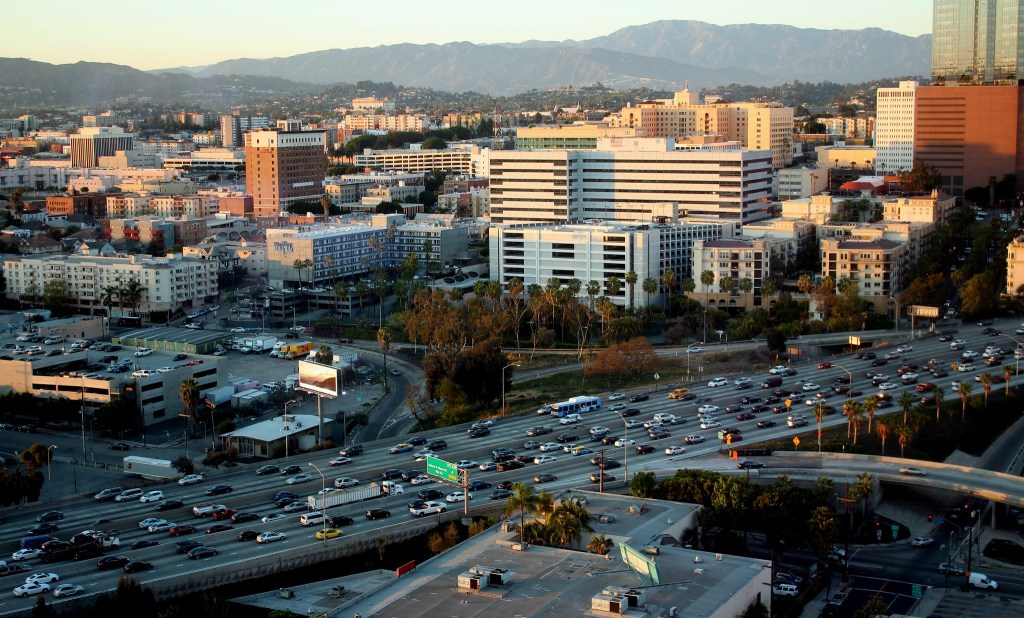
The report’s ranking of major cities’ congestion woes also received attention. Traffic-plagued Los Angeles topped their list with the country’s worst rush-hour commuter delays in 2017 with drivers frittering away 119 hours in gridlock; followed by San Francisco-Oakland with 103 hours; Washington, D.C., (102 hours); greater New York (92 hours), and San Jose (81 hours).
Yet even those figures are flawed. It ranked compact, transit-friendly cities like Boston, New York, and Washington, D.C., as having worst congestion than sprawling, car-dependent metropolises like Atlanta, Houston, and Miami, even though drivers might spend less time in bumper-to-bumper traffic but more hours speeding down endless freeways for their commute.
Schaller argues in City Lab that commuters are not actually spending more time getting to work because jobs are coming to suburbs where people live. According to Census data he analyzed, average commutes have grown over the past decade by less than 10 percent, with most travel times only one or two minutes longer. Schaller recommends building denser cities, with work concentrated in downtown commercial districts and new housing built nearby.
So what is there to take away from a misleading traffic study?
The authors do recommend some progressive policy solutions, such as making public transit systems more efficient, staggering commuting times, and encouraging mixed-use development in neighborhoods to make them more walkable.
But many of their recommendations, such as programming traffic signals to give motorists a string of green lights, fielding more Artificial Intelligence-driven cars, and widening streets and highways, will get a thumbs-down from safe-streets activists.

Read More:
Streetsblog has migrated to a new comment system. New commenters can register directly in the comments section of any article. Returning commenters: your previous comments and display name have been preserved, but you'll need to reclaim your account by clicking "Forgot your password?" on the sign-in form, entering your email, and following the verification link to set a new password — this is required because passwords could not be carried over during the migration. For questions, contact tips@streetsblog.org.