The Magic of Red Painted Bus Lanes
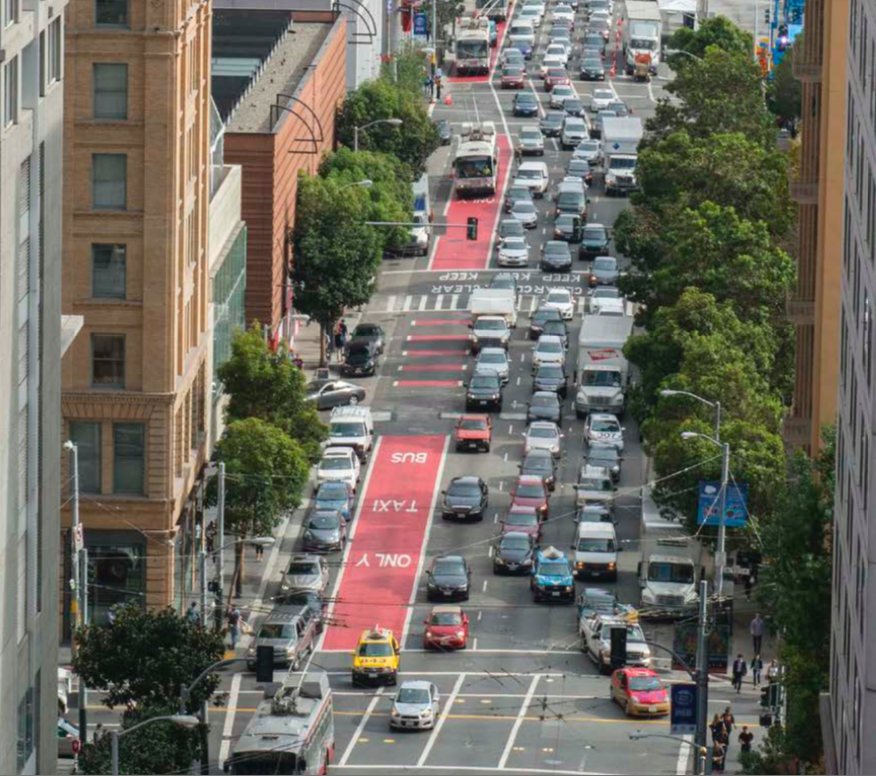
Drivers may be seeing red, but bus drivers are seeing only green.
Washington, D.C.’s new red-painted bus-only lanes on H and I streets downtown appear to be a success just one week in, with buses are moving faster, and most drivers are following the rules and staying out of their way, according to a quick, early analysis by Greater Greater Washington.
This latest bus lane experiment stands in contrast to the city’s earlier experiments with bus only lanes, says the site’s Dan Malouff:
Unlike other D.C. attempts at striping bus lanes on Seventh Street and Rhode Island Avenue, which did not feature red pavement and which many car drivers completely ignored (if they knew bus lane restrictions existed at all), drivers are mostly staying out of the H and I lanes. With bright red pavement, there can be no excuses, no believable claims from drivers that “I didn’t know” or “I didn’t see it.”
For such a simple thing, the red is incredibly effective.
Taxis, trucks and Ubers parking in D.C.’s new bus lanes has been a little bit of a problem. But Malouff reports the red paint sent such a strong message, drivers didn’t seem to understand that the city is allowing them to park in the red lanes at off peak hours.
Things could change as time goes on in the nation’s capital, but red paint has been a surprisingly effective tool in other regions as well.
San Francisco’s SFMTA found [PDF] bus lane violations on Third Street fell 51 percent after the lane was painted red. Among a series of interventions to prevent driving or parking in the bus lanes, SFMTA’s analysis found red paint was the most effective.
“Red bus lanes are especially important as a transit priority tool because they don’t cost a lot and can be implemented very quickly,” Ben Fried, a spokesman for Transit Center, told Streetsblog.
Since they were installed in Baltimore in 2017, the city’s transit agency MTA says they have improved travel times on nearly all routes. The city amended its laws to impose a $250 fine for parking in them. But enforcement is still an issue, according to the Baltimore Sun, despite Baltimore police issuing 1,700 citations and 500 warnings.
Despite their effectiveness red bus lanes are still in use in only a handful of U.S. cities.
Even though the Third Street red bus lanes have been so effective in San Francisco, improving not just bus travel times but also safety, the city has struggled to expand them. Residents of the Mission neighborhood have successfully fought to against plans for red bus lanes on 16th Street.
Another barrier, unfortunately, is federal policy.
“The [Federal Highway Administration] still considers them ‘experimental’ despite the fact that American cities have used them for more than a decade,” said Fried. “That creates completely unnecessary red tape, adding time and cost to what should be inexpensive transit improvements. FHWA should remove the ‘experimental’ designation to expedite these projects.”

Read More:
Streetsblog has migrated to a new comment system. New commenters can register directly in the comments section of any article. Returning commenters: your previous comments and display name have been preserved, but you'll need to reclaim your account by clicking "Forgot your password?" on the sign-in form, entering your email, and following the verification link to set a new password — this is required because passwords could not be carried over during the migration. For questions, contact tips@streetsblog.org.