Opinion: Too-Fast Riders Could Be The Downfall of E-Bike Culture
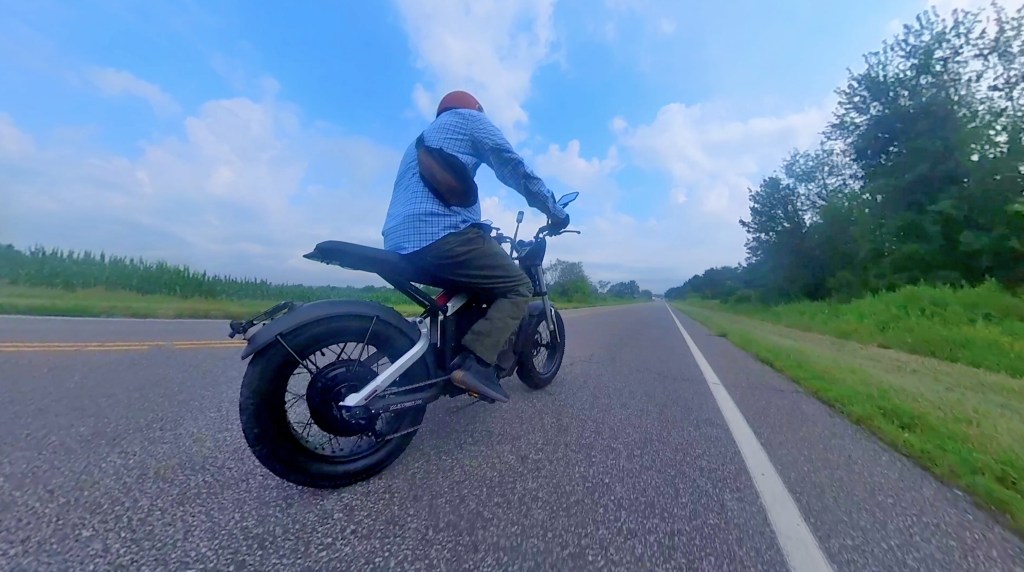
Editor’s note: The following article concerns what bike industry leaders call “out of class” e-bikes, which are capable of speeds in excess of 28 miles per hour and are designed to be ridden on local roads alongside car traffic. They are typically barred from entering bike paths or mixed-use trails by communities that legally recognize only three “classes” of low-speed, pedal-assist devices, and use those classes to regulate where e-bikes of each class can legally ride. Visit People for Bikes to learn more about their advocacy to get more states to adopt this e-bike classification system.
Opinion pieces do not necessarily reflect the views of Streetsblog USA.
When I first got into e-bikes during the early days of the pandemic, it felt like we had discovered a new form of freedom. The streets were empty, the skies were clear, and for the first time in a long time, people had room to breathe. Riding was peaceful, even healing. No traffic, no smog, no noise — just the sound of tires on pavement and the wind on your face.
Back then, group rides were slow, respectful, and almost meditative. We weren’t out there trying to prove anything. We were just trying to feel something again in the middle of a world that was falling apart.
But that moment didn’t last. As people grew more comfortable with e-bikes, something started to change. Riders began tinkering with their bikes, pushing the limits of what was possible. It wasn’t long before conversations turned from “Where should we ride today?” to “How fast can we make this thing go?” Battery upgrades, controller swaps, torque monster builds — suddenly it was all about speed and power.
People were hungry for more, and companies like Powerful Lithium and Chi Battery Systems were happy to feed that hunger. You could take a standard commuter bike and turn it into a silent speed demon.
And then came the stunts. Enter a YouTuber named Sur Ronster — one of the first to really showcase aggressive e-bike riding on camera. He wheelied through city streets, ran with huge groups, and became a symbol for this new, wild side of the culture. And like clockwork, kids followed him. No safety gear, no experience — just wheelies and views.
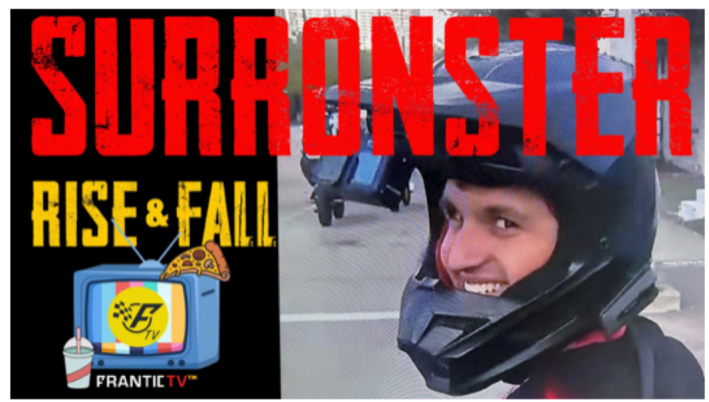
That’s when everything really started to spiral. Mega rides exploded in popularity — massive, unsanctioned group rides filled with high-speed antics, stunts, and chaos. For a while, they felt like they were untouchable. But deep down, everyone knew it was only a matter of time before the public — and law enforcement — pushed back.
And they did.
I’ve talked to cops who told me point-blank: “Before the stunts, we didn’t care. Now we do.” They used to turn a blind eye to e-bikes. But after the complaints, the crashes, and the chaos, that all changed. Today, they treat e-bikes like unregistered motorcycles. No plate? No mercy. It doesn’t matter if you’re riding responsibly—if your bike looks fast, you’re a target.
What we once saw as freedom is now criminalized. And it didn’t have to be this way.
Now, we’re seeing the industry respond with new regulations. Manufacturers are dialing back power to comply with laws. Riders, of course, are pushing back, because nobody wants to go slower. But the truth is, we need this reset. We pushed too far, too fast.
Personally, I don’t need to go 60 mph to feel alive. I ride my Segway Xyber to my doctor’s appointments, cruise at 25 to 35 mph on local roads, leaving the bike path to slower-speed e-bikes. I love it. It’s fast enough. It’s safe. It gets me there. That’s all I need.
But too many people got caught up in the chase. The need to be faster. The need to be viral. And in that race, we lost control of the narrative. We attracted the wrong attention, the wrong energy, and in some cases, the wrong people. And now, everyone’s paying the price. Responsible riders. New riders. Parents. Kids. All of us.
I’ve spent the last five years documenting this community for Frantic TV. I’ve seen the beauty and the bullshit. I know how much potential we have as a movement — but I also know we can’t move forward if we’re stuck in a stunt-loop for views and clout.
It’s time we get back to the root of why we started riding in the first place. The peace. The joy. The independence. We can still have that. But we need to slow down, ride smarter, and stop pretending like chaos is culture.
If we want to preserve this freedom, we have to evolve. Otherwise, e-bike culture won’t just fall — it’ll crash and burn.

Read More:
Streetsblog has migrated to a new comment system. New commenters can register directly in the comments section of any article. Returning commenters: your previous comments and display name have been preserved, but you'll need to reclaim your account by clicking "Forgot your password?" on the sign-in form, entering your email, and following the verification link to set a new password — this is required because passwords could not be carried over during the migration. For questions, contact tips@streetsblog.org.