Monday’s Headlines
Uber filed paperwork for its long-awaited initial public stock offering. Despite the company’s claims that it complements transit, the IPO reveals what we’ve suspected all along: It’s competing with public transportation. The goal is to operate at a loss until it achieves dominance, then jack up prices. (Jalopnik) More on the Uber IPO: The company … Continued
By
Blake Aued
12:01 AM EDT on April 15, 2019
- Uber filed paperwork for its long-awaited initial public stock offering. Despite the company’s claims that it complements transit, the IPO reveals what we’ve suspected all along: It’s competing with public transportation. The goal is to operate at a loss until it achieves dominance, then jack up prices. (Jalopnik)
- More on the Uber IPO: The company lost $1.8 billion on $11.3 billion in revenue last year, and growth is beginning to slow (NY Times). That’s less of a loss than in 2017, but revenue growth also fell by half (Wired). Its biggest vulnerability may be that a quarter of its rides came from just five cities: New York, San Francisco, Los Angeles, London and Sao Paulo (Slate). The losses make Uber seem like an essential service investors want to exist, rather than a typical business that’s forced to turn a profit, says City Lab. Some of those losses are self-inflicted, for example spending nearly half a billion on pie-in-the-sky autonomous- and flying-car research (Tech Crunch).
- Meanwhile, competitor Lyft is partnering with a nonprofit to invest $50 million in parks and transit. (Curbed)
- Lyft-owned Citi Bike, Capital Bike Share and the Bay Area’s Go-Bike had to ground their entire e-bike fleets because of a front brake problem, a story broken by our StreetsblogNYC colleagues.
- Las Vegas officials have opted for bus rapid transit over light rail for a transit line from downtown along the Strip to the airport, mainly because it’s only a third of the cost. However, the vast majority of citizens who commented on the project preferred rail. (Nevada Current)
- Although Kansas City missed out on a federal grant to extend its streetcar this year, officials are hopeful they’ll get ’em next time. (Star)
- Honolulu will also have to wait another year for federal funding for a light-rail line. (Civil Beat)
- After a successful pilot program, San Francisco is considering doubling the number of e-scooters allowed in the city. (Chronicle)
- Missouri is one of just two states that hasn’t fully banned texting while driving, but that could change soon. (KROG)
- A bill to let Seattle install cameras to catch drivers blocking intersections and bike lanes has a second life. (KIRO)
- An SUV driver who ran over two pedestrians has residents in Washington’s Tri-Cities area talking about how streets are designed for drivers’ convenience. (KEPR)
- A Washington, D.C. elementary school has a new “traffic park” where kids can ride bikes and play on miniature city streets. (WAMU)

Blake Aued has been doing Streetsblog's daily national news digest for years. He's also an Atlanta Braves fan, which enrages his editor in New York.
Read More:
Streetsblog has migrated to a new comment system. New commenters can register directly in the comments section of any article. Returning commenters: your previous comments and display name have been preserved, but you'll need to reclaim your account by clicking "Forgot your password?" on the sign-in form, entering your email, and following the verification link to set a new password — this is required because passwords could not be carried over during the migration. For questions, contact tips@streetsblog.org.
More from Streetsblog USA
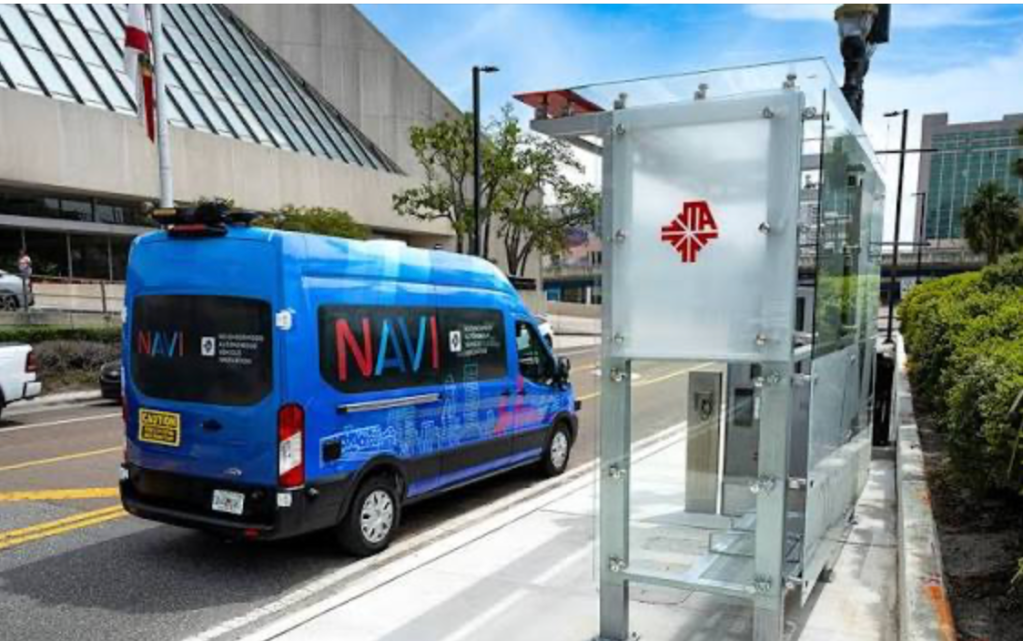
Is America’s ‘First Autonomous Transit System’ Really Dead?
And what should Jacksonville teach us all about the role of technology in our transit future?

October 13, 2026
Inducing Demand for Tuesday’s Headlines
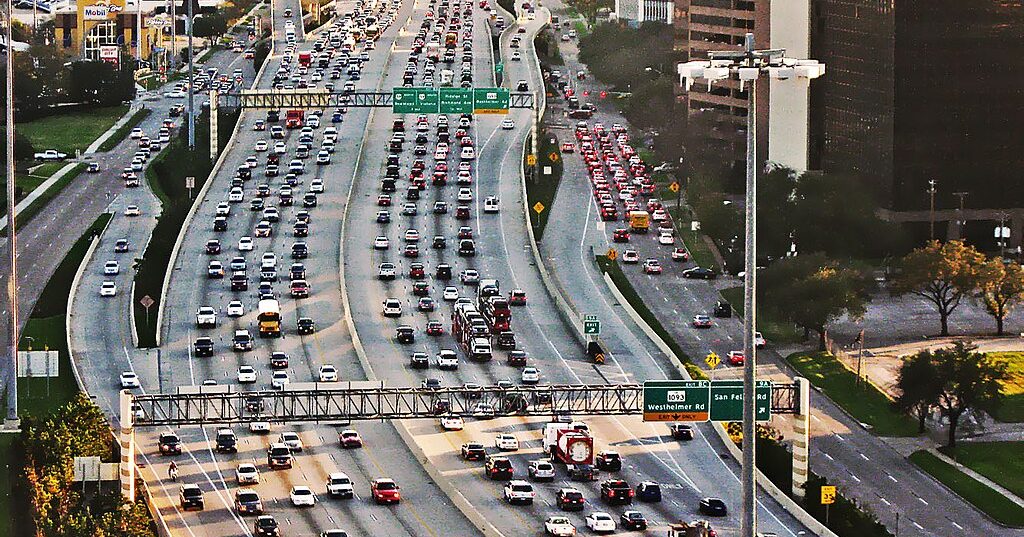
Just more one more lane, bro. I promise, one more lane will fix it.
October 13, 2026
Monday’s Headlines Take Matters Into Our Own Hands
Our editor-at-large Gersh Kuntzman isn't the only one getting up to criminal mischief.
October 12, 2026

Inside Baseball: Kuntzman To Step Down At Streetsblog; David Meyer To Take Over
Streetsblog's longtime editor will take on new challenges. And so will his successor.

October 9, 2026

Friday Video(s): Two Urban Cycling Trips Worth Taking
Choose your own urban cycling adventure: domestic or international edition.

October 9, 2026