Baton Rouge Advocates Look to Tear Down Institutional Barriers to Safe Streets
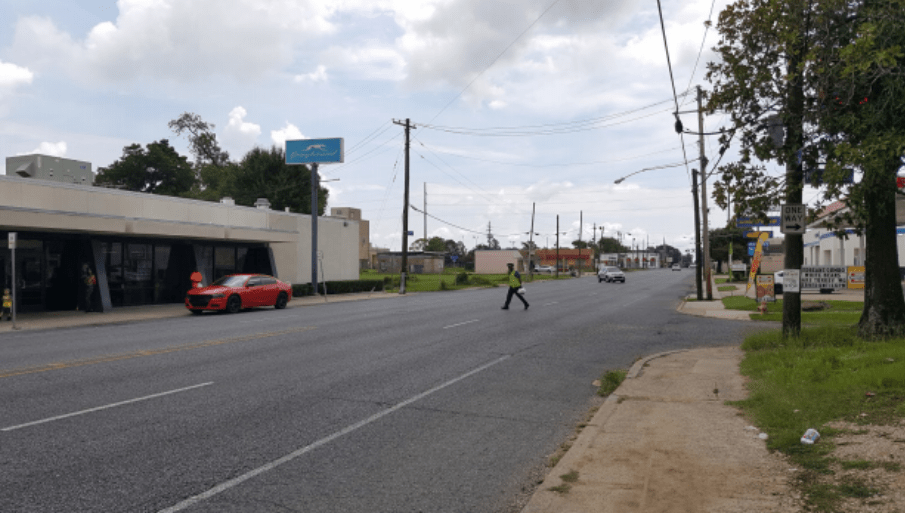
Some places make it harder to change car-centric streets than others, and one city where it’s especially tough to implement safety improvements for walking and biking is Baton Rouge, Louisiana. Now the advocates at Bike Baton Rouge have mapped out a strategy to change that.
Baton Rouge is one of the most dangerous places to walk in the United States. Among cities with at least 200,000 residents, it ranks fourth in pedestrian deaths per capita, according to an analysis by USA Today and the Detroit Free Press. Statewide, Louisiana is also the second-deadliest for cycling, reports Governing magazine.
Baton Rouge officials are finally starting to redesign streets to calm car traffic, improve pedestrian safety, and provide dedicated space for cycling. But the task is much harder than it should be due to institutional barriers to change, according to a new report from Bike Baton Rouge.
Some of these hurdles are embedded in city code or traffic engineering manuals and apply to almost any city. Others are specific to Baton Rouge. They all contribute to a system where wide, fast roads are the norm, and any attempt to reduce the human toll of dangerous streets faces long odds.
Here are the barriers that Bike Baton Rouge identified.
1. Wide traffic lanes are the standard
Louisiana’s state design guidelines specify that general traffic lanes should be 12 feet wide — which might make sense on highways but is simply unsafe for urban streets where lots of people are walking. Wide lanes encourage drivers to go fast, leading to more crashes and more severe traffic injuries. Recent research has shown that lane widths between 10 and 10.5 feet wide minimize crash rates.
2. Requiring supermajority neighborhood approval
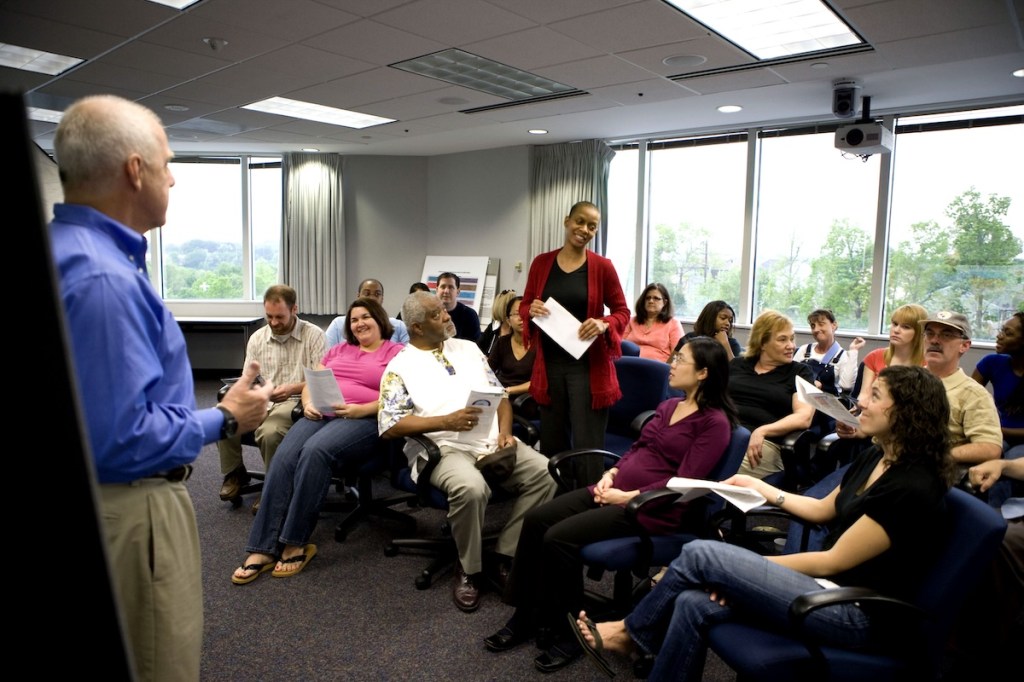
Like many cities, Baton Rogue has a complicated, hyper-local approval system for street safety changes. Street widenings were never subject to these veto points, but now that officials want to make walking and biking a higher priority they have to get through them.
The process is extremely tilted toward preserving the status quo in East Baton Rouge, the county (technically a “parish”) that includes the city of Baton Rouge. To move forward with a redesign, 65 percent of all property owners on the street must vote in favor of the change. The barrier is even higher because East Baton Rouge counts a property owner who doesn’t vote as a “no” instead of simply tallying “yes” votes as a percentage of the total votes cast.
In some cases projects have been overturned via this process even when it’s obvious they have public support. A 2015, the Goodwood Property Owners Association voted 327-208 in favor of a traffic-calming project. But because non-voting property owners counted in the “no” column, the measure failed.
Bike Baton Rouge says a simple 50 percent-plus-one majority of all votes cast ought to be sufficient to approve a project.
3. Setting speed limits by the “85th percentile rule”
Speed kills. The faster a driver is traveling, the less time they have to react, and the more severe the impact of a collision will be.
But an engineering rule-of-thumb called the “85th-percentile rule” works against policies that get drivers to travel at safe speeds, even on streets with lots of pedestrians. The rule holds that speed limits should be set so that 85 percent of drivers travel under the limit. The practical effect of the rule is that streets are designed and managed to accommodate drivers who travel at dangerous speeds, not to maximize public safety.
A 2017 report from the National Transportation Safety Board [PDF] said the 85th percentile “may not be valid” as practiced because it can “lead to higher operating speeds …and reduced safety.”
4. Crosswalk “warrant” rules are pseudoscientific garbage
Other guidelines that traffic engineers rely on all over the United States also reinforce dangerous conditions for walking. Developed during the heyday of the Interstate highway era, they continue to hold sway over the design of city streets to this day.
Crosswalk “warrants” are one of the best examples. The Manual on Uniform Traffic Control Devices, one of the nation’s most influential engineering guides, says a signalized crosswalk isn’t warranted unless at least 93 pedestrians are crossing at that location every hour, or five people are struck by cars at that location in a year.
Louisiana uses the same guidelines. But as Bike Baton Rouge points out, “if a crosswalk does not exist, then pedestrians will not cross the road (or will cross it at other locations and not be counted).”
Citing these pseudoscientific rules, engineers often deliver a “technical brushoff” — ignoring residents who demand street safety improvements by hiding behind technical jargon.

Read More:
Streetsblog has migrated to a new comment system. New commenters can register directly in the comments section of any article. Returning commenters: your previous comments and display name have been preserved, but you'll need to reclaim your account by clicking "Forgot your password?" on the sign-in form, entering your email, and following the verification link to set a new password — this is required because passwords could not be carried over during the migration. For questions, contact tips@streetsblog.org.