Fed Up With an Apathetic City Hall, Phoenix Complete Streets Volunteers Resign En Masse
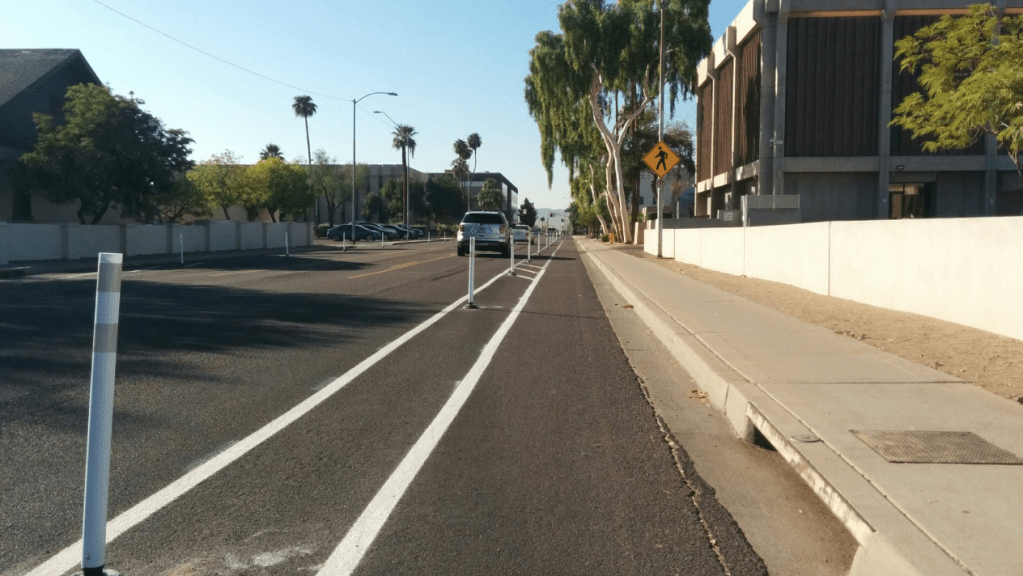
Seven members of Phoenix’s Complete Streets Advisory Board resigned in disgust this week, frustrated by the lack of action from city officials to make streets safer for walking and biking.
The 11-member committee was charged with developing implementation guidelines for the city’s complete streets policy, which passed in 2014. After the mass resignation, only two people remain on the committee.
Under Mayor Greg Stanton, the city has not made significant progress redesigning streets with pedestrian and cyclist safety in mind. Drivers have killed about 300 people walking on Phoenix’s streets since the complete streets policy was adopted, with Stanton and the City Council displaying a complete lack of urgency to address the problem, the resigning members say.
The advisory board spent three-and-a-half years developing new street design policies for the city, drawing from the National Association of City Transportation Officials’ Urban Street Design Guide. They worked alongside city officials and representatives from private developers, as well as holding public forums.
But for more than a year, various city authorities refused to approve the recommendations.
Advisory board member Connor Descheemaker petitioned the City Council in April to compel a vote. Instead, council members punted the decision over to entities lower down the totem pole, including the council’s Transportation and Infrastructure Subcommittee, which itself delayed a vote until at least August.
In their open letter to Stanton and the City Council [PDF], the resigning advisory members say they’ve lost confidence in the city:
Your passage of the Complete Streets ordinance in 2014 and policy in 2017 gave the appearance of progress and made for good headlines. But, as acutely stated in a CSAB meeting (April 2016) by the Planning Department’s liaison, “the policy cannot be implemented without design guidelines.” So here we sit with an ordinance and a policy that do us no good without design guidelines, and those design guidelines are not seeing enough support from those we most need support from.
The city’s Street Transportation Department was a significant barrier, proposing a series of alterations to the street design guidelines that watered them down until they were meaningless, say advisory board members. Their letter cites public records that show the department even tried to have the advisory board disbanded last year.

Read More:
Streetsblog has migrated to a new comment system. New commenters can register directly in the comments section of any article. Returning commenters: your previous comments and display name have been preserved, but you'll need to reclaim your account by clicking "Forgot your password?" on the sign-in form, entering your email, and following the verification link to set a new password — this is required because passwords could not be carried over during the migration. For questions, contact tips@streetsblog.org.