Boston Advocates Show How the Law Lets Drivers Get Away With Killing Cyclists
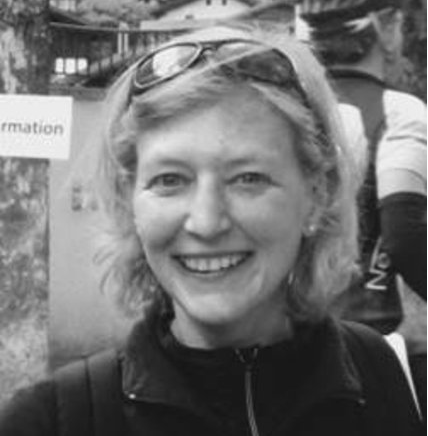
On the morning of August 7, 2015, Matthew Levari drove a semi-truck across the path of Anita Kurmann, who was riding straight ahead on Massachusetts Avenue in Boston’s Back Bay.
Kurmann, a well-known endocrinologist and medical researcher, died at the scene.
Levari did not stop and did not notify the authorities. He was located by police that night.
Despite the evidence that Kurmann was doing nothing wrong, and that Levari caused the collision, police and prosecutors in Boston refused to bring charges.
Jake Wark, a spokesman for Suffolk County District Attorney Dan Conley, told the Boston Globe that because the driver wasn’t drinking, speeding, or distracted, and didn’t “disregard” a “known risk,” they could not charge him.
In many cases, the exact circumstances of a fatal crash are difficult to pin down because the victim can’t tell her story. But in this case, there is clear video footage of the collision and the moments that preceded it. The Massachusetts Bicycle Coalition put together the following video to demonstrate that Levari should have known not to turn across Kurmann’s path.
Warning: This video contains upsetting footage of a fatal crash, proceed with caution.
Killing a cyclist due to carelessness is still not considered a prosecutable offense in Boston, nor in most places around the U.S. Kurmann is one of 33 people killed while biking in the Boston area since 2015, according to MassBike. Charges were brought in only five of those cases, and convictions were secured in two.
Since 2015, nine cyclist fatalities in the Boston region have involved heavy trucks, nearly 30 percent of the total. MassBike is pushing legislation at the statehouse that would require trucks like Levari’s to be equipped with mirrors to make cyclists more visible to truck operators, and to reduce the severity of injuries in the event of a collision.

Streetsblog has migrated to a new comment system. New commenters can register directly in the comments section of any article. Returning commenters: your previous comments and display name have been preserved, but you'll need to reclaim your account by clicking "Forgot your password?" on the sign-in form, entering your email, and following the verification link to set a new password — this is required because passwords could not be carried over during the migration. For questions, contact tips@streetsblog.org.