Seattle Used Bike Racks to Break Up Homeless Encampment
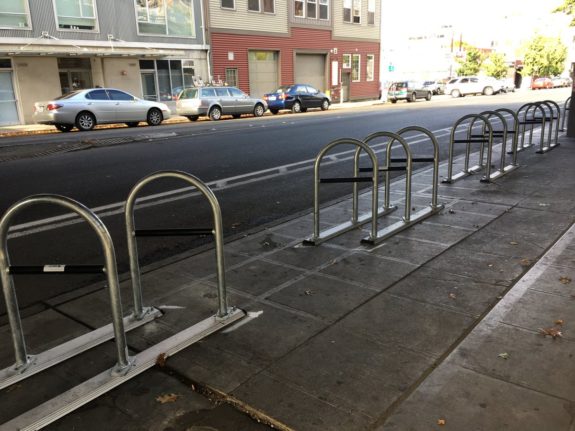
Back in October, when Seattle installed a bunch of bike racks under a viaduct, it was a little bit curious. They weren’t near any obvious destination that people would bike to.
At the time, one person suggested they appeared to be aimed at preventing homeless people from using the space to camp. Turns out, he was absolutely correct.
The Stranger prevailed on Seattle DOT to produce records about the bike racks. Heidi Grover reports:
In a statement to The Stranger, SDOT spokesperson Karen Westing confirmed that the bike racks were part of a “strategy for lessening the hazards of unsheltered living by creating space for a different active public use.” She said SDOT has not made any other similar installments to deter camping.
The racks and installation cost about $6,700, according to Westing. The 18 racks and six mounting rails cost $3,998 and the labor of three crew members for five hours cost $2,718. SDOT used bike racks purchased through the voter-approved Move Seattle levy. However, the department reimbursed the total cost of the project through an SDOT fund specifically for homelessness, according to Westing.
Tom Fucoloro at Seattle Bike Blog is troubled seeing bike infrastructure used this way. “These aren’t bike racks, they are bike-washed ‘anti-homeless spikes,‘” he writes:
As someone who has been a big advocate of expanding the city’s bike parking, it is disturbing to see hard-won bike racks used in such a way. Bike racks are for improving bike access to businesses and other destinations, not for forming a physical impediment to our neighbors who are just looking for a dry place to sleep. The idea that something this blog and many other advocates for bike access have worked so hard to get into the levy and city budget was used in such an inhumane way makes me feel ill.
If it were a coincidence that the new bike parking displaced some people camping, that might be one thing. But the department admits displacement was the reason. There is no destination near this area warranting that many bike parking spaces. The bike racks were purchased using Move Seattle levy money, but SDOT was reimbursed from a fund for addressing homelessness.
Seattle’s homeless shelters are overflowing with people who have nowhere to go. The problem is exacerbated by local zoning laws that outlaw any type of housing except single-family in 65 percent of the city.

Read More:
Streetsblog has migrated to a new comment system. New commenters can register directly in the comments section of any article. Returning commenters: your previous comments and display name have been preserved, but you'll need to reclaim your account by clicking "Forgot your password?" on the sign-in form, entering your email, and following the verification link to set a new password — this is required because passwords could not be carried over during the migration. For questions, contact tips@streetsblog.org.