Coming Soon to Boston’s Massive Parking Crater: More Subsidized Parking
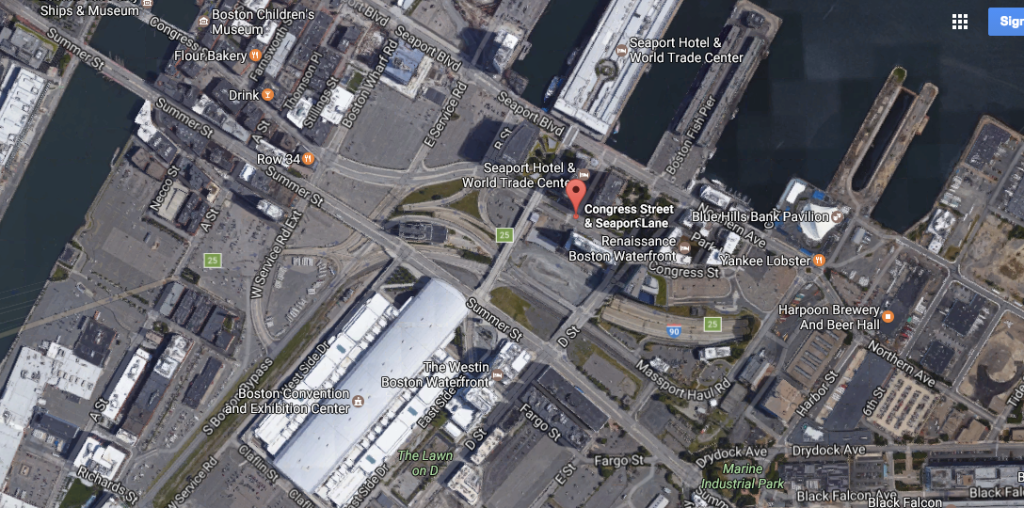
Quick — what should a city do to improve access to a rapidly developing area near a bus rapid transit station? In Boston, officials have settled on an expensive plan to subsidize driving and traffic.
The Boston Globe’s Jon Chesto reports that the city of Boston and the Massachusetts Port Authority are planning to spend more than $100 million to add 2,100 parking spaces in Boston’s Seaport District. As you can see above, this area — a competitor in Streetsblog’s 2015 Parking Madness tournament — is already an ocean of surface parking. But recent development has caused the market for parking to tighten up, so the government is stepping in to rescue “suburban commuters who [don’t] want to pay downtown Boston prices or use public transit.”
The city will pay $22 million to add 550 parking spaces to an existing parking deck, Chesto reports, while the Port Authority is paying $85 million to build a 1,550-space garage nearby to bring parking prices down:
Massport officials have taken to calling the project a “transportation center” because it would include a shuttle bus stop, possibly a taxi or Uber stand, and a Hubway bike-rental station. The project would include a covered walkway along the World Trade Center Avenue viaduct to connect Summer Street, the garage, and the World Trade Center station on the MBTA’s Silver Line.
City Hall officials are also watching a steady stream of employers move into the district and recognize more parking is needed.
More recommended reading today: David Levinson at The Transportist spoke to NPR about the shaky economics of Trump’s $1 trillion infrastructure plan. And Modern Cities looks at Target’s new strategy of entering urban markets with smaller stores.

Read More:
Streetsblog has migrated to a new comment system. New commenters can register directly in the comments section of any article. Returning commenters: your previous comments and display name have been preserved, but you'll need to reclaim your account by clicking "Forgot your password?" on the sign-in form, entering your email, and following the verification link to set a new password — this is required because passwords could not be carried over during the migration. For questions, contact tips@streetsblog.org.