White House: Make Cities Affordable By Building for Walkability, Not Parking
The Obama administration is taking on the crisis of rising rents in American cities, releasing a series of recommendations today to spur the construction of more affordable housing. Among the many ideas the White House endorses: allowing more multi-family housing near transit and getting rid of parking minimums.
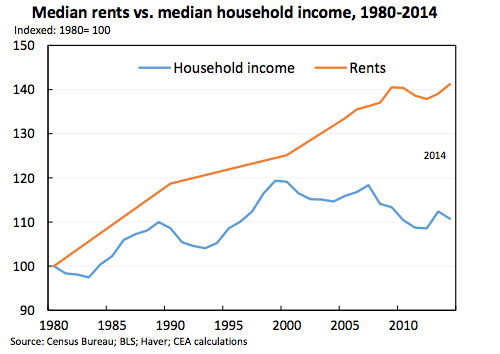
Since 1960, the share of renters paying more than 30 percent of their income for housing — the baseline for what is considered “affordable” — has risen from 24 percent to 49 percent, the White House reports in its new Housing Development Toolkit [PDF]. There are now 7.7 million severely rent-burdened households, defined as those paying more than 50 percent of their income for rent — an increase of about 2.5 million in just the past 10 years.
In the toolkit, the Obama administration acknowledges the links between housing and transportation, saying that “smart housing regulation optimizes transportation system use, reduces commute times, and increases use of public transit, biking and walking.”
The toolkit is full of policy recommendations to make it easier to build multi-family housing, incentivize the construction of subsidized housing, and shift away from the single-family/large lot development paradigm.
The document is merely advisory — federal officials don’t have the power to supersede most local zoning laws. But the White House does say that U.S. DOT will evaluate cities’ approaches to new housing development when it considers awarding major grants for new transit projects.
Here are a few of the highlights from the recommendations.
Make It Easier to Build Housing
Cities should do away with rules that discourage denser housing, the White House says. Instead of forcing housing developments to go through extensive review processes, cities should allow them by right.
Cities can also use “by-right” development to incentivize public goals — for example, fast-tracking projects if developers agree to provide a baseline percentage of affordable housing units or conform with transit-oriented development standards.
Eliminate Parking Minimums
Building parking can cost between $5,000 and $60,000 per space, making housing construction more expensive and depressing the housing supply. The burden of parking requirements is heaviest for low-income households, which tend to own fewer vehicles and pay for parking they don’t even use. Still, nearly every city in America requires a minimum number of parking spaces per housing unit as part of its zoning code.
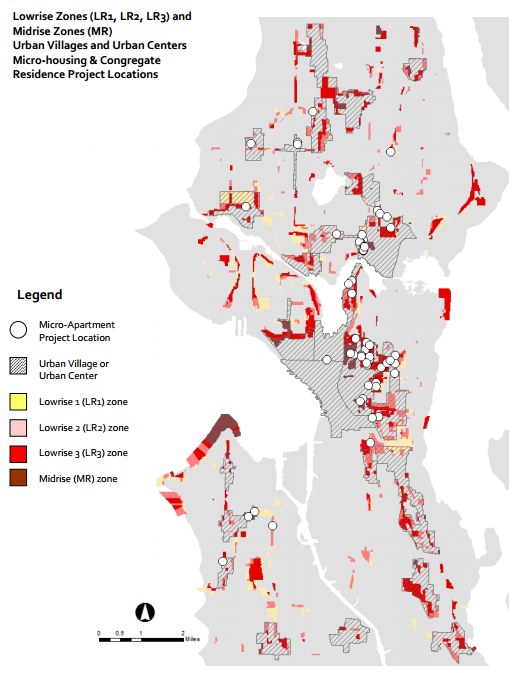
A study in Seattle found that building the mandated level of parking increased rental costs 50 percent compared to building no parking, the Obama administration points out. Seattle responded by reducing parking requirements 50 percent for developments within a quarter-mile of frequent transit service.
If more cities would consider policies like Seattle’s, but on a wider scale, the savings are potentially enormous.
Zoning for Walkable Development
In large parts of many cities, compact, multi-family housing is effectively illegal, thanks to single-family zoning. That means more sprawl, less effective transit and people being priced out of cities and into long commutes. The White House recommends enacting “high-density and multi-family zoning,” especially near frequent transit.
Allow Granny Flats
More U.S. cities should allow small accessory dwellings on properties, sometimes called “granny flats.” This can help aging generations to remain with family and also increase walkability and flexibility in built-out single-family neighborhoods. Portland and Santa Cruz have both taken efforts to encourage accessory dwellings. But many, many more cities and neighborhoods — and families — would benefit from the increased flexibility, affordability and walkability accessory dwelling units offer.

Read More:
Streetsblog has migrated to a new comment system. New commenters can register directly in the comments section of any article. Returning commenters: your previous comments and display name have been preserved, but you'll need to reclaim your account by clicking "Forgot your password?" on the sign-in form, entering your email, and following the verification link to set a new password — this is required because passwords could not be carried over during the migration. For questions, contact tips@streetsblog.org.