How Will Mayor Turner Change Houston’s Streets? Here Are Some Hints
What would it take to turn traffic-clogged Houston into a more walkable, transit-rich place?

Newly elected Mayor Sylvester Turner made waves earlier this year when he called for a paradigm shift in the region’s transportation policies, prioritizing transit instead of highway expansions. Now a copy of Turner’s transition plan leaked to the Houston Press sheds some light on what the new administration is thinking [PDF]. While the Press apparently considers some of the ideas to be scandalous (Turner wants additional bonding capacity to expand METRO’s transit network), the document is an encouraging sign of where the mayor is headed.
Here’s a look at the major ideas.
Turner wants to bring pedestrian, bike, and transit improvements all under one roof
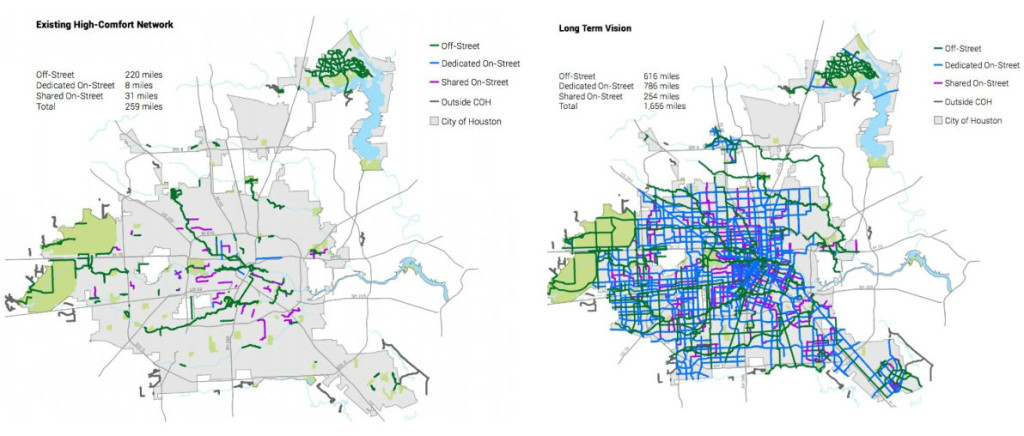
Turner’s policy brief notes that Houston has a number of transportation plans, including the new bicycle network plan, but they aren’t well integrated. “There is no pedestrian masterplan or transit strategy for the entire City,” the document notes.
All these blueprints should be brought together to create a “comprehensive, multimodal transportation plan.”
The document recommends developing the plan over a two-year period and hiring a “Transportation Executive” to oversee the initiative.
Turner wants to seek funds to expand Houston METRO
The document notes that Houston METRO has almost exhausted the bonding capacity from a 2003 voter referendum to expand bus and rail service. Turner thinks the agency should seek new borrowing capacity to fund another expansion:
METRO should update their 20-year transit plan and go back to voters for more bonding capacity in the near future. METRO’s 20-year plan should include all modes and all technologies. METRO should consider BRT and BRT Lite as it may provide better benefit cost ratio for certain corridors.
Might one of those new routes be the long-awaited University Line, which would connect the city’s major universities — Rice, University of Houston, and Texas Southern? We’ll see.
So far, neither of these ideas are very fleshed out, but it’s exciting that Turner came into office with better transit, biking, and walking front and center on his agenda.

Read More:
Streetsblog has migrated to a new comment system. New commenters can register directly in the comments section of any article. Returning commenters: your previous comments and display name have been preserved, but you'll need to reclaim your account by clicking "Forgot your password?" on the sign-in form, entering your email, and following the verification link to set a new password — this is required because passwords could not be carried over during the migration. For questions, contact tips@streetsblog.org.