North Carolina Lawmakers Try to Sabotage Durham-Orange Light Rail
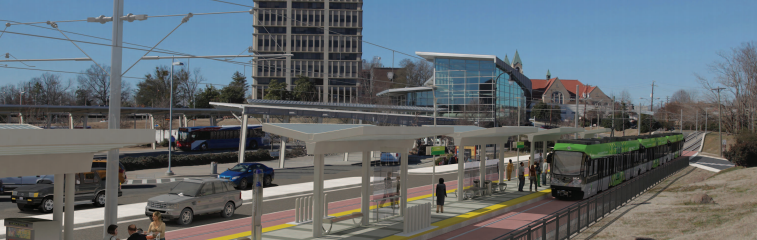
State lawmakers in North Carolina launched a sneak attack this week on plans for light rail between Durham and Orange County — and nobody’s sure exactly who’s behind it or why they did it.
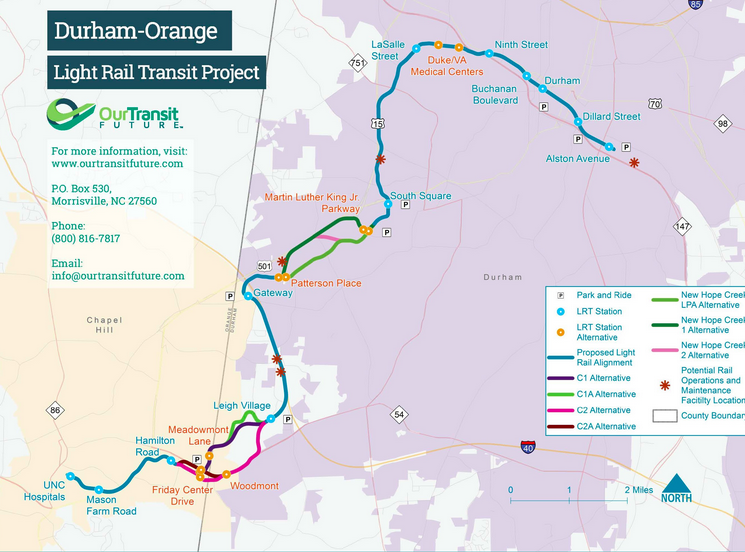
Leaders in Durham and Orange are counting on the state to deliver about 10 percent of the funding for the $1.5 billion, 17-mile line, which would connect the booming area between Durham and Chapel Hill. But North Carolina residents learned this week that the state budget compromise between the House and Senate includes a new provision that would outlaw directing more than $500,000 in state funds to a light rail project. Lawmakers never openly debated the provision.
The move was sudden and unexpected. “Nobody knew about it, and bang – it was there,” said Ron Tober, a retired transit executive who lives in the state. “It’s a fairly dramatic event that has occurred.”
Voters in Durham and Orange counties have approved a half-cent sales tax to fund the light-rail project. The plan also called for $138 million from the state, with federal funding to close the gap.
Just this week, the Federal Transit Administration awarded $1.7 million to GoTriangle to plan transit-oriented development around the stations. Project leaders recently completed a draft environmental impact statement and were preparing to approach the federal government for funds to begin the engineering phase.
In Orange and Durham counties, Tober says, there’s no real organized opposition to the project, outside of some run-of-the-mill concerns about where the route will go. Daily ridership on the line is expected to be 23,000.
“This is clearly a political, ideological effort on the part of somebody to undermine a worthy investment in public transportation,” said Tober. “The Raleigh-Durham region is one of the fastest growing in the United States.
The attack came so suddenly and late in the budgeting process that supporters of the project haven’t even had time to respond, he said.
The frustrating thing is that Governor Pat McCrory, with the help of the legislature, established a “non-political” merit-based funding system for transportation projects. And in that process, the Durham-Orange Rail line succeeded against competing highway projects, Tober said.
McCrory isn’t expected to veto the budget over this provision, but Tober thinks Raleigh’s light rail plans can survive the attack. It’s possible the budget could be amended after the fact. Or a subsequent budget could reverse the rule.
But even if it’s a temporary obstacle, the new rule definitely creates a problem for project leaders, he said.
“As soon as you start delaying a project of this magnitude,” he said, “the cost will go up.”
Another transit project in North Carolina, Charlotte’s 9-mile light rail extension, appears to be safe. There’s already a signed full funding grant agreement from the state awarding that project $260 million. The existing segment of that light rail system is considered an enormous success, carrying more than 16,000 riders a day.
UPDATE: According to a poll of the Triangle Business Journal, 80 percent of readers oppose the state legislature’s interference with the project.
Also, local journalist Tim Boyum reports Governor Pat McCrory has condemned the measure, saying “I think it’s a huge mistake.”

Read More:
Streetsblog has migrated to a new comment system. New commenters can register directly in the comments section of any article. Returning commenters: your previous comments and display name have been preserved, but you'll need to reclaim your account by clicking "Forgot your password?" on the sign-in form, entering your email, and following the verification link to set a new password — this is required because passwords could not be carried over during the migration. For questions, contact tips@streetsblog.org.