Contraflow Bike Lanes Finally Get Nod From U.S. Engineering Establishment
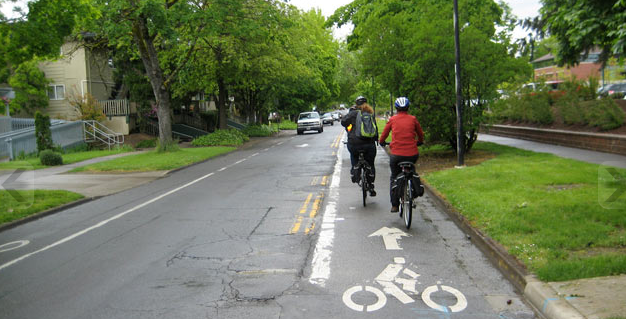
Buffered bike lanes have been used in some American cities for decades now, and an increasing number of cities are implementing contraflow bike lanes. But only just now are these street designs getting official recognition from powerful standard-setters inside the U.S. engineering establishment.

Late last month, the National Committee on Uniform Traffic Control Devices gave its approval to 11 treatments, including these two bike lane configurations. Committee members also, as anticipated, approved bike boxes and bike signals, which had been considered “experimental,” as well as bike lane markings that continue through intersections.
This opens the way for these designs to be included in the Manual on Uniform Traffic Control Devices. Without recognition in the MUTCD, engineers in many cities are reluctant to install these treatments. Official acceptance in the leading design manual would help make these treatments more widespread — and that will help make American streets safer for biking.
That’s still not a done deal. The committee approval is advisory, and the group’s recommendation will now be sent to the Federal Highway Administration for potential inclusion in the MUTCD. To get final approval, the new guidelines must undergo a rule-making period where they are reviewed by other engineering institutions that have historically been averse to change, like the American Association of State Highway and Transportation Officials.

Read More:
Streetsblog has migrated to a new comment system. New commenters can register directly in the comments section of any article. Returning commenters: your previous comments and display name have been preserved, but you'll need to reclaim your account by clicking "Forgot your password?" on the sign-in form, entering your email, and following the verification link to set a new password — this is required because passwords could not be carried over during the migration. For questions, contact tips@streetsblog.org.