Blumenauer Introduces a Tax Break for Bike-Share Commuters
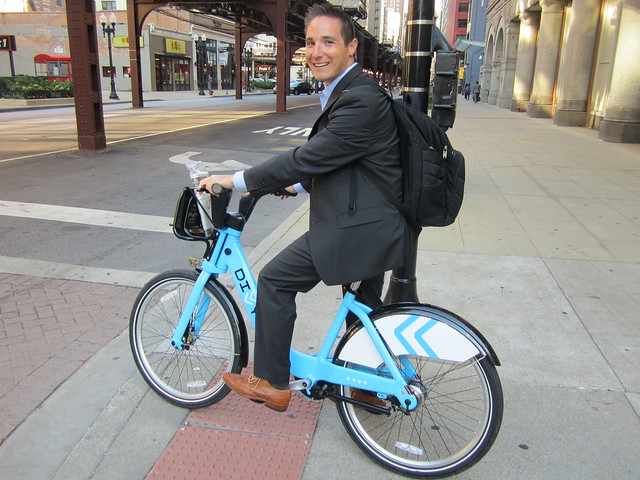
If you drive to work, the feds will subsidize that. But if a Citi Bike (New York), or a Divvy bike (Chicago), or CoGo (Columbus, Ohio) is your ride to work, no such luck. But that could change. Michael Andersen at Bike Portland reports that Representative Earl Blumenauer (D-Oregon) has introduced legislation that would establish tax incentives for bike-share commuters:
If you drive to work, the feds will subsidize that. But if a Citi Bike (New York), or a Divvy bike (Chicago), or CoGo (Columbus, Ohio) is your ride to work, no such luck. But that could change. Michael Andersen at Bike Portland reports that Representative Earl Blumenauer (D-Oregon) has introduced legislation that would establish tax incentives for bike-share commuters:
It’s a new goal for the city transportation commissioner turned Congressman, who spent years pushing for the IRS’s first bike commuting benefit. The $20-a-month deduction finally passed as part of the 2008 bank bailout (despite Blumenauer’s “no” vote on that package).
Neither the existing bike commute deduction nor Blumenauer’s proposal would affect personal income taxes. Instead, they let employers (including governments and nonprofits) reimburse workers for bike expenses or bike sharing passes like any other fringe benefit, and treat that cost as a business expense.
Unfortunately, the bill is limited by a persistent oversight in tax policy that restricts its benefits to those who both live and work in areas that have bikesharing stations.
Blumenauer has fought multiple legislative battles in recent years to ensure that the tax code treats transit commuters and car commuters equally.
Elsewhere on the Network today: Carfree with Kids explains why, for her, biking is more of a practical way to get around than a passion. Vibrant Bay Area considers what makes a walkable hotel and how policies can support them. And Joe Urban describes a new Minneapolis transit-oriented development that, he says, could be a model for the nation.
Angie is a Cleveland-based writer with a background in planning and newspaper reporting. She has been writing about cities for Streetsblog for six years.
Streetsblog has migrated to a new comment system. New commenters can register directly in the comments section of any article. Returning commenters: your previous comments and display name have been preserved, but you'll need to reclaim your account by clicking "Forgot your password?" on the sign-in form, entering your email, and following the verification link to set a new password — this is required because passwords could not be carried over during the migration. For questions, contact tips@streetsblog.org.
Toronto might be in the center of the fight to resist bike lane teardown today. But if some far-right politicians have their way, this fight won't be the last.