Study: Electric Cars Not So Green Unless Powered by Renewables
A study by the government of the Australian state of Victoria highlights the limits of electric cars, in isolation, to reduce greenhouse gas emissions.
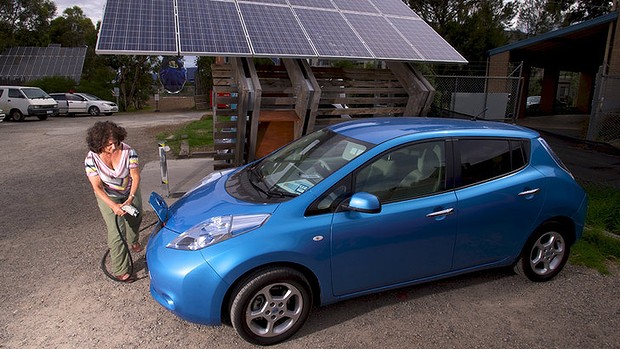
The Victorian government’s ongoing “electric vehicle trial” [PDF] found that electric cars powered by coal may actually produce more carbon emissions than petroleum-fueled cars over the lifetime of the vehicle, from manufacturing to junkyard. This is due in part to the added environmental impacts of the lithium batteries that electric cars require.
This is not to say that EVs won’t improve on internal combustion engines. It all depends on where the electricity comes from. The authors found that, taking into account the full vehicle life-cycle, an electric car powered by 100 percent renewable energy — like wind and solar — can begin outperforming gas-powered cars after two years of use.
In the United States, the cleanest sources of electricity are near the coasts, and EVs in those areas outperform the best hybrids, according to a study by the Union of Concerned Scientists released last spring. But in the Midwest and Mountain West, coal-powered energy generation makes EVs dirtier.
Of course, even setting aside the deaths, injuries, chronic diseases, and traffic jams caused by a car-dependent transportation system, vehicle emissions are far from the only environmental cost of cars. To reduce global greenhouse gas emissions, cutting down on the “embedded energy” that comes with sprawling development is absolutely essential. And while cleaner cars can help curb global warming, the wrong incentives for their use can also dump more carbon into the air. To the extent that policies discourage transit, biking, or walking in order to favor electric vehicles, the net effect can actually backfire. Witness Denmark’s incentives to park electric cars in the center city, which undermines the high mode-share for greener modes of travel.
The Australian government has been providing a better incentive, helping gas stations install electric vehicle charging facilities. The city of Melbourne currently has about 30 such stations in the central business district but 10 more are on the way as part of a government trial, reports Melbourne’s The Age.

Read More:
Streetsblog has migrated to a new comment system. New commenters can register directly in the comments section of any article. Returning commenters: your previous comments and display name have been preserved, but you'll need to reclaim your account by clicking "Forgot your password?" on the sign-in form, entering your email, and following the verification link to set a new password — this is required because passwords could not be carried over during the migration. For questions, contact tips@streetsblog.org.