Bicycle Advocates Thank LaHood, Talk Strategy

This was a big week for bike advocates: They had a pow-wow with Transportation Secretary Ray LaHood, launched a new coalition, and refined their strategy for the 112th Congress.
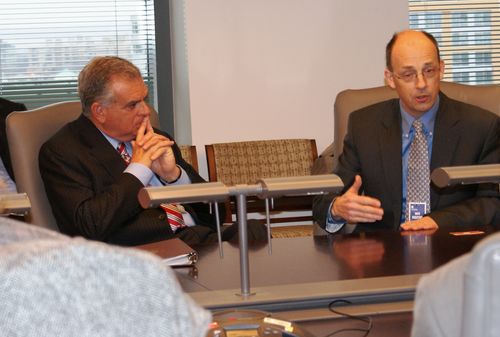
LaHood blogged about the meeting, encouraging bike advocates to stay engaged in the political process. He assured advocates that they “have a friend in the administration” but warned that they’ll have to work harder than ever to educate members of Congress. Beneath those words is a clear message about the challenges they’ll face in communicating the benefits of federal funding for bicycle infrastructure to fiscal super-conservatives.
That’s a tough pill to swallow for advocates who’ve been working their tails off for decades to support biking and walking as modes of transportation. “At some point we’d like to think this battle is over,” Caron Whitaker of America Bikes told Streetsblog. “We fought it in ‘91, we fought it in ‘98, we fought it in 2003, we fought it in 2005. And we’re prepared to fight it again. But given all the success at the local level, it feels like Congress is increasingly out of step.”
Speaking of local efforts: also this week, advocates got together to work on a strategy to better coordinate efforts at the state and local levels. “With the contraction of the federal bill you’re going to see even less in the way of mandates coming out of the federal level, and decision-making at the state and local level is going to be even more important,” says Randy Neufeld, who’s heading up the effort. He told Streetsblog that a new coalition effort to focus on state and local campaigns will be launched at the Bike Summit in March.
But with LaHood at the helm of the DOT, there is still significant action at the federal level. America Bikes called the meeting to thank LaHood for all he’s done for biking – and not just as secretary. While he was a Republican member of the House of Representatives, LaHood helped preserve funding for “transportation enhancements,” or bike-ped improvements. We’ll be watching for other Republicans to come forward in the current House to fight for these programs.
LaHood couldn’t go into details about what’s coming up in the budget process, but advocates hope to maintain some space for their programs. “We’re a cheap date,” says Whitaker. “Everything Portland has done on biking and walking has cost them $57 million. That’s the cost of one mile of urban highway. So what would you rather have? If all the people that are biking over the Hawthorne bridge were driving cars, they’d need to build a new bridge.”
We’ll be celebrating Martin Luther King Jr.’s birthday Monday. Have a good, long weekend and we’ll see you Tuesday!

Read More:
Streetsblog has migrated to a new comment system. New commenters can register directly in the comments section of any article. Returning commenters: your previous comments and display name have been preserved, but you'll need to reclaim your account by clicking "Forgot your password?" on the sign-in form, entering your email, and following the verification link to set a new password — this is required because passwords could not be carried over during the migration. For questions, contact tips@streetsblog.org.