Oberstar’s Final Words of Wisdom

Outgoing Transportation and Infrastructure Committee Chair Jim Oberstar (D-MN) just wrapped up a roundtable conversation with reporters. He looked back on his 36 years in Congress – starting in January 1963 as clerk of the the Rivers and Harbors Committee, which eventually morphed into the T & I Committee.
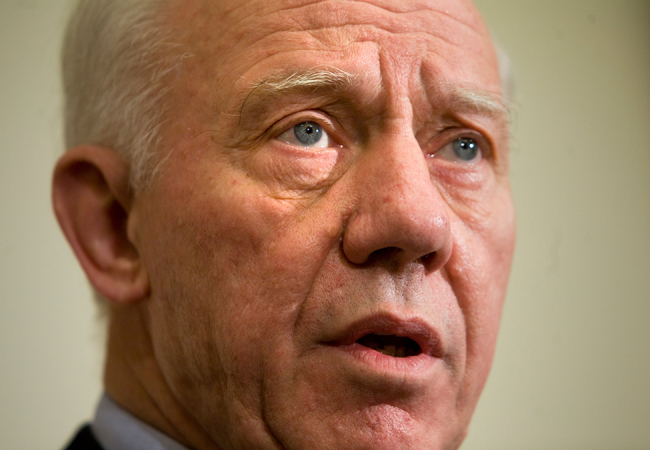
He said the history of the committee – and his service to it – has been “the movement of people safely, efficiently, and effectively, for the betterment of the nation.”
He also imparted some final nuggets of wisdom for those who will follow him on the committee:
- Earmarks. Oberstar said a bill “devoid of the 27,000 earmarks like we had in 2006” would be a good thing. “That’s excess,” he said. But, he said, it was too simplistic to shut legislators out of the allocation process. “If you believe that, then the executive branch – at the national or state level – will make all those decisions.” He pointed to his own achievements in making the process more accountable and transparent.
- The reauthorization. He acknowledged that it was a “big hole in the legislative agenda.” He blamed the White House and the Senate for failing to come up with an agreement on a financing mechanism.
- An extension. He said that an answer on the length of the extension of the current authorization could come as early as tomorrow, when the newly elected House and Senate leadership meets. He even threw out the possibility that “if they come to some agreement, we could maybe even be doing a new authorization in the balance of this session. We’d be prepared to do that.” Assuming that won’t happen, however, he spoke strongly against doing short, month-to-month extensions as a forcing mechanism to “hold somebody’s feet to the fire.” He said that was not reasonable. He said if it wasn’t going to be a six-year bill, they should extend it for a year.
- John Mica. Oberstar spoke with fondness of the “close working relationship” he had with his ranking member and the accomplishments they’ve shared. “That’s a record, I submit, of cooperation, conciliation, that is taking the best of Mr. Mica’s ideas, the best of my ideas, what we can sell to our respective caucuses, and putting it together in a bill.” He says he hopes Mica can rebuild those structural relationships in the next Congress.
- The new class. He acknowledged the conservatism of the new freshmen and their inexperience with policy issues. “You’ll see, coming in, a lack of institutional understanding and also, it appears, a lack of willingness to follow seasoned leaders,” he said. He worries that the new members have “little appetite or appreciation for the broader policy questions the nation faces on transportation.”
- High speed rail. He cheered Ray LaHood’s decision that states have to “use it or lose it” when it comes to high speed rail dollars. “If the new governor of Wisconsin wants to build highways instead of high speed rail, increase your gas tax in Wisconsin,” he said. “Stop complaining and whining about wanting to build highways with rail dollars. Build highways with highway dollars.”
- A glass of rosé. He spoke at length – and in French! – about his recent experience riding the trains in France. He was impressed that you could travel the distance between Boston and Washington in 2 ½ hours, and that “you could put a glass of rosé on the table and it didn’t flutter. You could write notes and your pen didn’t quaver. It was interesting to come back to a third world country.”
- Gas tax. Financing is the “Gordian knot” of the surface transportation authorization, Oberstar said. He wishes the president would have taken his advice – and that of two national commissions – and increased the gas tax or user fees. “We’d have had a bill; it’d be law; we’d be moving ahead.” Recalling Europe again, he says high gas taxes are paying for a $1.3 trillion, 20 year infrastructure investment program. “We’re just sitting on the sidelines while they’re eating our lunch.”
- The looming highway trust fund crisis. Oberstar rejected the idea of passing a “barebones” reauthorization that didn’t adequately inject more money into the highway trust fund. He said it’s “on course to being $16 billion to $18 billion short of the authorization level” because of raiding to pay for disaster relief. He said states are now drawing down revenues more slowly than during stimulus because they’re now working on longer-term projects with a longer “spend-out time.” By his calculation, the chickens will come home to roost “sometime in July.”
- His successor. He wouldn’t speculate or opine on whether Nick Rahall or Peter DeFazio would – or should – be the next ranking member.
- His plans for the future. “You will not see my name on any lobbying firm,” he pledged. He said he remains committed to working on transportation policy, especially safety, as well as “the new rural view of America and the new urbanism.”

Read More:
Streetsblog has migrated to a new comment system. New commenters can register directly in the comments section of any article. Returning commenters: your previous comments and display name have been preserved, but you'll need to reclaim your account by clicking "Forgot your password?" on the sign-in form, entering your email, and following the verification link to set a new password — this is required because passwords could not be carried over during the migration. For questions, contact tips@streetsblog.org.