My Brother Died Because No One Could Stop a Super Speeder. Now We Can.

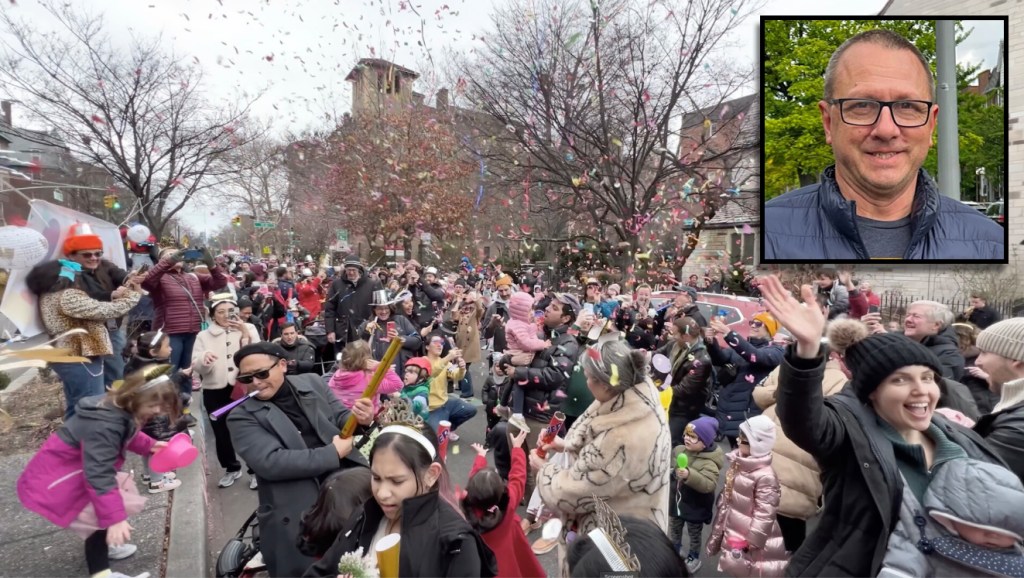
On Sunday, November 15, families like mine will gather in more than 75 communities nationwide for World Day of Remembrance for Road Traffic Victims. In Michigan — where my brother, Paul Sonkin, lost his life— we’ll stand on the steps of the State Capitol in Lansing for the first time. We’ll honor the people we’ve lost. And this year, we’ll bring something that’s been missing for most of my life: a concrete, bipartisan fix for the drivers who frighten us most, and proof that our speeding epidemic is spreading.
My family knows this all too well. On August 2, 1992, my brother Paul slid into the passenger seat of his friend’s Ford Probe. They were 16, headed to soccer camp at Eastern Michigan University, 45 minutes away by freeway. The speed limit was 55. His friend drove 75, because he could.
At the exit ramp, the friend yanked the wheel, lost control and flipped the car off the road. The weather was clear and dry. Only the driver survived.
Paul was a fun and funny guy, a top student and an avid athlete with a big, longtime circle of friends. Nothing about him bespoke tragedy. Thirty-four years later, his absence is still an abyss. His death wasn’t bad luck. It was predictable and preventable, and the adults responsible for our roads let it happen.
The drivers no penalty reaches
Anyone who’s been on an interstate lately knows the type. They weave through traffic at 100 mph or more, sometimes in packs, treating the highway like a drag strip while everyone else scrambles out of the way. Super speeders are a small fraction of drivers, but they cause an outsized share of the carnage.
Nothing seems to stop them. Not tickets, not license suspensions. An estimated 75 percent of drivers with suspended licenses continue to drive. They go on terrorizing law-abiding road users with the threat of sudden, violent death on the way to work or school or home or the grocery store. Their willful, sadistic choices could harm your family next.
Intelligent Speed Assistance (ISA) closes that safety gap. A device in the offender’s car uses GPS and speed-limit data to keep the vehicle from exceeding the posted limit. The driver can still get to work, school, the doctor and the grocery store. They just can’t speed. It forces super speeders to drive like the vast majority of the rest of us.
A record year
Families for Safe Streets’ Stop Super Speeders campaign has turned this idea into law faster than almost anyone expected.
D.C. went first in 2024. Virginia and Washington followed in 2025. This year, six more states (Arizona, Georgia, Hawai’i, Illinois, Maryland and New York) enacted Stop Super Speeders laws, tripling the total to nine. Bills advanced in dozens more.
The coalition behind those wins doesn’t fit the usual pattern. Georgia Gov. Brian Kemp and New York Gov. Kathy Hochul both signed one. Arizona’s sponsor was a Republican; Illinois’s were Democrats. Virginia launched the nation’s first statewide program on July 1. New York’s version, triggered by 16 or more speed-camera tickets in a year, is projected to cover roughly 10,000 drivers annually. And the American Association of Motor Vehicle Administrators approved model legislation in January, so states no longer have to start from scratch.
Why it matters now
American roads have been getting deadlier while our peers’ roads get safer. Between 2013 and 2022, the U.S. traffic death rate rose 22.5%, according to the CDC, while the median rate across 27 other high-income countries fell 19.4%. Speeding alone killed more than 11,000 Americans in 2024.
Those other countries didn’t get lucky. They adopted proven tools, one after another, and kept going. The European Union now requires passive ISA, which warns drivers when they’re over the limit but doesn’t stop them, on new vehicles. We don’t need to wait for the entire fleet to turn over. We can start with the drivers who have already shown us who they are, and require active ISA to stop them.
For families like mine, that would be something close to justice. My children are growing up in the shadow of Paul’s death. They aren’t allowed anywhere near a highway, as drivers or passengers. That’s what it costs a family when a country shrugs and says nothing can be done about chronic, lethal speeding.
That was never true. It’s even less true now.
World Day of Remembrance gatherings keep growing, and so do our numbers. And yet, we are the rare advocacy community working to shrink our membership to zero, because no one should lose a loved one to traffic violence.
Most state legislatures convene in January. Contact your state legislators now and urge them to pass a Stop Super Speeders law. If your state has already passed one, push to make sure it’s implemented well and enforced. And on November 15, join a World Day of Remembrance event in your community.
Nine jurisdictions have shown it can be done. The rest of the country shouldn’t make another family wait.