Wednesday’s Headlines Flock Together
Some traffic enforcement cameras are installed in a way that makes them dangerous to road users.
By
Blake Aued
12:01 AM EDT on August 5, 2026
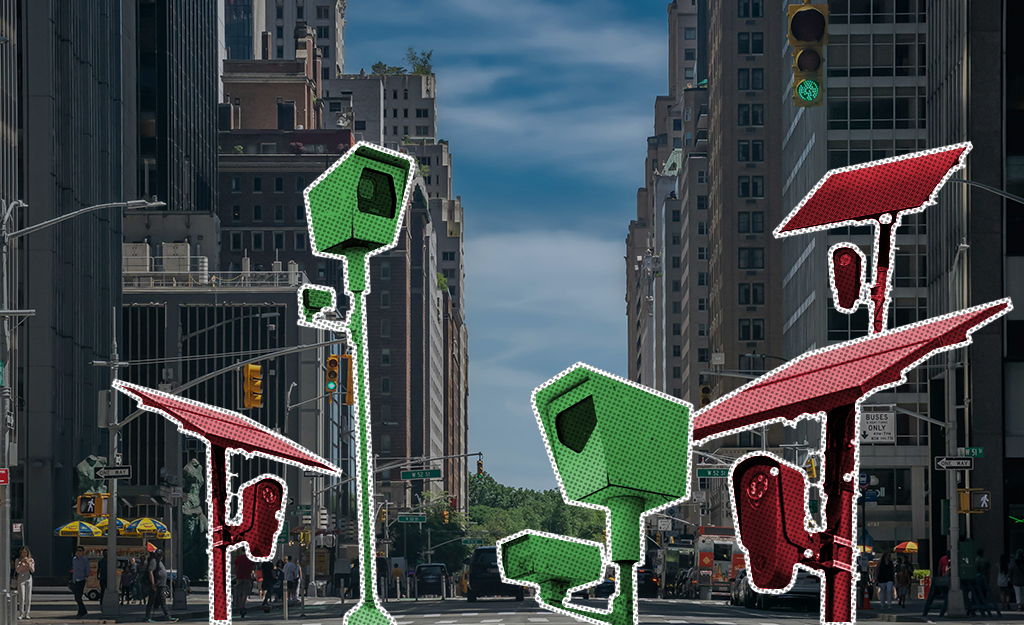
- Flock license plate readers are useful in enforcing traffic laws, but they can also be traffic safety hazards. Some cameras are just a couple of feet from the road, perched atop black metal poles that are hard to see and a lack a breakaway plate allowing them to easily snap when hit by a car. And they’re rarely inspected by city or state transportation officials. (The Guardian)
- Transit agencies are boosting their own ridership by developing land around stations, which has the added benefit of creating more housing where residents don’t need expensive cars. (Metro Magazine)
- The Trump administration’s isolationism is leaving the U.S. behind other countries that are rapidly adopting electric vehicles, according to climate activist Bill McKibben. (New Yorker)
- An Amtrak restructuring could create conflicts within the agency and does not address its biggest problem, funding. (Trains)
- Massachusetts Sen. Ed Markey and Rep. Ayanna Presley introduced a bill allocating $25 billion to help transit agencies go fare-free, but some would prefer to spend that money on improving service. (Boston Globe; paywall)
- Not even Dulles officials think the Washington, D.C. airport needs the 32,000-space parking garage President Trump is proposing, especially since it’s now on a D.C. Metro line. (NOTUS)
- Seattle Mayor Katie Wilson is pitching a proposed small tax hike to fund transit as an affordability measure, pointing to the high cost of owning a car.
- Nashville is rolling out more raised crosswalks and concrete dividers protecting bike and scooter lanes as part of its Choose How You Move initiative. (Axios)
- Oklahoma City is an example of a booming city that’s trying to deal with growth by expanding transit rather than highways. (Streetsblog USA)
- A Wayne County, Michigan transit tax referendum looked like it would pass easily Tuesday night. (Detroit Free Press)
- Honolulu Civil Beat reported on a dangerous crosswalk, and lo and behold, the Hawaii DOT actually fixed it!
- To accommodate increased ridership after going fare-free, Iowa City is building a new $20 million transit center. (Press-Citizen)
- Some rural counties in Alabama still have more dirt roads than paved ones, but the state ignores them because not many people live there. (Alabama Political Reporter)
- Business Insider has some tips for traveling overnight on Amtrak.

Blake Aued has been doing Streetsblog's daily national news digest for years. He's also an Atlanta Braves fan, which enrages his editor in New York.
Read More:
Streetsblog has migrated to a new comment system. New commenters can register directly in the comments section of any article. Returning commenters: your previous comments and display name have been preserved, but you'll need to reclaim your account by clicking "Forgot your password?" on the sign-in form, entering your email, and following the verification link to set a new password — this is required because passwords could not be carried over during the migration. For questions, contact tips@streetsblog.org.
More from Streetsblog USA
Friday Video: Inside the Global Far-Right Push To Rip Out Bike Lanes
Toronto might be in the center of the fight to resist bike lane teardown today. But if some far-right politicians have their way, this fight won't be the last.

October 23, 2026

Friday’s Headlines Shoot Themselves in the Foot
Gas taxes pay for transit, too, so what happens when politicians pander to voters, and the highway trust fund runs dry?
October 23, 2026
Talking Headways Podcast: A More Humanized Experience in Honolulu
If we look transit just as a distance issue, but as a time issue, performance should be discussed as one big whole.

October 22, 2026

Our Best Bet To Confront Climate Change in the Trump Era? Build More Apartments
Most climate strategies are hamstrung by Washington and culture wars across the country. But zoning reform may be the exception.

October 22, 2026

What ‘Flying Cars’ Could Mean For US Car Culture
Would fleets of flying cars be a dystopian nightmare, or a chance to create more walkable cities on the ground?

October 22, 2026