Safer Roads Are Just A Vacation Away
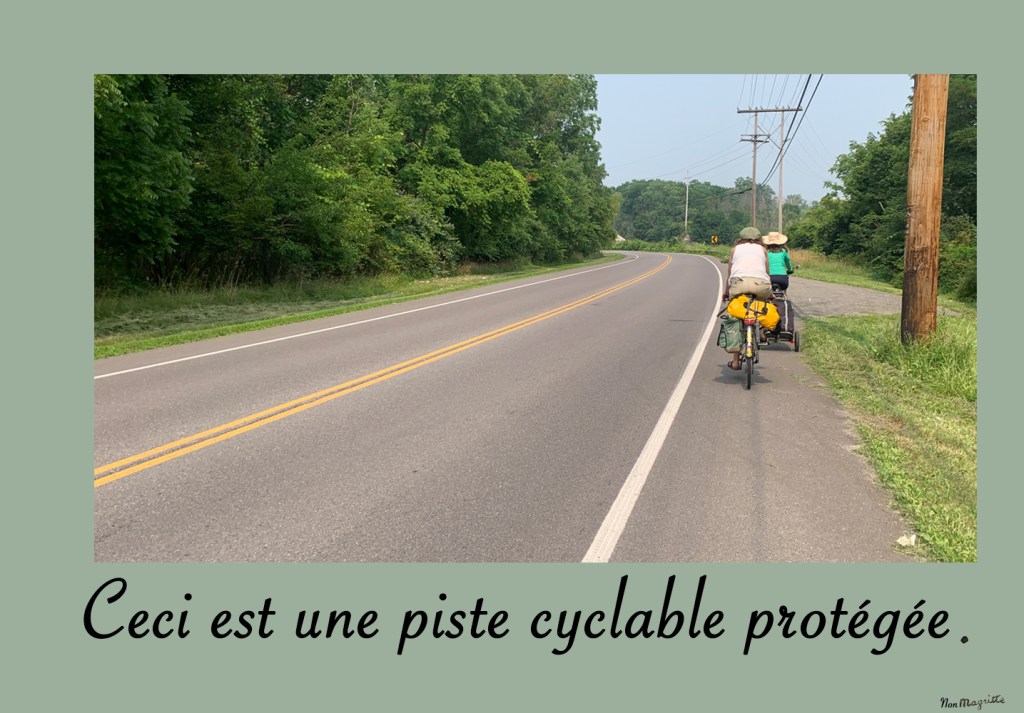
We all want better active transportation in this country. But the only way we’ll get it is if more Americans — and more important, their politicians — go on vacation outside of this country.
The fact is, in most of America it requires a car to take a hike or a bike ride. Even our national parks — which were set aside to protect public spaces from the pollution, noise and chaos of modern life — require a vehicle to get to. Getting to the Grand Canyon is the same horrible experience as going crosstown at rush hour: it requires hours of driving in traffic.
There is a better way. European countries have invested in making major recreational routes safe by design for pedestrians and cyclists. There are three ways that European governments do this. The first is by building rural sidewalks. The second is to put pedestrians, hikers and cyclists onto roads where cars can’t drive at high speed. The third tool in the box is to create off-street multi-use paths for pedestrians and cyclists that run between major countryside destinations.
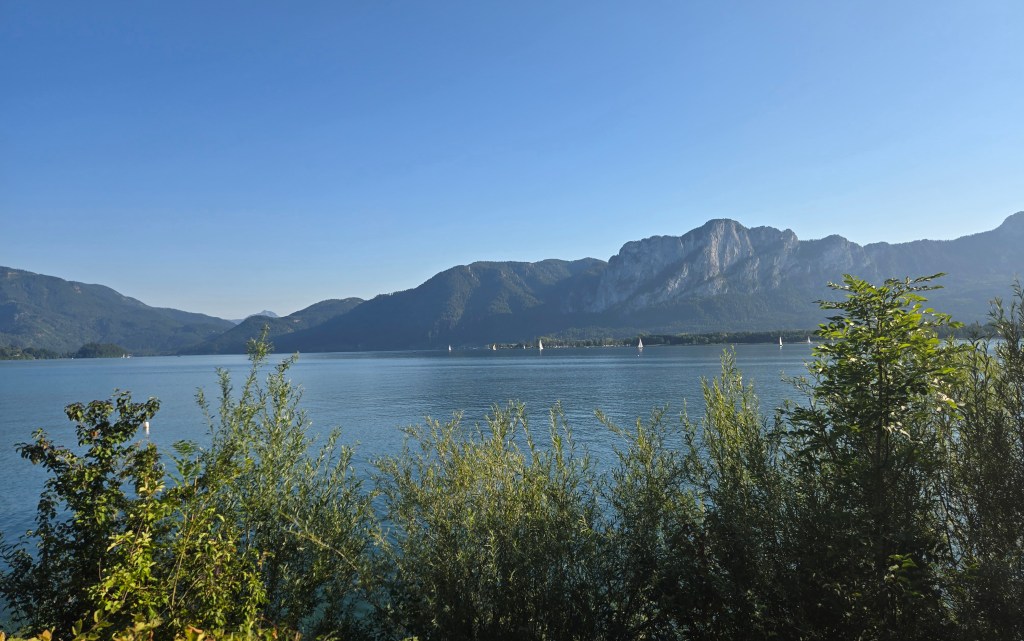
A good example of how these approaches work in parallel is to take a look at a lake resort town in the northern Austrian Alps called Mondsee, 140 miles west of Vienna. Mondsee, where parts of “The Sound of Music” were filmed, is a popular vacation spot. Cafes and swimming piers line the lake, which sits below a dramatic cliff known as the Dragon Wall. The main roads around the lake have multi-use paths for cyclists and pedestrians.
The main road into and out of Mondsee has a protected multi-use path.
Mondsee’s side roads use the second approach to make roads safe. These roads are narrow, barely wide enough for two cars to pass. This design forces drivers to go slow, making the streets suitable for safe cycling, walking, and for children to play.
Mondsee’s narrow side roads are narrow, a design that forces drivers to slow down.
A similar example of this exists in Fife, Scotland, where a coastal path runs the length of the region. The Fife coastal path runs from the Forth Bridge, in the Edinburgh metropolitan area, to the Tay Bridge, which connects to Dundee, an industrial-era city of 150,000 that has transitioned from the city of “jute, jam and journalism” to being a lively university town.
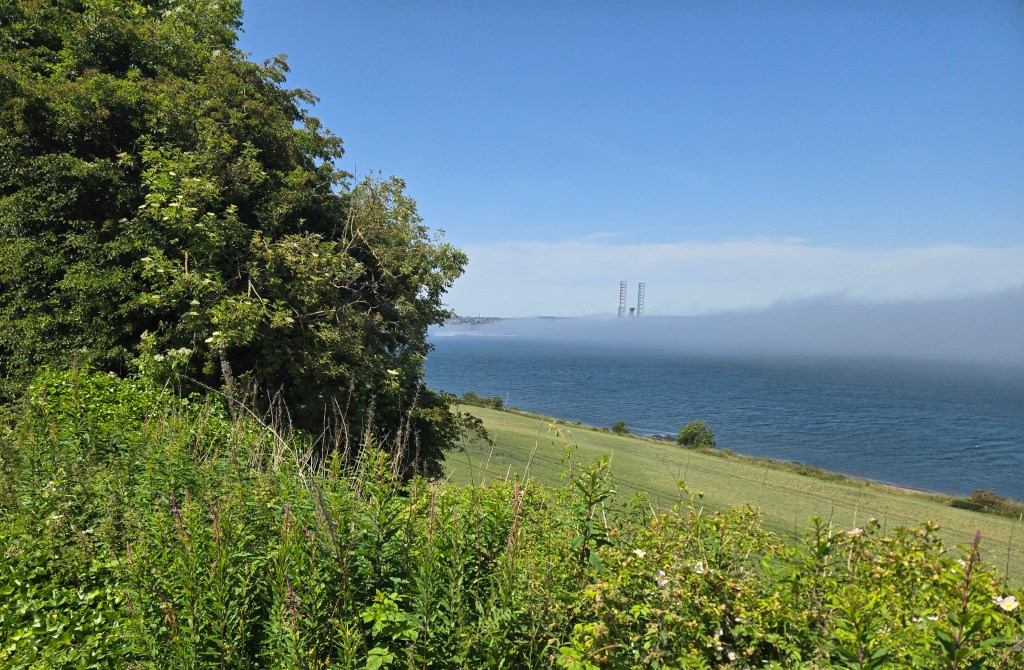
Between the two is a bucolic stretch of countryside, a dozen villages that have changed little since the reign of Queen Victoria, and the town of St. Andrews, the Mecca of golf. The coastal path practically invites users to stop and smell the roses, combining sidewalks, off-road pathways, and narrow rural roads into one continuous beltway suitable for both transport and recreation.
Examples of the sidewalks, off-road paths, and narrow rural roads that make up the Fife coastal path.
It’s rare to see these types of routes in America. A few long-distance routes exist, like the Empire State Trail in New York and the Chesapeake and Ohio Canal in Appalachia, but otherwise, the pedestrian/cycleway networks are few and far between, and they’re designed primarily for recreation, not for transport (long stretches of the Empire State Trail are on the highway!). This situation needs to change. Making non-urban America bikeable and walkable has obvious transportation benefits.
For example, the town of Sonoma, in the heart of California’s famed wine country, has dozens of wineries within easy cycling distance. Sonoma’s town square, built in the 19th century during the Mexican period, is lovely, and many wineries have established tasting rooms in the town. But to really take in the scale and beauty of wine country, one has to leave town, and that’s not realistic without a car. (Because it’s wine country, one would hope that a designated driver comes along too.)
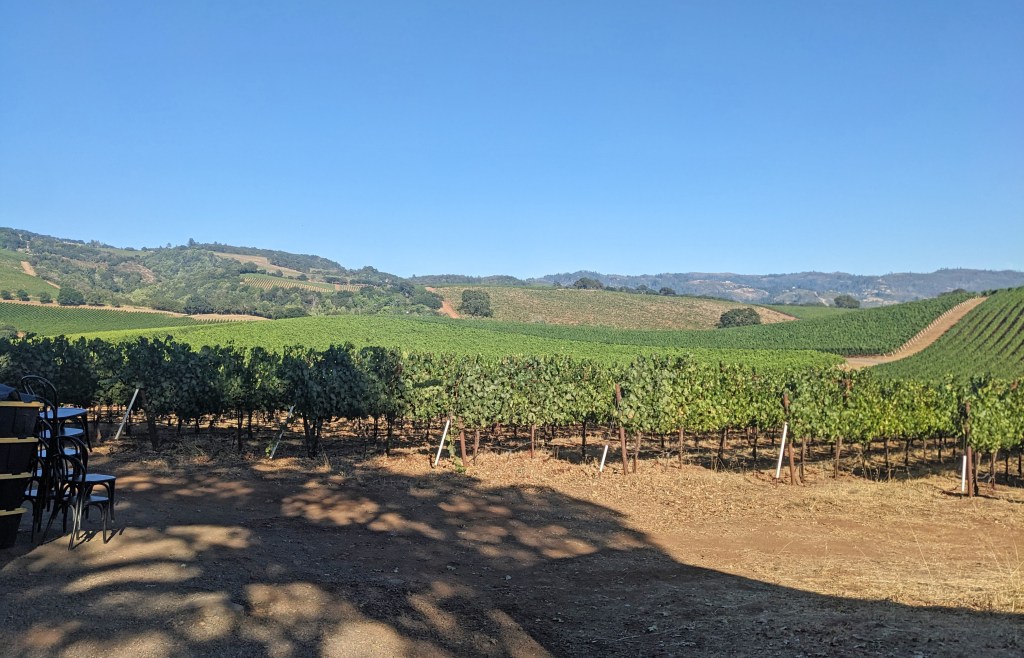
These areas suffer from hideous traffic during peak season, and every cyclist or pedestrian takes a car off the road. Going from San Francisco to Sonoma takes an hour and 15 minutes off-peak. At peak times, it’s two to three hours. Europeans handle this with a two-pronged approach: they have commuter buses every half-hour from the urban center, and pedestrian and bike infrastructure for local trips once passengers arrive in the country.
In addition to the quantifiable transport benefits, there’s also a deeper, more human benefit to this: the ability to slow down and take stock of the little details of a place, as opposed to zooming between discrete attractions in a metal box at 50 miles per hour. Being able to stop and smell the roses is exactly why people go on vacation, after all.
Obviously, all non-urban areas should have this type of transport infrastructure — and Europe leads the way here, too. But vacation destinations are the logical place to start because travel means getting out of your comfort zone, and liking it. And it’s common for travelers to want to replicate their experiences when they get home.
The California town of Davis became the bike capital of America because a University of California professor, Frank Child, spent time in the Netherlands with his family while on sabbatical in the 1960s. Child and his wife were so enthralled by the bicycle culture in the Netherlands that he was determined to bring the Dutch experience to sunny California. The result was Davis’s superlative bikeway network. Davis, smack-dab in the middle of California’s agricultural Central Valley, even has rural bikeways that would fit in well with the Austrian and Scottish examples.
Rural bike path in Davis.
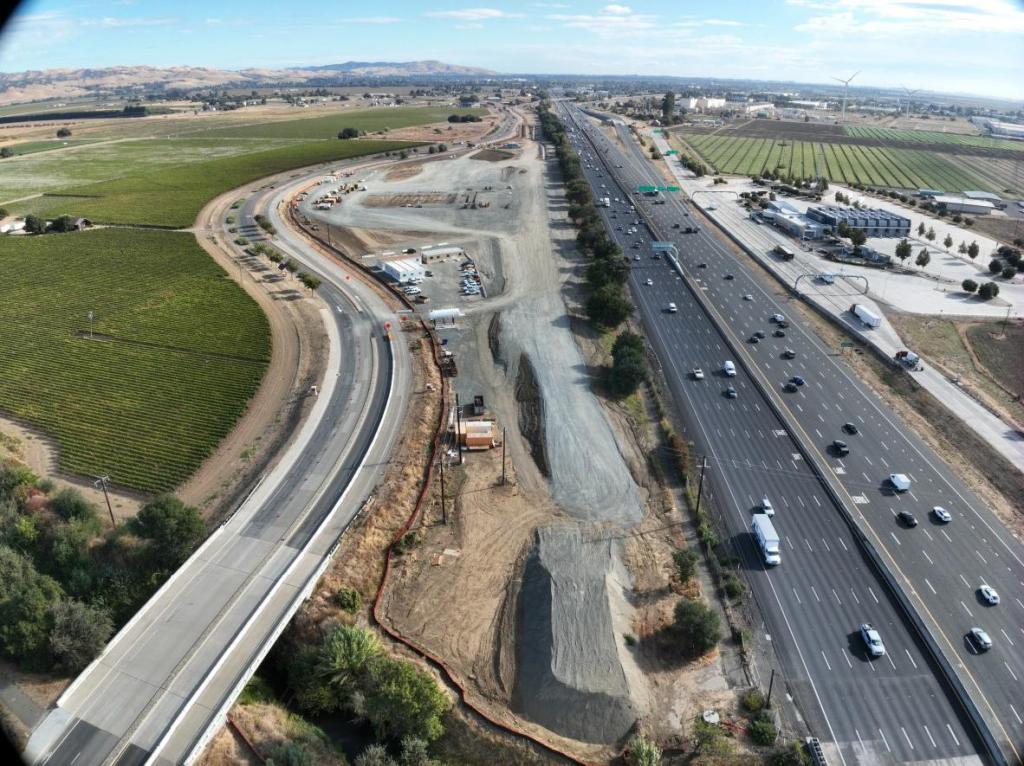
Cost is not a barrier to this type of infrastructure investment, because so many American roads are overbuilt, and designed for high-speed travel. The main entry road to Sonoma, Highway 12, is built with a hard shoulder; converting one shoulder to a multi-use path would be as easy as putting up some Jersey barriers.
Highway 12 is wide enough to add a multi-use path.
Cities aren’t the only places that need alternative transport options. And the best places to start with transforming non-urban areas are vacation destinations, where people are already willing to get outside their comfort zones. European transportation officials have already thought about the types of small-bore changes to make non-urban areas more bike- and pedestrian-friendly. Thankfully, most of these changes are cheap ones to make, and ones that can and should be imported by American transport officials.
Read More:
Streetsblog has migrated to a new comment system. New commenters can register directly in the comments section of any article. Returning commenters: your previous comments and display name have been preserved, but you'll need to reclaim your account by clicking "Forgot your password?" on the sign-in form, entering your email, and following the verification link to set a new password — this is required because passwords could not be carried over during the migration. For questions, contact tips@streetsblog.org.