Talking Headways Podcast: The Transit ‘Abundance’ Playbook
This week on the Talking Headways podcast, we’re joined by Will Poff-Webster of the Institute for Progress to talk about the Transit Abundance Playbook, a new collection of ideas to reduce transit project costs. We discuss how to translate ideas into legislation, how these ideas fit into the current transportation bill, the importance of building public sector capacity, and how to cut costs in order to build more transit projects.
And, as always, let’s review all the ways you can enjoy this spirited content:
- Click the player below to listen.
- Check out the lightly edited excerpt below the player.
- Click here for a full transcript, albeit with some AI typos.
Edited transcript:
Jeff Wood: Which of these fixes might be easiest for a layperson who isn’t deep in the weeds to understand?
Will Poff-Webster: There’s one pretty simple one, which is the fire code that most US transit agencies follow. It requires twice as many extra passageways in between subway tunnels as Europe or Asia does, and we spend a lot of money building those extra tunnels, and there’s no evidence that it improves fire safety.
Because guess what? Trains are made of metal. There’s not a lot of fires in train stations. It’s not that safety isn’t important, it’s just that this kind of extra expense doesn’t seem to do anything. Other countries study whether to follow the American model or the European model for building subways, and they go with the European one because they’re like, “We don’t want to spend all that extra money.”
That’s one of them. Another? We should let transit agencies buy land when they actually want to build the project instead of waiting five years to complete a book report before they’re allowed to buy land.
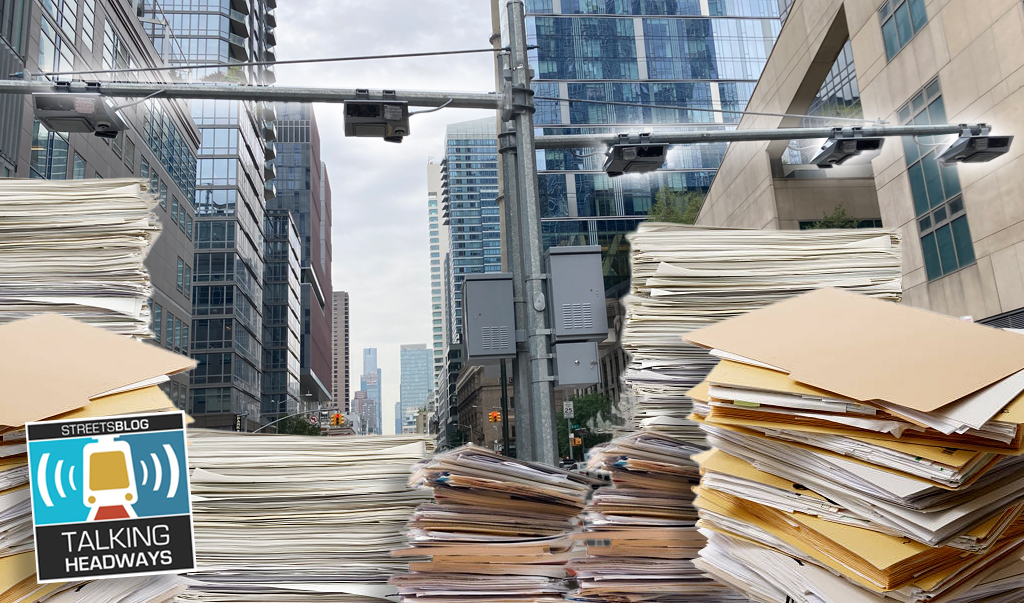
Jeff Wood: Yeah, a book report. That’s funny. I remember seeing the NEPA application for, I think it was the Portland Streetcar, and it was, like, taller than me when they stacked them up on top of each other.
Will Poff-Webster: The joke I’ve heard about this is the way to have a really bulletproof environmental review that no one can sue and stop you is to make it literally so thick with paper that you can’t shoot a bullet through it.
Jeff Wood: It’s literally bulletproof.
Will Poff-Webster: And it’s so sad that we require more environmental review, more pages of it, for congestion pricing or high-speed rail or a transit project, projects that actually improve the environment. Like there’s no negative environmental impacts of congestion pricing. It’s just straight up a good thing for the environment, but we make it go through years.
And, I mean, the conclusion that our authors come to is that that creates this avenue for the small percentage of people who do not want transit, who, you know, probably are drivers and, and don’t care about this. They just have so many ways to stop a project and delay it until it dies. And so instead we should be listening to the majority that voted for these projects and wants them to go ahead.

Read More:
Streetsblog has migrated to a new comment system. New commenters can register directly in the comments section of any article. Returning commenters: your previous comments and display name have been preserved, but you'll need to reclaim your account by clicking "Forgot your password?" on the sign-in form, entering your email, and following the verification link to set a new password — this is required because passwords could not be carried over during the migration. For questions, contact tips@streetsblog.org.