Tuesday’s Headlines Try, Try Again
Maybe another climate conference can succeed on phasing out fossil fuels where COP30 failed.
By
Blake Aued
12:01 AM EDT on April 14, 2026

- A major U.N. climate summit last year failed to produce an agreement on phasing out fossil fuels, largely due to the influence of petro-states like Saudi Arabia. But later this month, 85 nations will gather again to craft such a roadmap, including some of the world’s biggest economies, like Germany, the U.K., France, Spain, Brazil and Mexico. California Gov. Gavin Newsom is considering joining as well. (The Guardian)
- As fuel economy improves, U.S. gas consumption falls, even though people are driving more miles, according to the U.S. Energy Information Administration.
- Reviewing the new-ish book “Life After Cars,” even car enthusiast website Jalopnik acknowledges that life would be better if people didn’t have to drive so much.
- New York City Mayor Zohran Mamdani has created an Office of Curb Management to make better use of space that’s mostly now serving as car storage. (Streetsblog NYC)
- California’s push in the 1970s to force automakers to cut pollution by adding equipment like catalytic converters made the air cleaner and reduced lead levels for the entire nation. (The Conversation)
- As more riders use mobile payments, Bay Area transit agencies are losing millions of dollars to debit and credit card fees. (SFGate)
- Atlanta is spending $200 million on new sidewalks and sidewalk repairs along 50 corridors. (11 Alive)
- The growing Seattle suburb of Bellevue is moving away from its car-centric past. (The Urbanist)
- Hawaii transit ridership has been stuck at 81 percent of its pre-COVID level for two years. (Free Press)
- Austin is improving lighting on city streets and trails to make them safer. (KXAN)
- Palm Springs is working on a number of bike and pedestrian safety projects. (Post)
- TriMet is retiring the last of Portland’s original 1980s light rail trains. (Railfan)
- The Canadian, Ontario and Toronto governments are kicking in $1 billion each for a waterfront light rail line. (CBC)
- The Japanese travel more by train than in any other country because they have the world’s best rail system. It got that way through competing private companies that turn a profit by building entire neighborhoods along their tracks. (Works in Progress)

Blake Aued has been doing Streetsblog's daily national news digest for years. He's also an Atlanta Braves fan, which enrages his editor in New York.
Read More:
Streetsblog has migrated to a new comment system. New commenters can register directly in the comments section of any article. Returning commenters: your previous comments and display name have been preserved, but you'll need to reclaim your account by clicking "Forgot your password?" on the sign-in form, entering your email, and following the verification link to set a new password — this is required because passwords could not be carried over during the migration. For questions, contact tips@streetsblog.org.
More from Streetsblog USA
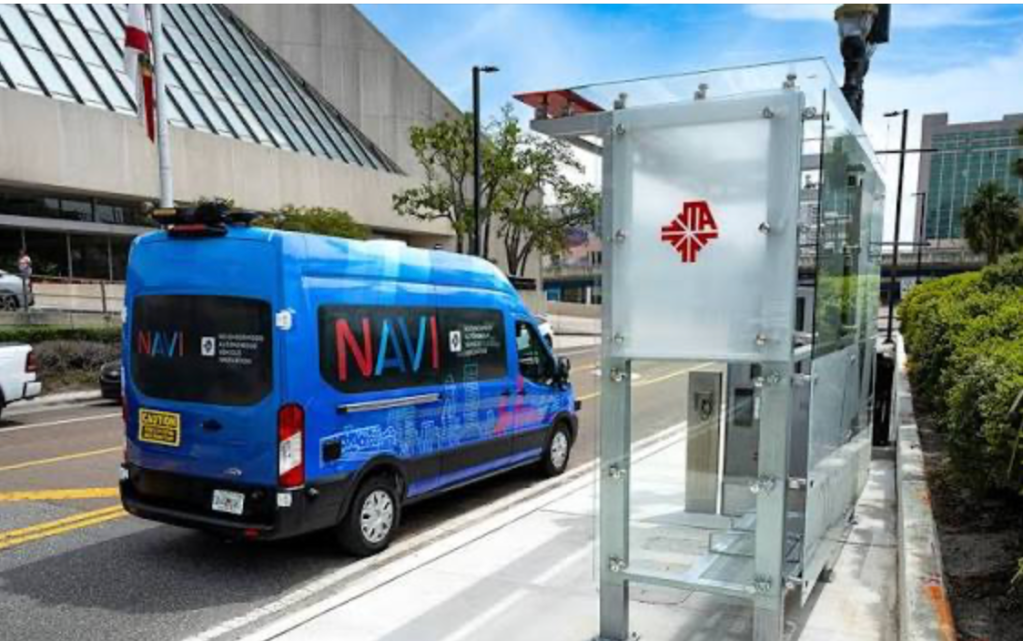
Is America’s ‘First Autonomous Transit System’ Really Dead?
And what should Jacksonville teach us all about the role of technology in our transit future?

October 13, 2026
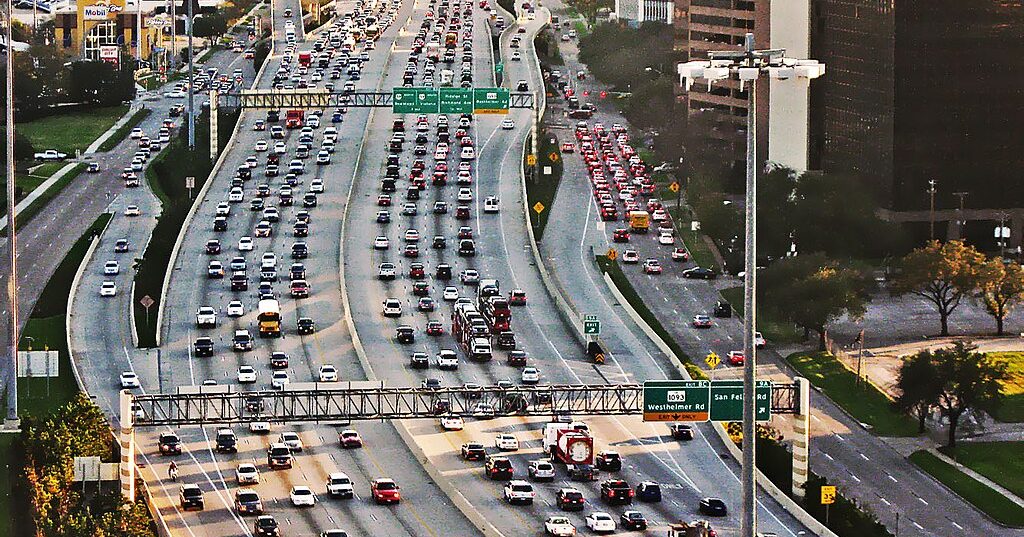
Inducing Demand for Tuesday’s Headlines
Just more one more lane, bro. I promise, one more lane will fix it.
October 13, 2026
Monday’s Headlines Take Matters Into Our Own Hands
Our editor-at-large Gersh Kuntzman isn't the only one getting up to criminal mischief.
October 12, 2026

Inside Baseball: Kuntzman To Step Down At Streetsblog; David Meyer To Take Over
Streetsblog's longtime editor will take on new challenges. And so will his successor.

October 9, 2026

Friday Video(s): Two Urban Cycling Trips Worth Taking
Choose your own urban cycling adventure: domestic or international edition.

October 9, 2026