Thursday’s Headlines Are Getting Their Butts Kicked by China
China alone accounted for 72 percent of the new metro and light rail lines that opened last year, more than doubling the rest of the world combined.
By
Blake Aued
12:01 AM EST on January 22, 2026
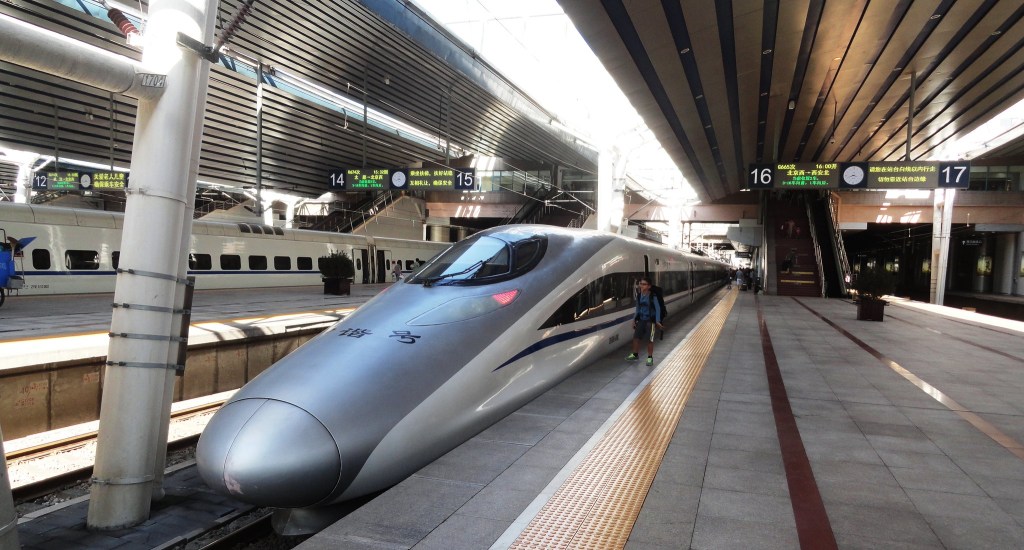
- China continues to far outpace the rest of the world when it comes to building new passenger rail lines. It accounted for 930 of the 1,300 kilometers worldwide that opened in 2025, and is expected to put up similar numbers this year, according to Yonah Freemark’s annual roundup of global transit projects. (The Transport Politic)
- Urban trails, transit and passenger rail are among the priorities for business groups in Boston and elsewhere as Congress writes a new transportation funding bill this year. (Boston Herald)
- Congressional Republicans are siphoning off funding for rail under the Biden administration’s infrastructure act, but Amtrak’s funding for 2026 remains unchanged, so the Rail Passengers Association thinks the rail appropriations bill could be worse.
- Quartz ranks Honolulu as the U.S. city with the best opportunities for outdoor activities like walking and biking, and Garland, Texas as the worst.
- On his way out, New Jersey Gov. Phil Murphy signed legislation requiring e-bikes to be registered and insured, and requiring a driver’s license to ride one, applying to all e-bikes regardless of their top speed (ABC 6). He also pardoned drivers convicted of a fatal hit-and-run and a vehicular homicide. (Politico)
- Atlanta officials secretly canceled a long-promised light rail project along the Beltline’s Eastside Trail. (Journal-Constitution)
- With city approval, residents of historically Black Southwest Atlanta are using tactical urbanism to protect pedestrians. (Fox 5)
- Cyclists are frustrated because a new protected bike lane on Juniper Street isn’t open, even though construction is done. (11 Alive)
- Chicago Mayor Brandon Johnson will not try to reverse a financially disastrous 2008 deal to sell the city’s parking meters to a private company, arguing that doing so could impede future bus and bike lane projects. (Tribune)
- Illinois Uber and Lyft drivers are lobbying for the right to collectively bargain. (Block Club Chicago)
- A road safety group is calling on Charlotte to reinstate its red light cameras. (WCNC)
- Copenhagen’s new red-tinted streetlights prevent light pollution and are better for nocturnal wildlife. (Daily Galaxy)
- Contrary to popular belief, the Amish don’t entirely shun technology, and some Amish communities are using e-bikes as a replacement for horses. (Jalopnik)

Blake Aued has been doing Streetsblog's daily national news digest for years. He's also an Atlanta Braves fan, which enrages his editor in New York.
Read More:
Streetsblog has migrated to a new comment system. New commenters can register directly in the comments section of any article. Returning commenters: your previous comments and display name have been preserved, but you'll need to reclaim your account by clicking "Forgot your password?" on the sign-in form, entering your email, and following the verification link to set a new password — this is required because passwords could not be carried over during the migration. For questions, contact tips@streetsblog.org.
More from Streetsblog USA
Inside Baseball: Kuntzman To Step Down At Streetsblog; David Meyer To Take Over
Streetsblog's longtime editor will take on new challenges. And so will his successor.

October 9, 2026

Friday Video(s): Two Urban Cycling Trips Worth Taking
Choose your own urban cycling adventure: domestic or international edition.

October 9, 2026

Friday’s Headlines Pay a Lot for Parking
The average apartment-dweller pays $200 a month for a parking space, included in their rent, whether they use it or not.
October 9, 2026
Talking Headways Podcast: The Long Road to Real Transit Progress
Jeff Wood and Reece Martin discuss China’s lessons for American infrastructure.

October 8, 2026

Thursday’s Headlines Are Another Front in the Culture War
David Zipper explains how transportation, once an issue with broad consensus, became politically polarized.
October 8, 2026