Talking Headways Podcast: Highway Robbery
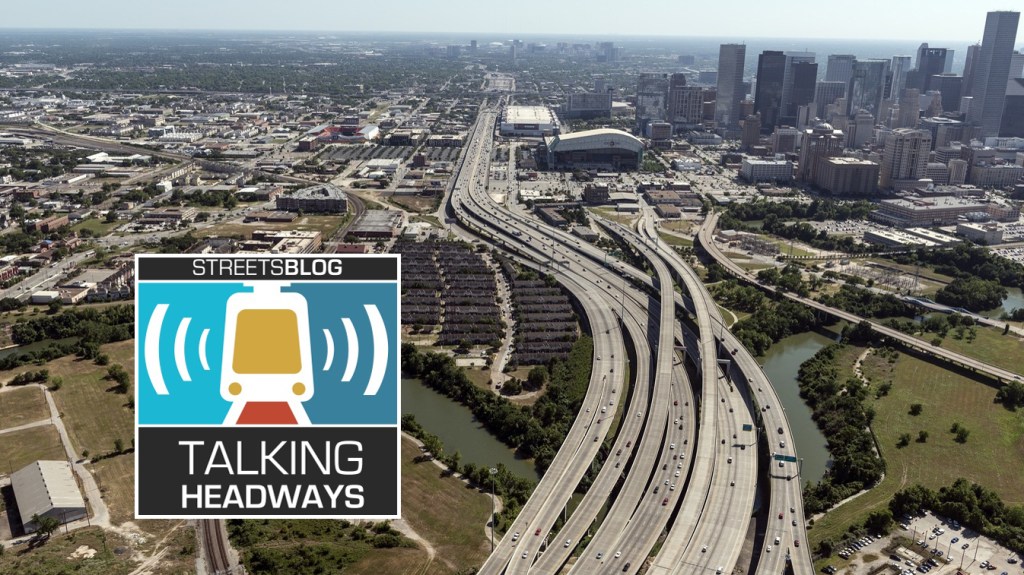
This week on the Talking Headways podcast we’re joined by Ben Ross and Joe Cortright to discuss their article in Dissent Magazine discussing how modeling is being used to expand highways around the country.
We chat about their critiques of highway modeling, politics and some potential solutions to the problem.
Jeff Wood: Considering 19 percent of, at least when I last looked at the data, which was-pre pandemic, 19 percent of trips are for work, but most of those trips take place at that time period. And so if you spread them out a little bit more, [it] might be actually a little bit more easy to provide those in some way.
It makes me think too, as we were seeing what’s happening with the pandemic, after the pandemic, in terms of work trips and things like that, and the spreading of all other trips throughout the day. It makes me wonder, like, what the new paradigm might be and how the models aren’t really going to address that either.
Ben Ross: Yeah, the models basically only do rush hour and then what they do is they just apply some multiplier to get the rest of the day, and I think that the modelers are a long way from catching up to the changes that have happened since pandemic.
Joe Cortright: That’s a great point because, and we’ve looked at that with regard to the interstate bridge project here in Portland, they essentially just blow off anything that happened during the pandemic. It’s industry standard practice to ignore what happened in the shift to work from home.
They haven’t even tried to adjust their models to show what’s going on there. And that should speak volumes to anybody who is serious about sort of the science of this. This is probably the most dramatic both short term and long term change that we’ve seen to travel behavior, occurred during and then subsequent to the pandemic and we’re seeing it, in the collapse of commercial office values in cities throughout the country that this market has fundamentally changed. and yet these models are pretending that nothing happened in terms of work from home. I wrote a piece for City Observatory that they’re planning for a world that doesn’t exist. That is something that should call into question all of these projects.

Read More:
Streetsblog has migrated to a new comment system. New commenters can register directly in the comments section of any article. Returning commenters: your previous comments and display name have been preserved, but you'll need to reclaim your account by clicking "Forgot your password?" on the sign-in form, entering your email, and following the verification link to set a new password — this is required because passwords could not be carried over during the migration. For questions, contact tips@streetsblog.org.