

Tuesday’s Headlines Compete for Curbs
Curbs are useful for a lot of things, and competition for space is growing. But the default in many cities is still free parking.
By
Blake Aued
12:01 AM EDT on October 31, 2023
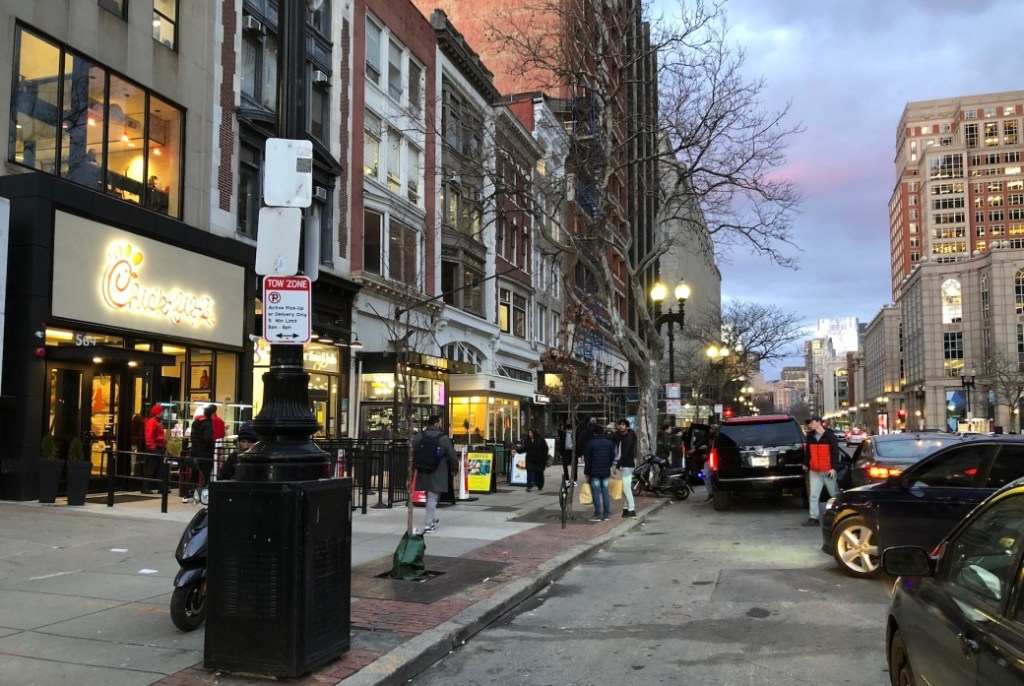
- Despite all the competition for curb space these days — from deliveries to outdoor dining to charging stations — cities mostly still use it for free parking. (CNN)
- California’s quick reversal on driverless cars shows that government regulators still aren’t quite sure what to do with them. (Washington Post)
- The average American drives 10,000 miles a year, and at that rate the costs to society far outweigh the benefits. Driving should be infrequent in urban and low-income areas, and practically nonexistent in city centers, according to a Planetizen analysis.
- E-scooters don’t really belong on sidewalks, but sometimes riders have no choice. (Forbes)
- Angie Schmitt wonders why police departments waste Pedestrian Safety Month by shaming victims instead of doing something helpful. (Streetsblog USA)
- The D.C. Metro has improved service and streamlined fares over the past year and a half, but all that progress could be lost as the agency faces a fiscal cliff. (Transit Center)
- A Jewish cyclist and her child were harassed by an antisemitic driver in Washington, D.C. who blocked a bike lane with his SUV and called them “the devil.” (New York Post)
- A Mississippi woman searching for her missing son finally discovered that police had run him over and buried him in a pauper’s grave six months earlier. (NBC News)
- BART officials are considering consolidating with some of the Bay Area’s many other transit agencies. (San Francisco Chronicle)
- Sactown Mag interviews Susan Handy, a University of California at Davis professor, director of the National Center for Sustainable Transportation and author of “Shifting Gears: Toward a New Way of Thinking About Transportation.”
- It looked like Los Angeles was going to tear down the Marina Freeway and replace it with housing, but true to form, the city wound up caving to NIMBYs. (L.A. Times)
- Has bus rapid transit made Charlotte’s Red Line obsolete? The proposed light rail line would actually be slower than BRT. (WFAE)
- Portland’s “BRT lite” is working, and could be a model for a lot of other places where dedicated lanes aren’t an option. (Human Transit)
- San Antonio will break ground on the Green Line BRT next year. (Report)
- Denver is considering making transit permanently fare-free for riders 19 and under. (The Center Square)
- Today is the last day for Seattle residents to urge the city to improve its transportation plan. (The Urbanist)
- Sydney may let buses take control of traffic lights. (The Guardian)

Blake Aued has been doing Streetsblog's daily national news digest for years. He's also an Atlanta Braves fan, which enrages his editor in New York.
Read More:
Streetsblog has migrated to a new comment system. New commenters can register directly in the comments section of any article. Returning commenters: your previous comments and display name have been preserved, but you'll need to reclaim your account by clicking "Forgot your password?" on the sign-in form, entering your email, and following the verification link to set a new password — this is required because passwords could not be carried over during the migration. For questions, contact tips@streetsblog.org.
More from Streetsblog USA
‘Premeditated Road Violence’: Toronto Protestors Block Bike Lane Removal
Toronto advocates are putting their bodies on the line to protect a bike lane the province wants to rip out — and and to fight a wave of anti-bike lane sentiment that this writer warns is sweeping the whole continent.

October 21, 2026
Take a Risk on Wednesday’s Headlines
Transit agencies that bet on high diesel costs are reaping rewards, but the strategy doesn't always work out.
October 21, 2026
Why US Roads Are Full of SUVs and Trucks, Part II
Yesterday, we looked at how SUVs and pick-ups captured the new car market. Today, let's talk about how they captured the used car market as well.

October 21, 2026
When Are Parking Debates Just A Smokescreen for Hate?
A new paper finds that mosques are more likely to face pushback over parking than other houses of worship. What should planners do about it?
October 20, 2026

Tuesday’s Headlines Do the Robot
Cities and states are filling the void, but the feds really need to step in to set rules for autonomous vehicles.
October 20, 2026
