Thursday’s Headlines Are Incomplete
There's too much wiggle room and not enough specific direction for traffic engineers in many Complete Streets policies.
By
Blake Aued
12:01 AM EDT on July 13, 2023
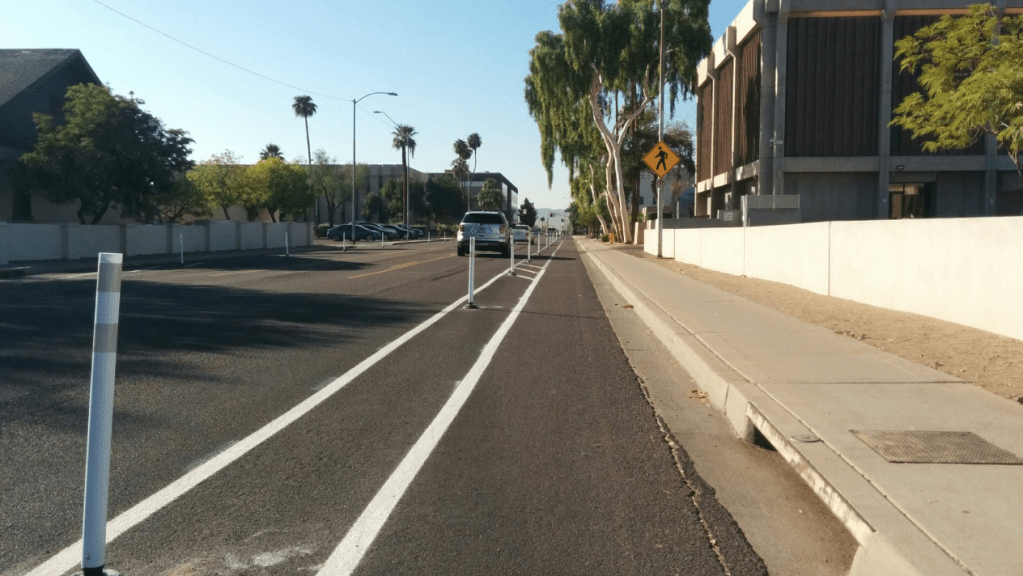
- Failed Complete Streets policies that don’t result in fewer cyclist and pedestrian deaths are often so vaguely written that they don’t give bureaucrats much guidance, a recent article argues. (Planetizen)
- When freight trains block street intersections, forcing pedestrians to wait or risk their lives clambering over them, local governments have little recourse, even with $3 billion in funding from the Biden administration for bypasses. (New York Times)
- Congestion pricing like New York City is implementing is a “perfect trade” that both discourages driving and funds transit. (GreenBiz)
- Truck manufacturers have agreed to abide by California’s 2036 ban on new diesel big rigs to avoid litigation and maintain one nationwide standard. (Washington Post)
- A new freight master plan in Portland calls for more separation from cyclists. (Bike Portland)
- The contractor for Minneapolis’ over-budget Southwest light rail line says recommendations in a critical audit would have led to even more delays and expenses. (Star Tribune)
- The New Orleans Regional Transit Authority’s new CEO is going back to basics by focusing on improving service and reliability. (Governing)
- Building Salt Lake traces the history of Salt Lake City’s S-Line.
- Denver’s popular e-bike rebate program is benefiting cyclists and the environment, but not necessarily local bike shops. (Axios)
- Los Angeles is following the lead of Barcelona’s “superblocks” by reclaiming portions of neighborhood streets for car-free parks. (Smart Cities Dive)
- Even one Dutch airline CEO wants to put short-haul passengers on trains as European airlines try to meet carbon emission goals. (Politico)
- Bikes now outnumber cars in the City of London, the sprawling metropolis’ central square mile. (Forbes)

Blake Aued has been doing Streetsblog's daily national news digest for years. He's also an Atlanta Braves fan, which enrages his editor in New York.
Read More:
Streetsblog has migrated to a new comment system. New commenters can register directly in the comments section of any article. Returning commenters: your previous comments and display name have been preserved, but you'll need to reclaim your account by clicking "Forgot your password?" on the sign-in form, entering your email, and following the verification link to set a new password — this is required because passwords could not be carried over during the migration. For questions, contact tips@streetsblog.org.
More from Streetsblog USA
Why Deadly, Illegal E-Motos Are On The Rise – And Why E-Bikes Are Being Blamed When They Crash
...and what we can do to protect our kids *and* the e-bike revolution.

October 26, 2026
Monday’s Great Smokey Headlines
While other countries work to reduce greenhouse gas emissions, the U.S. is moving in the opposite direction.
October 26, 2026

Op-ed: Will Illinois lawmakers let Waymo “Move fast and break things” in Chicago?
As Illinois considers autonomous-vehicle legislation, proposed protections for manufacturers raise questions about safety, privacy, and public consent.

October 25, 2026

Friday Video: Inside the Global Far-Right Push To Rip Out Bike Lanes
Toronto might be in the center of the fight to resist bike lane teardown today. But if some far-right politicians have their way, this fight won't be the last.

October 23, 2026

Friday’s Headlines Shoot Themselves in the Foot
Gas taxes pay for transit, too, so what happens when politicians pander to voters, and the highway trust fund runs dry?
October 23, 2026