Talking Headways Podcast: Reimagining Sustainable Cities
This week, I talk to Tina Rosan, associate professor at Temple University, and Stephen Wheeler, professor at UC Davis, about their new book “Reimagining Sustainable Cities: Strategies for Designing Greener, Healthier, More Equitable Communities.” How we can design our cities and our government to be fairer? Let’s go!
For those of you who get your news through your eyes and not your ears, there’s an edited transcript below the audio player. If you want a full, unedited transcript (with some typos!), click here. If you want to listen, here you go:
Jeff Wood: You talk in the book about how you feel like we’ve specialized a little bit too much, and I feel like this actually pushes people in another direction to look more at the larger picture. That’s a good thing. It’s something that I try to do with my newsletter. I could focus on transportation only, but we talk about a number of different strategies and a number of different topics, because it’s important to go further out from one silo.
Stephen Wheeler: The field of transportation is a great example of that. In the 20th century, it was taken over by the engineering side of things. And there were standards that were laid down by national associations, such as AASHTO, and the streets had to be a certain width and people were locked into a whole bunch of simple goals and ways of designing streets.
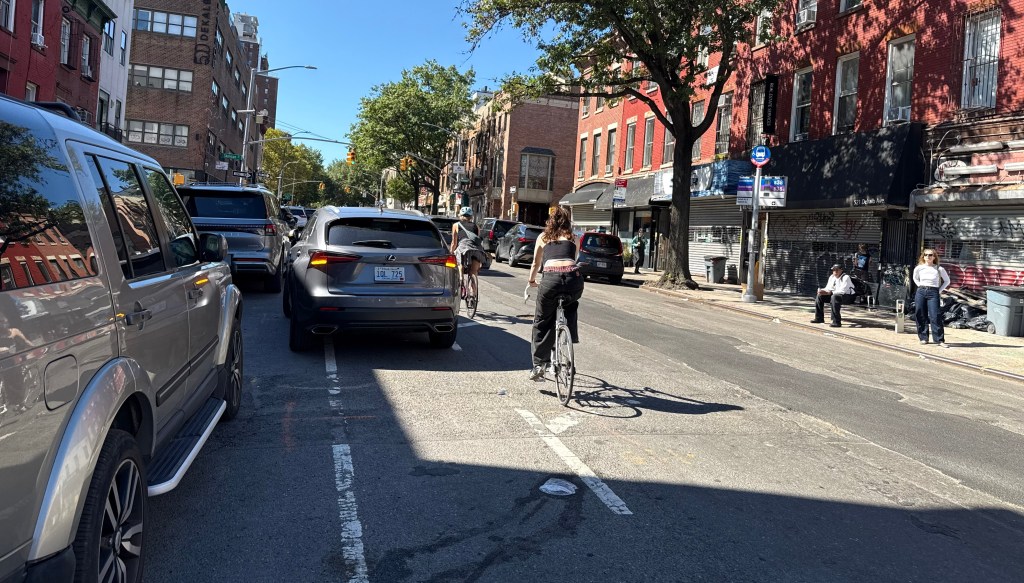
Then, toward the end of the 20th century, and now in the 21st, people are realizing, oh, we need a much broader approach. We need to really have designers involved, in addition to engineers, and we need to have things like complete streets, which account for all the user groups out there.
And we need to have things like green streets, which have ecological function. And so there has been a vast broadening out and some of the old engineering frameworks are now seen as way too constricting.
Tina Rosan: Steve, I think that’s also true if you think about something like green stormwater infrastructure, right in the past, you’d have some engineers who would just figure out how to get you the clean water and build the pipes. Now we’re asking people to think about how green stormwater management is related to parks and playgrounds, and it’s also connected to gentrification. So we need people who are skilled in the technical, but we also need them to understand the historical on the economic, the history that has shaped the urban environment.
Because if you just walk in with your engineering solution and you don’t understand history, you’re not going to get to that equitable place because you don’t understand how complex it is. The story that we are trying to tell is that, cities are exciting. They’re also super complicated and they are embedded in a lot of value systems and history and normative ways of thinking. We actually have to push back on that and imagine something different.
As an academic, I’ve had people say to me like, oh, Tina, you know, why are you fighting the refinery? Because we are always going to have a refinery. I keep asking, well, why, why is it there? Why do I have to have that refinery in my city? You know, is there another way? That’s what is exciting about like being allowed to ask the questions and to re-imagine, it does open the possibilities of a different future.

Read More:
Streetsblog has migrated to a new comment system. New commenters can register directly in the comments section of any article. Returning commenters: your previous comments and display name have been preserved, but you'll need to reclaim your account by clicking "Forgot your password?" on the sign-in form, entering your email, and following the verification link to set a new password — this is required because passwords could not be carried over during the migration. For questions, contact tips@streetsblog.org.