Dear Joe: The Electric Hummer is Not the Future
Dear Mr. President,
Well, here we are again.
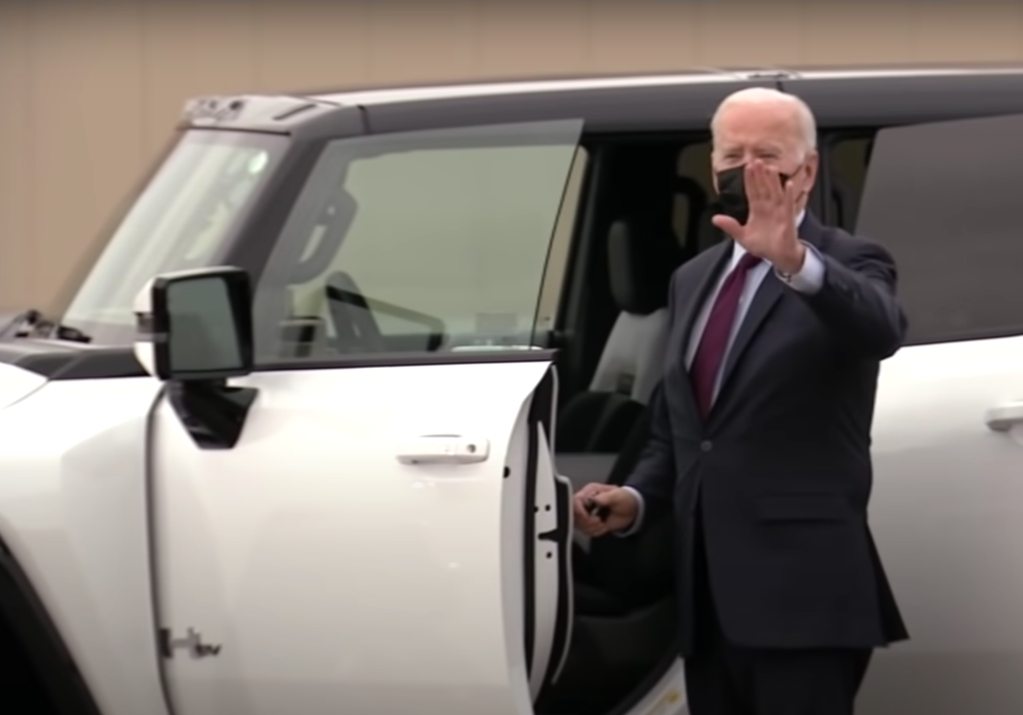
On Wednesday night, sustainable transportation advocates got their first lump of coal for the holidays: yet another video of you, gleefully speeding down a closed-course runway in a massive electric truck. “I’m a car guy,” you wrote in the caption (which sounds pretty odd coming from a man whose most famous nickname is “Amtrak Joe,” but we digress). “I’ve gotten a chance to drive some pretty incredible vehicles over the years, but I never could have imagined ones like the electric vehicle I took for a spin today.”
That “incredible” electric vehicle, needless to say, wasn’t an electric bike.
Nor was it an electric bus, or a wheelchair-accessible e-van, or even just a modest, small-format electric car.
No, that “incredible” vehicle was none other than the electric Hummer: a 9,046-pound behemoth that costs $108,700, can go from 0 to 60 in three seconds, and, like all cars of this gargantuan size, will be two to three times more fatal to a pedestrian in the event of a crash.
The Hummer EV has become something of a symbol of the neoliberal approach to curbing transportation emissions — at least among the handful of sustainability advocates who dare to question the wisdom of putting multi-ton, single-occupancy automobiles at the forefront of the nation’s climate strategy.
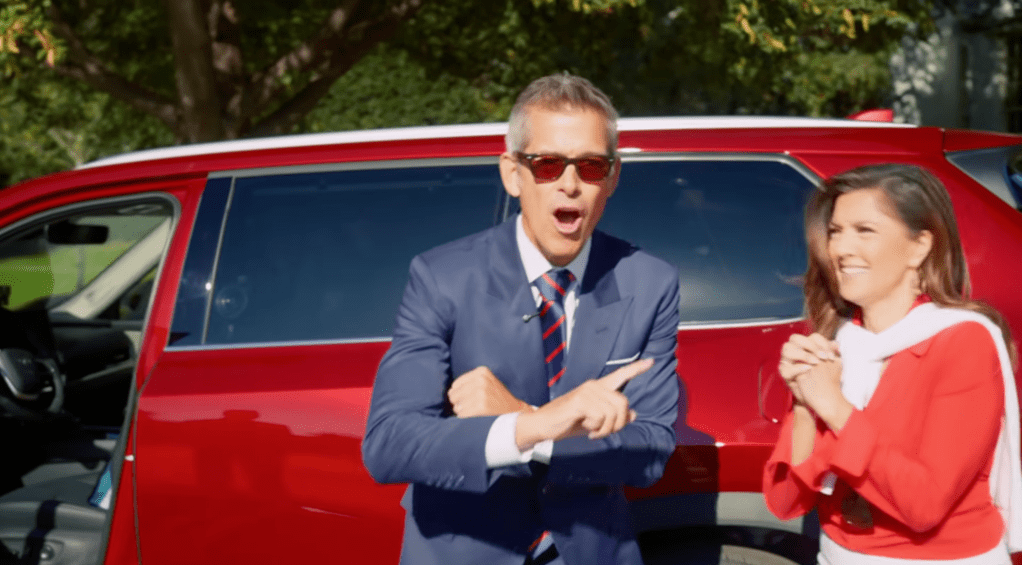
Grist journalist Shannon Osaka called it “an oxymoron on wheels that could make environmentalists want to tear their hair out.” CityLab’s Andrew Salzberg wondered whether the model could “convince skeptical SUV fans to give up on internal combustion and thus speed the decarbonization of transportation” or if it was simply “the worst kind of greenwashing.” Streetsblog wrote a whole three-part series about it back when the first commercials for it began to air in February, 2020, a full four years before the car will ostensibly become available for sale.
None of these advocates question that a car that runs on clean energy is superior to a car that runs on fossil fuels. Very few would seriously doubt that every car that is on the road in America should emit as little as carbon as possible, and that the U.S. government should play a role in making greener vehicles accessible to more Americans.
What sustainable transportation advocates must question, though, is how much of that government strategy — and how many presidential photo-ops — should focus on swapping gas tanks for batteries, while leaving all the other damages of autocentrism largely unaddressed, along with introducing several new ones.
By now, endless ink has been spilled on all the unfortunate side effects of the EV revolution:
- Ultra-heavy batteries that increase vehicle weights by roughly 20 to 30 percent, and threaten to increase crash death rates even when the electric cars involved aren’t as super-sized as the Hummer.
- A 3- to 8-percent spike in health-damaging particulate emissions, at least among the heaviest EV models that politicians like you have lavished with such rapturous praise.
- An environmentally intensive manufacturing process that emits more than building conventional cars and ravages fragile ecosystems along the way.
- A potential surge in vehicle miles travelled, and all the congestion, noise pollution, and traffic violence that comes with it — at least if advocates are correct that a reliable national charging network will someday tempt drivers to succumb to the Jevons paradox and get behind the wheel even more than they do now, because they believe, incorrectly, that ditching the internal-combustion engine means they’re ditching everything that’s harmful about driving.
Those negative externalities may seem like an unavoidable price we must pay for reducing the ultimate negative externality of global ecosystem collapse — the best a car-crazy country like America can realistically do. Even if we’ve seen the mountains of scientific evidence that make it clear that there’s no way to stop the worst impacts of climate change without driving less and choosing active and shared transportation more, focusing the public imagination on vehicle electrification at least feels more attainable: a green-ish solution that automakers, energy companies, construction firms, and the many other automobility capitalists can get behind, because, of course, it will make them all rich.
Heck: even the kind of person who would drive a Hummer might even get on board. What’s not to like?
But that line of reasoning raises an important question: why on Earth are we wasting a single presidential tweet trying to trick Hummer drivers into emitting less, when that same rapidly warming Earth is full of people who would willing drive a lot less, if only a safe, convenient, affordable and dignified option was available to them for at least some of their trips?
Yes: there are gas-guzzling Americans out there who could be convinced to trade their beloved megacars for a greener megacar through the right combination of super-sized tax credits, access to sub-prime loans, vast networks of government-funded charging stations, and toxic masculine ad campaigns featuring a Lebron James voiceover and an SUV plummeting out of the very sky.
But for every one of them, there are countless other Americans who could easily be convinced to walk a few blocks to the grocery store if they just had a sidewalk to get there, and a small shift in the local zoning code to make it possible for a grocery store to be built there at all. The maximum amount your Build Back Better Act would offer would-be Hummer EV buyers — a staggering $12,500 — would be enough to buy that same shopper an unlimited transit pass in notoriously expensive New York City every month for more than eight years, or roughly the same amount of time that the average American owns a car before she trades it in. And at the end of that eight years, she won’t have a 9,064-pound pile of scrap metal to contend with recycling.
Mode shift in America is often framed as a Herculean task that will require nothing short of the re-wiring of the American psyche, not to mention the wholesale re-designing of every street and road in the country. But the truth is, a staggering 21 percent of annual vehicle trips in the U.S. are under one mile long; six percent of them are under half a mile, and another 23 percent are within the easily-bikeable distance of one to three miles.
These are jaunts to the local park, outings to the library, short trips to the daycare that would absolutely be taken on foot if parents weren’t afraid they’d be met with a Hummer-sized threat to their child’s life at every intersection. They represent small, strategic, inexpensive, and above all, urgent infrastructure and policy investments — investments that the new Bipartisan Infrastructure Deal will make, but at a scale that will be dwarfed by roadway dollars that make driving a tank a couple of blocks to the movie theater all the more tempting.
The bill you just signed into law isn’t all bad news for vulnerable road users — and it isn’t all good news for the Hummer EV. The National Highway Traffic Safety Administration will finally be required to disclose to car-buyers how dangerous their new rides are to people outside their vehicles, which might give a few megacar enthusiasts at least a little pause. New safer hood and bumper standards, which Congress has mandated NHTSA to investigate, could make the sky-high nose of the car you drove yesterday illegal in just a few years, which could at least increase a pedestrian’s chances of being struck at the waist level or below rather than the all-too-fatal head- or neck-level crash.
It’s not nearly enough, of course. And until Congress starts adding teeth to laws like these and get inherently dangerous vehicles like the Hummer off the road for good, your leadership is all the more important.
The truth is, Joe, you’re not just a car guy. You are also the world’s most powerful traffic violence survivor. And that means you must be a voice for the millions of bereaved families who, just like you, have lost loved ones whose lives could have been saved, if the vehicles on their roads and the design of those roads themselves had just been safer.
You can be a car guy. But please, at the very least: don’t be that car guy. It’s not a good look.
Sincerely,
Streetsblog

Read More:
Streetsblog has migrated to a new comment system. New commenters can register directly in the comments section of any article. Returning commenters: your previous comments and display name have been preserved, but you'll need to reclaim your account by clicking "Forgot your password?" on the sign-in form, entering your email, and following the verification link to set a new password — this is required because passwords could not be carried over during the migration. For questions, contact tips@streetsblog.org.