How Cities Are Keeping Voting Queues Safe from COVID-19 and Cars
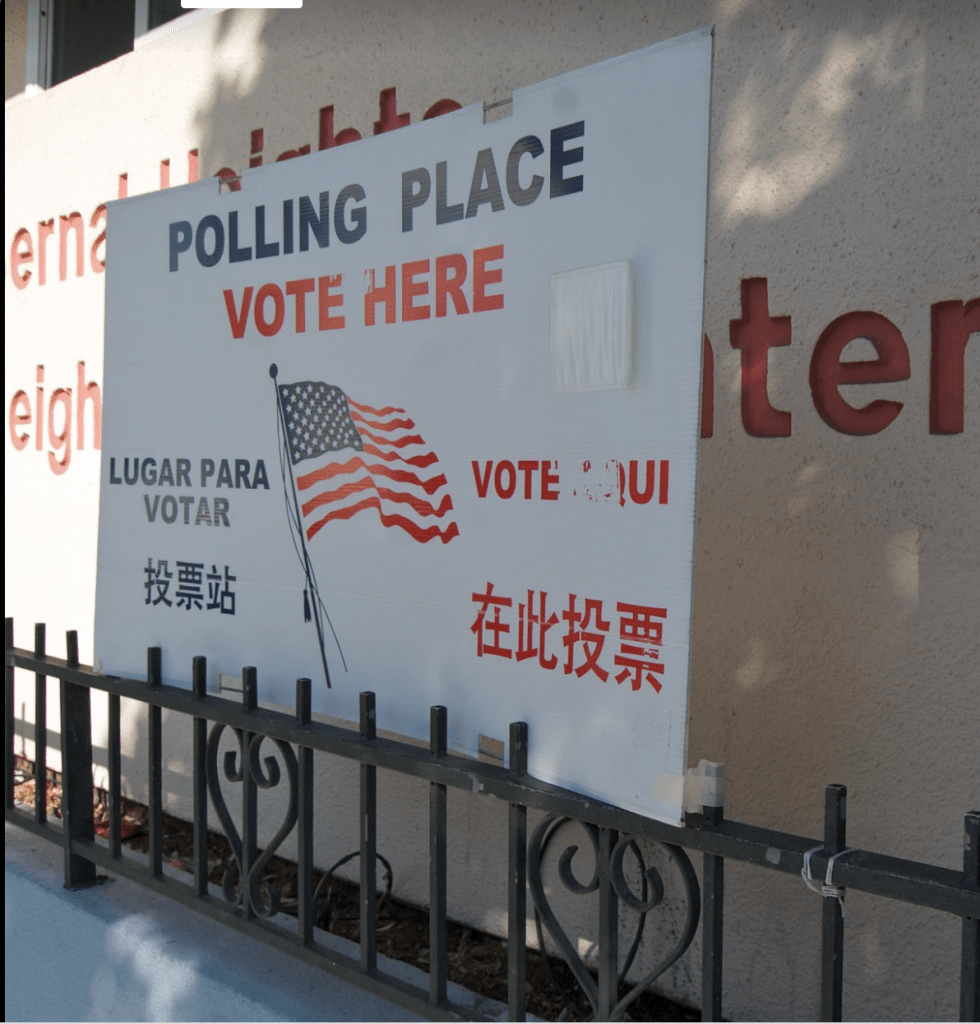
To make voting easier during the coronavirus pandemic, some cities are using space typically allocated to drivers to create larger polling places (and safer lines) for people — a reminder that casting ballots should be a priority in every election day in every city, advocates said.
Even in the first hours of election day, a combination of social distancing requirements and anticipated record-breaking voter turnout were already stretching lines to their limit; in some cities, voters have already waiting for hours in outdoor spaces that weren’t remotely designed with human bodies in mind.
“All over the country, we’re seeing long lines of voters spilling into the streets — and especially in places without good sidewalk infrastructure, or cities that didn’t think ahead to protect long lines of voters from the weather with basic coverings, it can become a real hazard,” said Mike Lydon, co-author of the Streets for Voting guide, which his firm, Street Plans, recently released to city officials. “I was just looking at photos of Atlanta where voters standing in intersections. Those kinds of hazards are unacceptable, and they can become their own deterrent to voting.”
But not every city is putting its voters in harm’s way. Some communities thought ahead and put guides like Lydon’s into practice — and some started long before election day.
In Pittsburgh, outdoor early voting stations on car-free streets were particularly popular among BIPOC voters who were wary of their mail-in votes being counted in time.
San Francisco was also quick to offer early voting in outdoor settings, including bike-up ballot drop-off stations like this one (don’t worry, we’re told there’s a generous sidewalk on the other side of that booth), and outdoor polling locations outfitted with generous canopies to keep voters warm and dry.
Portsmouth, N.H. spun its outdoor voting program as an alternative to those who don’t, won’t, or can’t wear a mask in an indoor facility, and set up generous space for waiting voters to safely social distance in a large parking lot.
Here’s one New Hampshire parking lot polling place, including the best use for a giant pick up we’ve seen in a while: as a massive paperweight for a protective canopy.
Southborough, Mass. also went the extra mile to draw voters to its outdoor polling locations by letting them double as COVID-19 screening centers; yes, you can drop off your ballot and your hermetically sealed vial of nose germs in one handy place!
Open-air stadiums are proving to be popular for well-ventilated voting, including this one in Harris County, Texas. (Yes, we’re aware that the Houston area is a little more famous these days for their drive-thru voting program and the ensuing legal debacle, but there are plenty of polling places in and around the Space City that don’t require access to a gas-guzzling automobile.) It’d be even better if they closed down the empty parking lots outside these monster arenas and put them to a more Democratic use, but at least you can avoid queueing around one of Houston’s notoriously pedestrian-unfriendly blocks at a more traditional voting location if you choose to vote at Rice University.
In Boston, Red Sox fans who prefer an outdoor voting option can even live out their Fenway fantasies…and of course, they were very Boston about it (see the wicked awesome video in second tweet below).
Even in cities that haven’t opened their streets and parking lots to people, private citizens are doing their best to make voting queues as safe, comfortable, and even joyous as they can — something experts stress is key to making participating in our democracy an exciting proposition, even in states that seem to do their darndest to suppress their citizen’s rights to the polls.
“It’s so important to think about how we can use public space to make the experience of waiting to get into a polling location joyous and inclusive,” Lydon emphasizes .”And particularly in dense urban spaces, that often means we need to repurpose some car space.”
Activists in Springfield, Mo. activated the area outside a Missouri State University voting place with a whimsical selfie station (though we wish they’d gotten clearance to put that thing in a parking spot….and maybe left a few Lysol wipes lying around.)
We’d love to see the streets filled with more #PlayForTheVote musicians serenading Americans as they wait on those long lines — especially in those cities that don’t provide a car-free patch of grass for performers to set up their instruments.
And some good neighbors supported their fellow voters in simpler ways: by giving them umbrellas when their government left them standing in the rain.
Of course, making public space around polling stations safer and more comfortable for outdoor voting isn’t a silver bullet — and until states stop suppressing the vote by closing down polling stations and other (often racist) atrocities, those lines will stay unacceptably long. But it’s heartening to know that at least some American cities — and average Americans – are out there trying their best to keep Democracy moving.

Read More:
Streetsblog has migrated to a new comment system. New commenters can register directly in the comments section of any article. Returning commenters: your previous comments and display name have been preserved, but you'll need to reclaim your account by clicking "Forgot your password?" on the sign-in form, entering your email, and following the verification link to set a new password — this is required because passwords could not be carried over during the migration. For questions, contact tips@streetsblog.org.