Berkeley To Become the First US City To De-Cop Traffic Enforcement
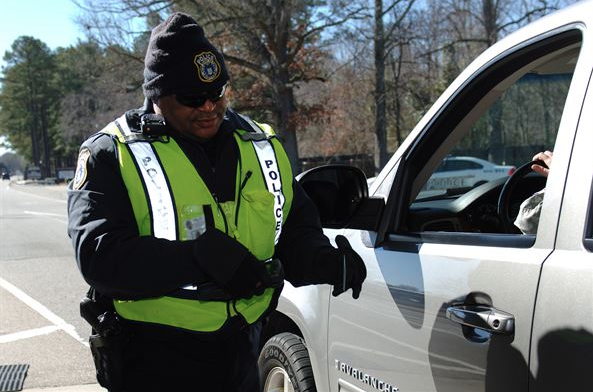
The California city of Berkeley will become the first in the United States to take police officers out of traffic enforcement and replace them with unarmed employees of a newly formed Department of Transportation.
The early Wednesday morning vote was part of a larger slate of reforms aimed at enhancing street safety for Black residents who face disproportionate violence and harassment by police on the city’s transportation network. Only 8 percent of Berkeley residents are Black, but between 2012 and 2016, 36 percent of traffic stops in the California city involved Black road users. Those numbers shot up between March and June of this year, when Black people were reportedly the target of half of the 608 traffic stops conducted by officers.
Local transportation advocacy group Walk Bike Berkeley was instrumental in initiating the final proposal, which received crucial support from Bike East Bay, East Bay For Everyone, the East Bay Community Law Center, and the Ella Baker Center for Human Rights.
The new transportation department will be established only after a “substantial community engagement process to develop a new model for policing in Berkeley, to address racial inequities, ensure community health and safety needs are met, and to build trust within our communities of color,” the council specified. Members also voted to relieve the police of its responsibility to respond to other non-emergency calls on the streets and elsewhere, including calls related to homelessness, domestic violence, intoxication and “any other calls that can be served by any other city resource.”
Berkeley cut its police budget by 12 percent two weeks ago. A proposal to cut the police budget by at least 50 percent, which was presented by the council’s only Black woman member, Cheryl Davila, did not pass, but the council said its goal is to get there by some unspecified date, the East Bay Times reported.
Racism in street safety law enforcement, of course, is not unique to Berkeley — and some street safety advocates hope that their own cities will consider similar proposals.
The most recent analysis from the Stanford Open Policing project found that the annual per-capita stop rate for Black drivers in the United States was 0.10, compared to 0.07 for white drivers on state roads; on municipal roads, the rate was even higher, with the average Black driver experiencing 0.20 stops each year compared to 0.14 for white drivers. And because Americans meet police so often in their cars — traffic stops and car crashes account for at least 66 percent of contact between police and the public, according to the Bureau of Justice Statistics — the roadway has become the most frequent backdrop for incidents of police brutality, including now-infamous cases like the deaths of Philando Castile and Maurice Gordon, both of whom were stopped for driving infractions shortly before they were killed by police.
“Traffic stops have a history of racial bias that has been continually backed up by the courts,” Berkeley Council Member Rigel Robinson said in a recent report. “Whren vs. United States enabled police officers to conduct pretextual stops, in which minor traffic violations are used as pretext to stop and search drivers suspected of more serious criminal activity. Coupled with the racial biases that permeate this country to this day, these stops have too often escalated into use of force or unnecessary arrests that disproportionately harm Black Americans.”
But it is unclear whether de-policing traffic enforcement will actually make Black road users safer — and advocates were urged to stay vigilant. Elizabeth Joh, law professor at the University of California, Davis, noted that shifting enforcement away from police, a heavily militarized institution that is “organizationally oriented to look for drugs/weapons offenses,” could very well save Black lives — but also noted that DOT-employed officers could still easily refer non-traffic crimes to police.
Here’s an excerpt of the thread (click through to read it in full):
Berkeley Mayor Jesse Arreguín told reporters that the plan will take at least a year to implement, but that the program will be richer if it the city invests the time to build it with the community from the bottom up.
“I think we can do this thoughtfully,” he told the local NBC affiliate. “What a person in the hills thinks is safety may not be what a person in the flatlands thinks. We need to have that conversation around what does health and safety mean for our community?”

Read More:
Streetsblog has migrated to a new comment system. New commenters can register directly in the comments section of any article. Returning commenters: your previous comments and display name have been preserved, but you'll need to reclaim your account by clicking "Forgot your password?" on the sign-in form, entering your email, and following the verification link to set a new password — this is required because passwords could not be carried over during the migration. For questions, contact tips@streetsblog.org.