In Pittsburgh, Transit Passes Come With Bike-Share Access at No Extra Charge
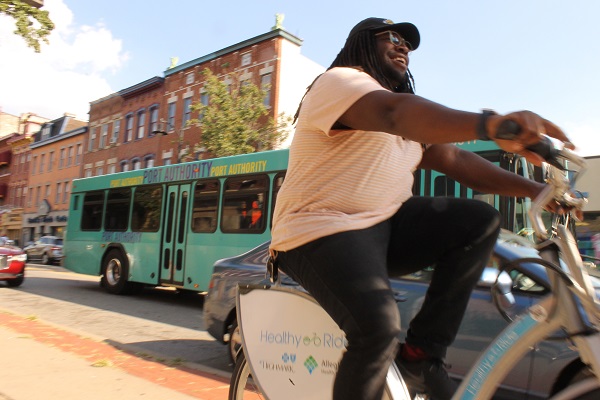
Two holy grails of bike-share service are increasing access to people without credit card accounts and integration with the local transit fare system. In Pittsburgh, local bike-share operator Healthy Rides is doing both simultaneously.
People who have a ConnectCard, the Pittsburgh region’s RFID-based transit farecard, now have access to unlimited bike-share trips of 15 minutes or less, reports Stefani Cox at Better Bike Share.
Cox spoke to Healthy Rides Executive Director David White about how the ConnectCard integration works “without requiring any registration on the customer’s part”:
To access the free 15 minutes of ride time, all an individual has to do is tap their ConnectCard on a bike share kiosk, input their phone number, and use the PIN number texted to their phone to access the bike. After the first use, the ConnectCard is linked to bike share, and all that is required is to tap the card on the desired bike.
There’s currently no limit on how many free rides can be taken. Someone could theoretically use the bikes all day, as long as they made sure to check the bike back in every 15 minutes. If someone does exceed their 15 minutes of free ride time, they will get a text asking them to register and pay for the overage before continuing to use the system.
While it’s too early to draw any conclusions about the success of the program, White noted that as of this Tuesday, about 100 people had linked their ConnectCard to bike share. All of those who linked their card then went on to actually ride a bike.
White said that by the end of this week, all 50 bike share stations should be on-line with the ability to link to the ConnectCard.
At 50 stations, Pittsburgh’s bike-share system is still pretty small, however, which limits its usefulness for first- and last-mile connections to transit. But Cox reports that the city is preparing to add 20 stations in lower-income areas that are underserved by transit.
More recommended reading today: Architect This City reports that the Trump administration’s proposed changes to the mortgage interest deduction would leave it in place for the wealthiest homeowners. And Darin Givens at Atlanta the City says local residents need to hold politicians accountable if children aren’t even safe walking on streets close to home.

Read More:
Streetsblog has migrated to a new comment system. New commenters can register directly in the comments section of any article. Returning commenters: your previous comments and display name have been preserved, but you'll need to reclaim your account by clicking "Forgot your password?" on the sign-in form, entering your email, and following the verification link to set a new password — this is required because passwords could not be carried over during the migration. For questions, contact tips@streetsblog.org.