Milwaukee Forges Ahead With Its First Bike Boulevards
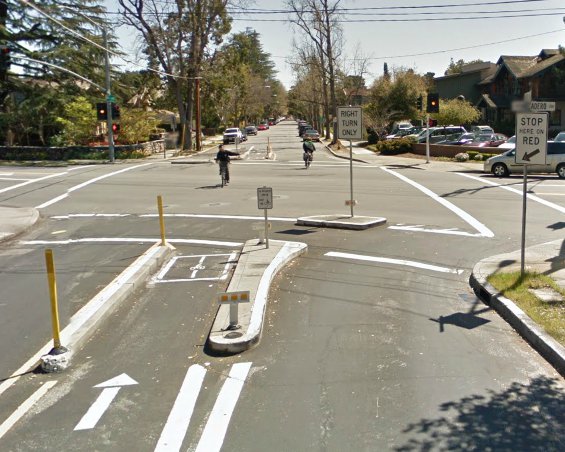
Milwaukee will be getting its first bike boulevards, the city announced this week, the beginning of what should eventually be a citywide network of low-traffic, low-stress streets for cycling.
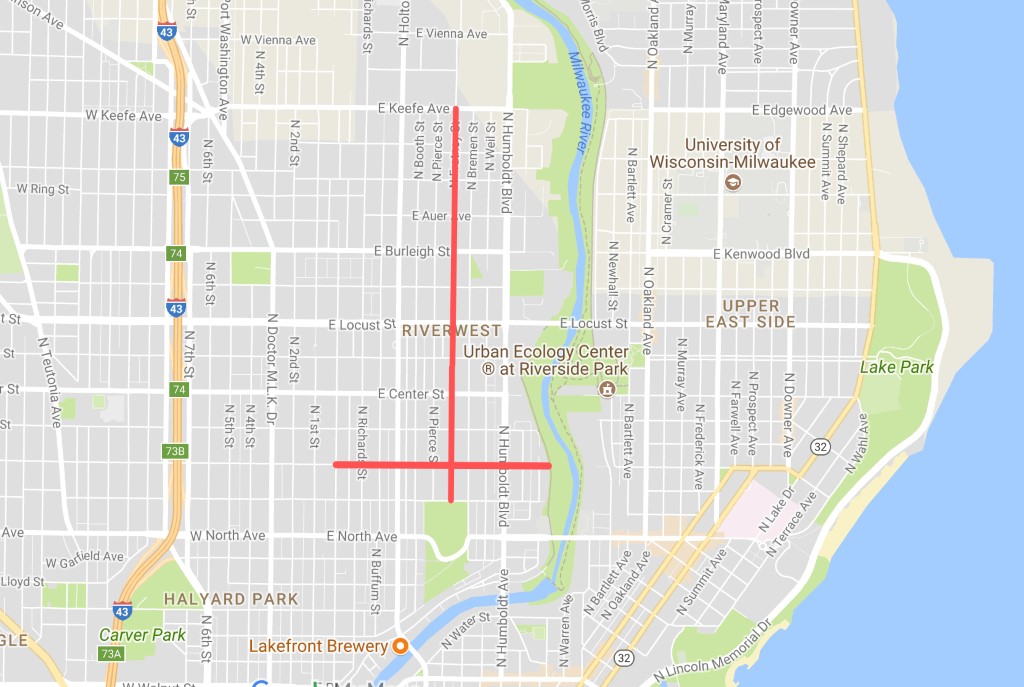
The city has identified two intersecting streets, totaling about two miles, to start out with. Details are still in development, but typically, bike boulevards involve diverting motor vehicle through traffic away from streets and implementing measures to further slow down cars and make cycling more convenient and safe.
Graham Kilmer at Urban Milwaukee reports:
When it comes to managing speed on a bike boulevard, anything from simple speed limit reductions to speed humps and curb build outs can be employed.
But for Milwaukee’s first bike boulevards, which are in the early planning stages, planners are looking at upgrading signalized intersections in order to “quickly and consistently pick up bicyclists on the corridor waiting to cross,” Hannig said. Also, there’s the possibility of replacing some four-way stops with neighborhood-scale traffic circles or, “similar traffic calming treatments to keep people on bicycles moving while maintaining neighborhood-appropriate travel speeds and discouraging cut-through traffic.”
Bike boulevards are another citywide infrastructure investment called for in the 2010 planning document, Milwaukee by Bike, which calls for the creation of 54 miles of bike boulevards.
Here’s a look at where the first two segments will go:
More recommended reading today: Wash Cycle reports that D.C.’s Department of Transportation is hosting trainings for construction managers about how to manage bike facilities in work zones. And modacity gives an overview of the case against bike licensing.

Read More:
Streetsblog has migrated to a new comment system. New commenters can register directly in the comments section of any article. Returning commenters: your previous comments and display name have been preserved, but you'll need to reclaim your account by clicking "Forgot your password?" on the sign-in form, entering your email, and following the verification link to set a new password — this is required because passwords could not be carried over during the migration. For questions, contact tips@streetsblog.org.