Caving to Resentment Politics, Oregon Enacts a Bike Tax
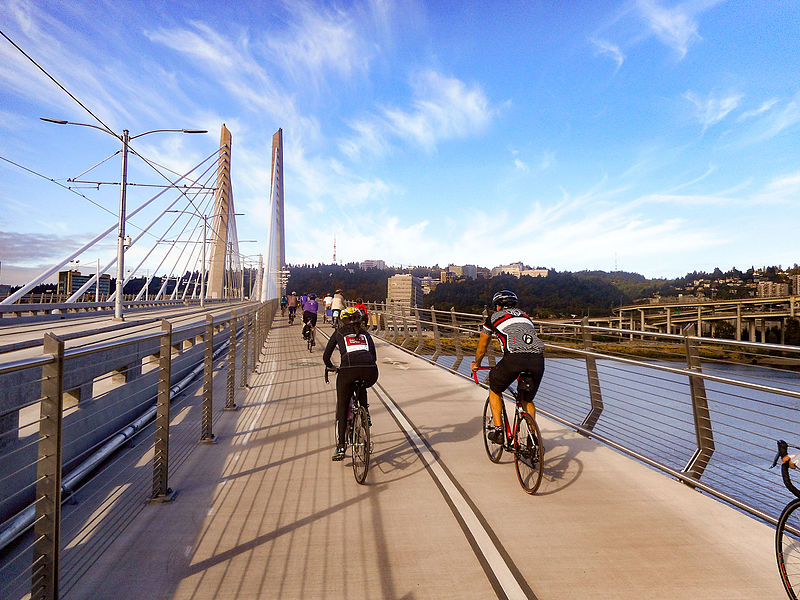
A straw man erected by bike infrastructure opponents has morphed into official policy in what’s supposedly one of the most bike-friendly corners of the United States.
The accusation that people who ride bikes don’t pay for roads is familiar to anyone who’s tried to argue for bike infrastructure in a public setting. Never mind that biking puts almost zero strain on the road network compared to driving, that people who bike also pay a variety of taxes that do fund roads, and that drivers don’t cover the full cost of car infrastructure by a longshot. It’s all about resentment.
Nevertheless, that idea has managed to shape the law in Oregon (yes, Oregon), which now has a tax on bicycles. Jonathan Maus at Bike Portland explains how it works:
The tax was opposed by small business owners, advocacy groups, and by many voters; but the political winds were simply too much to overcome. I have some thoughts about how we got to this point that I’ll share in a future post. For now, here are the final details of the bike tax:
- It’s a $15 flat tax instead of the 4-5% tax initially proposed.
- Applies to new bicycles with a wheel diameter of 26-inches or larger and a retail price of $200 or more.
- Expected to raise $1.2 million per year and cost $100,000 per year to administer.
- Funds will go into the Connect Oregon program and be set aside specifically, “for the purposes of grants for bicycle and pedestrian transportation projects… that expand and improve commuter routes for nonmotorized vehicles and pedestrians, including bicycle trails, footpaths and multiuse trails.”
- Tax will be collected by bicycle retailers and they’ll be required to file quarterly returns with the Department of Revenue.
- Bicycle retailers are required to keep receipts and records pertaining the collection of the tax for a minimum of five years.
- The tax will go into effect 91 days after the legislative session ends (that’d be October 8th if it ends on July 10th as scheduled).
So there you have it. We are taxing the healthiest, most inexpensive, most environmentally friendly, most efficient, and most economically sustainable form of transportation ever devised by the human species.
Congrats to Oregon on its preposterous bike tax that accomplishes no discernible transportation goal except dampening demand for new bikes. Will this finally put to rest the politics of bicycle resentment (spoiler: no), or will it just embolden the usual cast of bike lane haters to ratchet up their noise?
More recommended reading today: KXAN reports that some Houston residents are complaining “speed cushions” will slow emergency fire evacuations — but in practice what’s really endangering residents trying to flee wildfires is sprawling neighborhood design. And Human Transit says that while uncrowded transit vehicles may have plenty of room to stretch your legs, that’s not what cities should be striving for.

Read More:
Streetsblog has migrated to a new comment system. New commenters can register directly in the comments section of any article. Returning commenters: your previous comments and display name have been preserved, but you'll need to reclaim your account by clicking "Forgot your password?" on the sign-in form, entering your email, and following the verification link to set a new password — this is required because passwords could not be carried over during the migration. For questions, contact tips@streetsblog.org.