Senate Dems Put Out Their Own Trillion Dollar Infrastructure Plan
Senate Democrats want you to know that Donald Trump’s proposal to generate $1 trillion in infrastructure spending via tax credits is a non-starter with them. They have an infrastructure “blueprint” of their own, one that’s weighted much more toward transit. The trouble is that Democrats have little power to set terms, and getting drawn into negotiations over an unnecessary infrastructure bill may not play out to their advantage.
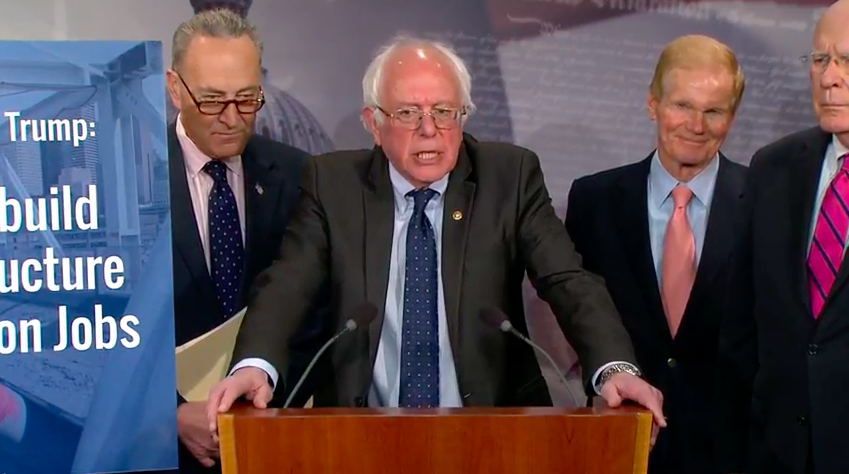
At a press event today, Senate Minority Leader Chuck Schumer and several colleagues, including Bernie Sanders, outlined their infrastructure spending proposal. It calls for a trillion dollars of spending on transportation, schools, “energy infrastructure,” and water and sewer systems over 10 years (see below).
“We will not support tax credits for developers,” Schumer said in his opening remarks, referring to a campaign white paper put together by Trump’s advisors. Nor will Democrats support cuts to healthcare or education to pay for their plan, Schumer added.
But Schumer didn’t spell out how his plan would be paid for either. “We will discuss how to pay for it with President Trump,” he said.
As a pure policy document, the Democrats’ proposal has few specifics but there’s a lot to like. Compared to current spending levels, it calls for an emphasis on transit and maintenance, not highway expansion. Those spending priorities don’t have much of a chance in the GOP-controlled Congress, however.
Schumer appears to be betting that he can drive a wedge between Trump and Republicans in Congress. Infrastructure, in vague terms, was a recurring campaign theme for Trump, but fiscal conservatives in the GOP have opposed any new government spending.
The risk that Schumer has introduced is that once negotiations start, Democrats will get baited into accepting a Republican plan that won’t look much like theirs at all. While Trump himself appears to have no fixed point of view about transportation policy, all the major players on his team are firmly in the anti-transit, anti-city camp. Every recent Republican transportation proposal has been a vehicle for promoting sprawl via highway construction.
In a recent piece, TransitCenter warned that Democrats (and Republicans from districts where transit matters) should be prepared to fight the “fossil fuel and Wall Street interests eager to insert self-serving policies into the vacuum left by [Trump’s] slogans.” Chuck Schumer and Senate Democrats don’t seem to be adopting that fighting stance. They’re talking about making a deal.
Here’s a look at the outline Democrats put out today:
—$100 Billion to “reconstruct roads and bridges.”
—$100 Billion to “revitalize Main Street.”
—$10 Billion to expand TIGER
—$110 Billion for water and sewer projects
—$50 Billion to modernize rail infrastructure.
—$130 Billion to repair and expand transit.
—$200 Billion for a “Vital Infrastructure Program.”
—$75 Billion to rebuild public schools
—$30 Billion for airports
—$10 Billion for ports
—$25 Billion to “build resilient communities.”
—$100 Billion “for 21st Century Energy Infrastructure.”
—$20 Billion to expand broadband access
—$10 Billion for VA hospitals
—$10 Billion to provide innovative financing tools.

Read More:
Streetsblog has migrated to a new comment system. New commenters can register directly in the comments section of any article. Returning commenters: your previous comments and display name have been preserved, but you'll need to reclaim your account by clicking "Forgot your password?" on the sign-in form, entering your email, and following the verification link to set a new password — this is required because passwords could not be carried over during the migration. For questions, contact tips@streetsblog.org.