Transportation Agencies Will Finally Measure the Movement of People, Not Just Cars
“What you measure is what you get,” the saying goes, and for a long time, America’s transportation policy establishment was obsessed with measuring one thing: car congestion. Hundreds of billions of dollars have been spent in the quest for free-flowing vehicular traffic. The result is wider highways, more sprawl, and more people stuck in congestion.
But this week U.S. DOT took an important step to change course, releasing new standards to guide how transportation agencies measure their performance. Advocates for transit and walkability say the policy is a significant improvement.
An earlier draft of these rules would have codified outdated highway-era dogma, emphasizing the movement of cars and trucks as a primary goal. Thousands of comments poured in demanding an approach that factors in the value of transit, biking, and walking — and the agency listened.
The revised U.S. DOT standards will lead agencies to assess their work in ways that support investments in transit and active transportation, according to Stephen Lee Davis at Transportation for America, which led the charge to reform the rule. Keep in mind that funding is not at stake here — U.S. DOT can’t reward or punish state DOTs based on how they perform. But state DOTs will now have to set new goals and report on their progress, and advocates will have new ways to hold transportation policy makers accountable.
Davis has identified four key wins in U.S. DOT’s new rule, which, it’s worth noting, can’t be struck down easily, because it’s the product of a lengthy regulatory process mandated by the 2012 federal transportation bill. Here’s our summary of the final regulation from U.S. DOT.
1. States will measure the movement of people, not just vehicles
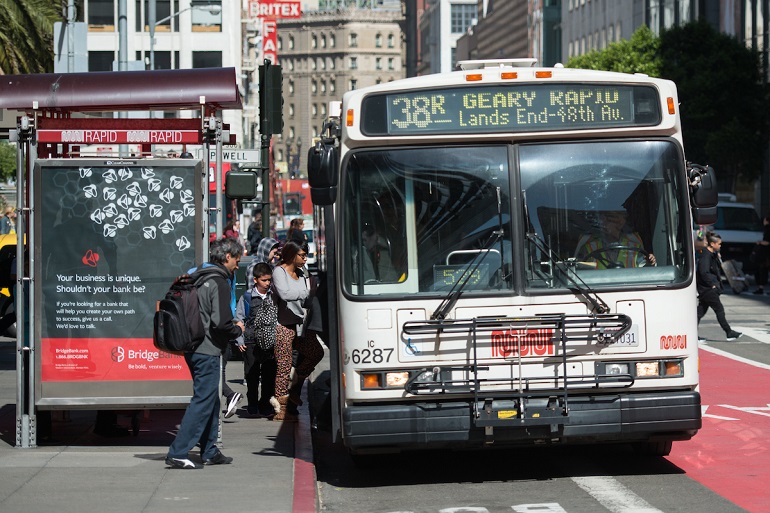
U.S. DOT’s previous version of the rule measured roads that move the highest number of vehicles were the most successful. If some of those vehicles were buses holding 40 people, they would count the same as a single person driving an SUV.
The final rule incorporates a measure of “person-hours” of delay rather than just “vehicle hours.” That means spatially efficient solutions like exclusive transit lanes won’t be penalized for supposedly worsening the congestion problem.
2. State DOTs will have to track their impact on carbon emissions
For the first time, state transportation agencies will be required to monitor and forecast the impact of their projects on greenhouse gas emissions. The rule will apply to any alteration of roads in the National Highway System, which includes not just interstates but many state highways and major urban streets as well. Transportation emissions are the single biggest source of carbon emissions in the U.S., and this acknowledgment that DOTs should address the problem is long overdue.
3. People who walk, bike, or ride transit will be counted
The U.S. DOT rule creates a “multi-modal” performance measure that will track “non-single occupant vehicle travel.” States will have to establish targets to increase walking, biking, and transit use.
U.S. DOT is also leading a research project to help states and local agencies development better tools to measure how much people walk and bike — a big missing piece in transportation agencies’ toolkits.
4. Free-flowing rush hour car traffic isn’t the goal
Originally, U.S. DOT wanted to measure congestion by comparing rush-hour travel times to free-flowing traffic conditions. That framework rewards road expansion and sprawl, and it’s been the basis for a lot of wasteful highway spending.
In response to comments, U.S. DOT dropped this problematic measure altogether.

Read More:
Streetsblog has migrated to a new comment system. New commenters can register directly in the comments section of any article. Returning commenters: your previous comments and display name have been preserved, but you'll need to reclaim your account by clicking "Forgot your password?" on the sign-in form, entering your email, and following the verification link to set a new password — this is required because passwords could not be carried over during the migration. For questions, contact tips@streetsblog.org.