The Top 100 Neighborhoods for Bicycle Commuting Have a 21% Mode Share

City rankings of bike-friendliness — while fabulous click-bait for their purveyors — obscure dramatic differences among neighborhoods. Los Angeles doesn’t appear on any cycling top 10 lists, but the area to the north and west of the University of Southern California has a 20 percent bicycle mode share. The city of Miami Beach is no bike heavyweight, but around Flamingo Park, nearly one in every four trips to work is made on two wheels.
Robert Schneider, an urban planning professor at the University of Wisconsin-Milwaukee, wanted to go beyond the city rankings. He and his assistant, Joe Stefanich, examined 60,090 census tracts to find the top 100 U.S. neighborhoods for bicycle commuting [PDF]. They presented the results at the Transportation Research Board Annual Meeting in January.
Taken together, those neighborhoods have a 21 percent bicycle mode share. Compare that to the U.S. as a whole, with its piddling 0.6 percent mode share.
Here’s what Schneider and Stefanich found:
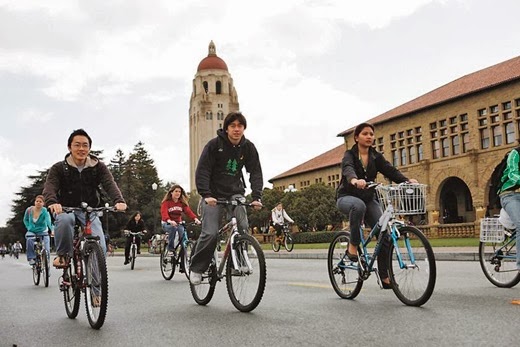
- Stanford University is a biking powerhouse. The central campus has a 52 percent mode share, the highest in the country. Five census tracts in and around the campus make it into the top 100. (Check out our coverage of Stanford’s transportation demand management program to find out more about how they did it.)
- Stanford is not alone. College campuses in general support biking like nothing else. Of the top 100 census tracts for bike commuting, 68 are within two miles of a campus.
- The polar vortex ate your bicycle. Seventy of the top 100 tracts have mild climates with fewer than 10 days a year with temperatures that don’t go above freezing.
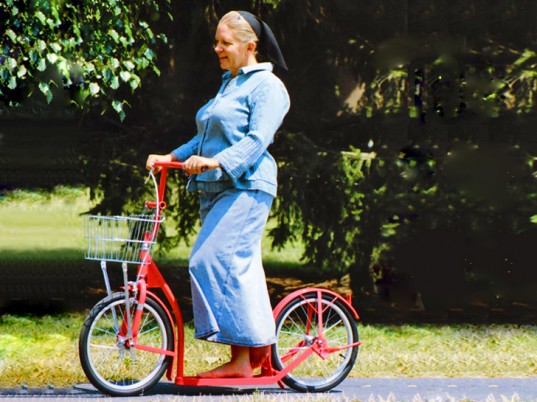
- The Amish will rival your beardiest hipsters for bike love (and beards for that matter). Only, many of them don’t exactly ride bikes but these hybrid bicycle scooters. Four tracts in rural areas of Ohio and Indiana with significant Amish populations have bike commuting rates between 15.7 and 18 percent.
The common threads you’d expect to find running through these top bicycling neighborhoods are all there: good bike facilities, lots of car-free households, higher population density, fewer hills.
This list has the same weakness as every other study on bicycling: It’s based on the American Community Survey journey-to-work data, so it doesn’t look at transportation patterns for anything but commuting, which makes up less than 20 percent of all trips.

Read More:
Streetsblog has migrated to a new comment system. New commenters can register directly in the comments section of any article. Returning commenters: your previous comments and display name have been preserved, but you'll need to reclaim your account by clicking "Forgot your password?" on the sign-in form, entering your email, and following the verification link to set a new password — this is required because passwords could not be carried over during the migration. For questions, contact tips@streetsblog.org.