A Thousand Cyclists Hold “Die-in” to Demand Safer Streets in London
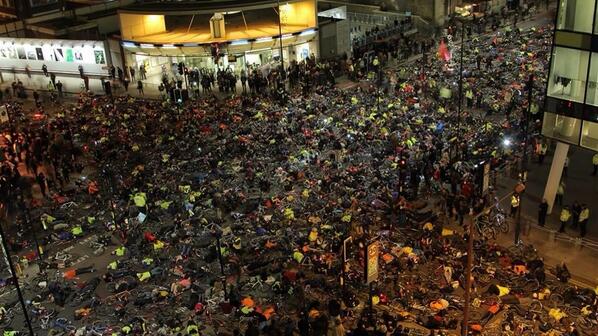
In a potent demonstration for safer streets, 1,000 Londoners staged a “die-in” with their bikes in front of the city’s transportation offices Friday. ABC producer Meredith Frost shared the above image, taken during the 15 minute demonstration. It has been going viral on the Internet. The original photo was taken by a member of the public and given to the Stop Killing Cyclists protest group.
Demands for safer streets have gained urgency in London following the death of six cyclists in a two-week period. Organizers are demanding 10 percent of the city’s transportation funds for safe bike infrastructure.
“We want a real budget, at the moment we’re getting crumbs,” organizer Donnachadh McCarthy told the BBC. “We want an integrated cycling network in London within five years and we want a say at the top table.”
The die-in tactic has some detractors, who think it will scare people from cycling and obscure evidence that cycling has recently become safer in London. But the BBC points out that similarly blunt and aggressive protests were key to the success of the 1970s-era safe streets movement in the Netherlands. They have also been used, with some success, to demand better infrastructure in American cities such as San Diego.

Read More:
Streetsblog has migrated to a new comment system. New commenters can register directly in the comments section of any article. Returning commenters: your previous comments and display name have been preserved, but you'll need to reclaim your account by clicking "Forgot your password?" on the sign-in form, entering your email, and following the verification link to set a new password — this is required because passwords could not be carried over during the migration. For questions, contact tips@streetsblog.org.